
Sustainable Filament Production
Turning plastic waste into purpose: RIT Dubai students recycle PET bottles into 3D printing filament.
Team Members:
- Vishnu Shyju
- Reem Aly
- Shriya Vijay
- Muhammad Sharfuddin
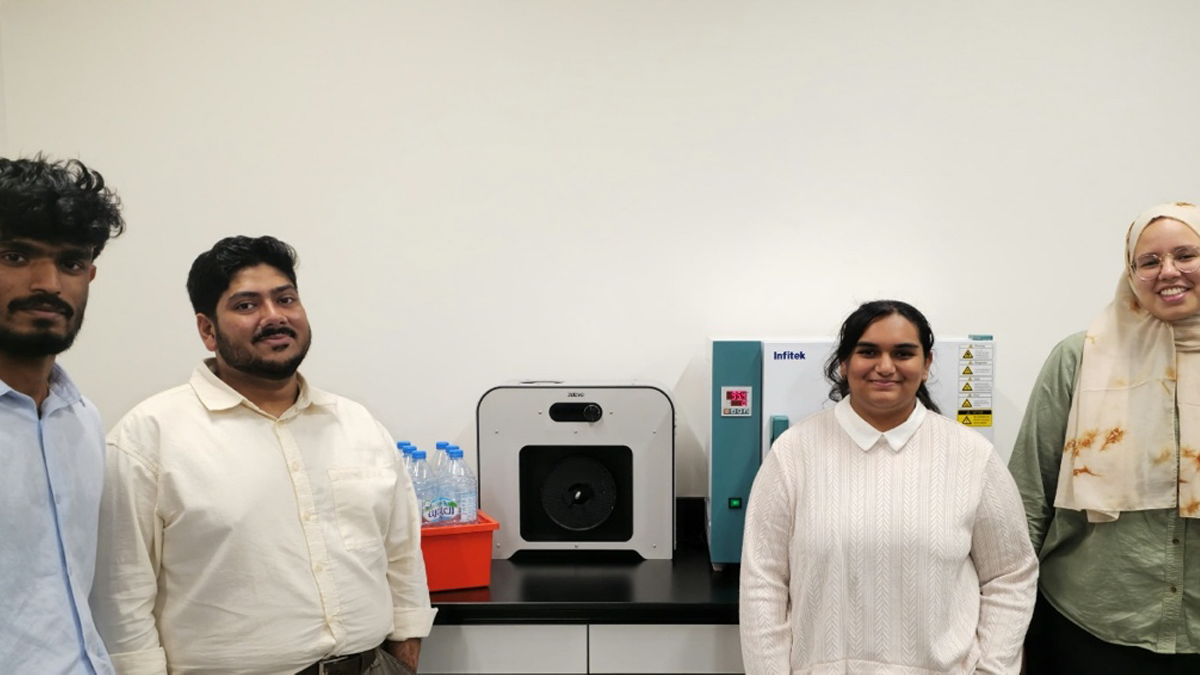
This study explores a sustainable method for converting plastic water bottles made from polyethylene terephthalate (PET) into 3D printing filament for fused deposition modelling (FDM) technologies. PET bottles collected from RIT Dubai students were shredded, sieved, and dried at 140°C for 5 hours to remove moisture and prevent hydrolytic degradation during extrusion. The dried flakes were then extruded into filament using a desktop single-screw extruder, dehumidified for 5 hours at 65°C, and stored in a polymer-sealed container to preserve material quality. To identify optimal printing conditions, a custom temperature tower and speed tower were printed to determine the ideal nozzle temperature and print speed for recycled PET. Standardized ASTM mechanical test specimens for tensile, threepoint bending, and compression testing were then printed using the optimized parameters of 270°C and 40 mm/s. Test samples using PLA and PETG filaments were also printed and tested to compare the properties of recycled PET. This study aims to encourage other small institutions to recycle plastic waste into filament for 3D printing applications.