Home Page

In addition to academic planning and curriculum development, the provost champions continued excellence in student-centered learning, teaching, research, and scholarship.
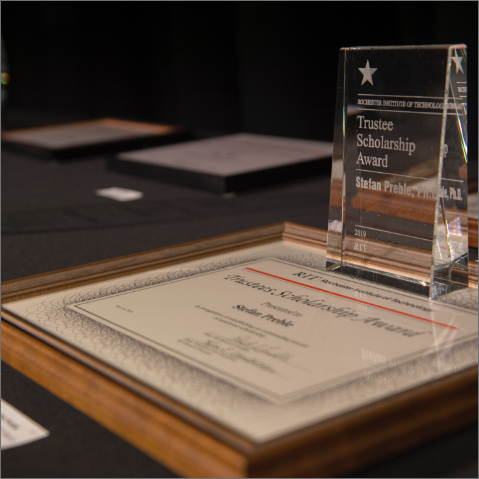
Celebration of Teaching and Scholarship
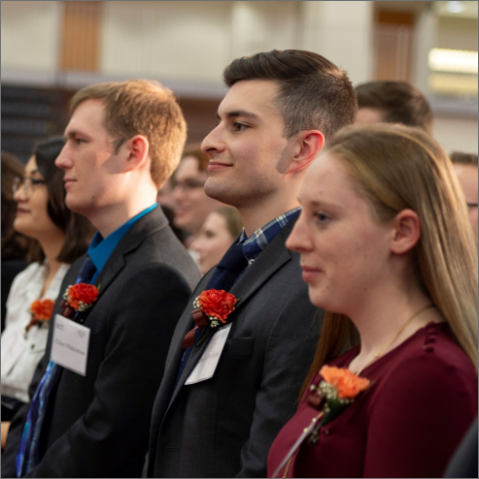
Outstanding Undergraduate Scholar Awards
Academic Affairs News
-
September 25, 2026

RIT hosts massive career fair with hundreds of employers
WROC-TV highlights RIT’s University-Wide Career Fair, where thousands of students connected with more than 200 employers for co-op, internship and full-time job opportunities.
-
September 23, 2026

What RIT alumni recruiters want students to know
To help students stand out in a competitive job market, RIT alumni recruiters attending the University-Wide Career Fair on Sept. 23 shared advice on networking, showing initiative, and building confidence. The Career Fair featured more than 200 local, regional, and national companies.
-
September 22, 2026

RIT named a top 100 national university for fourth year in a row in ‘U.S. News’ best colleges ranking
RIT continues its run as a top 100 national university for the fourth year in a row, according to the 2027 U.S. News & World Report rankings.
-
September 11, 2026
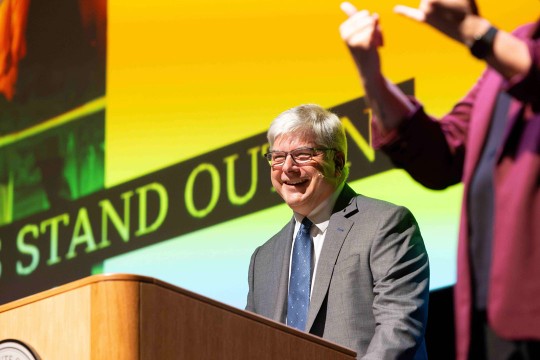
RIT president says next build is strengthening people and programs
In his State of the University address, RIT President Bill Sanders outlined a vision for RIT centered on investing in people, programs, and strategic priorities to sustain the university's momentum and impact.
Faces of RIT
-
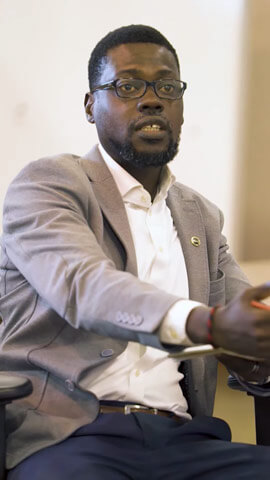
The Power of Architecture
Nana-Yaw AndohAssistant Professor, Department of ArchitectureNan-Yaw Andoh teaches his students that architecture is more than beautiful buildings. It's an element that can connect and unify communities.
-
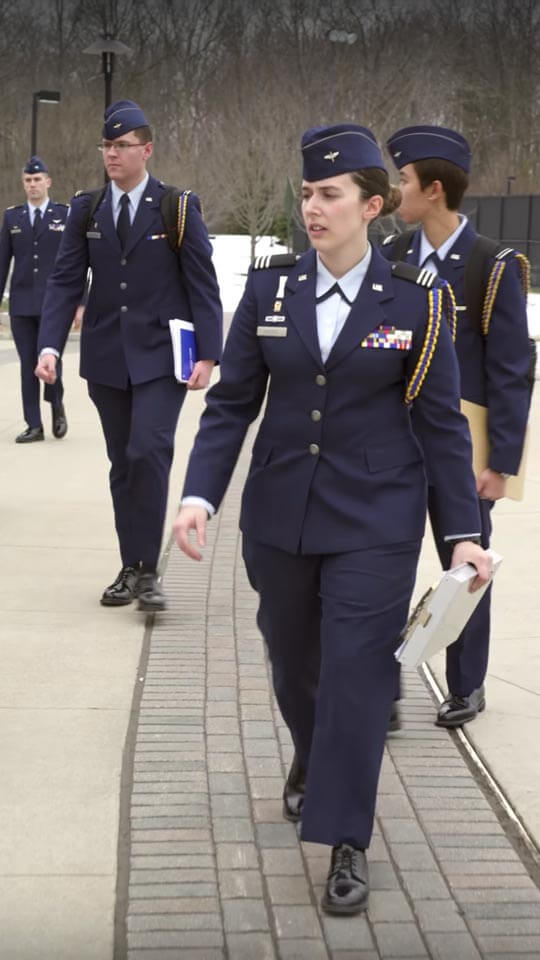
A Part of Something Bigger
Kimberly HedgerComputer Engineering TechnologyFor Hedger, giving back is a special part of the RIT community that lets her impact the world, one service project at a time.
-
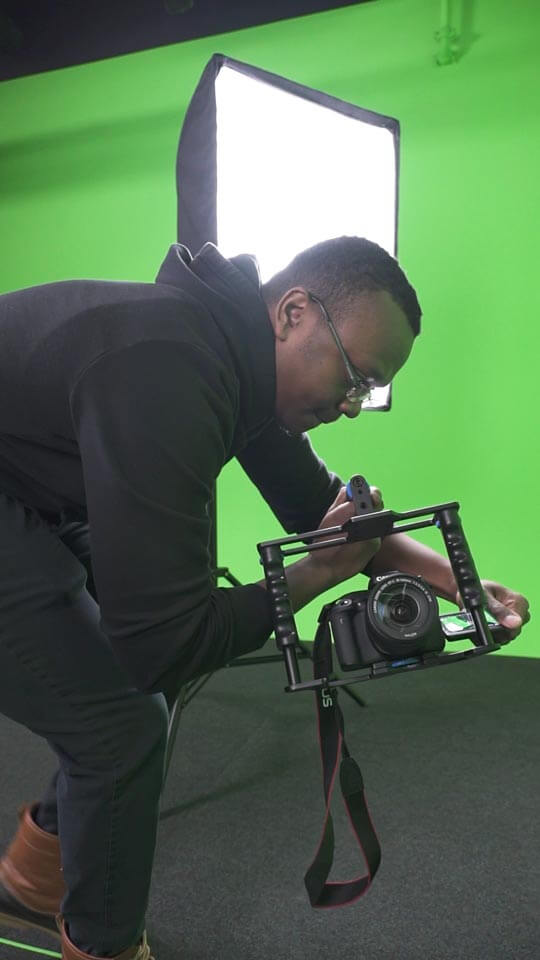
Bringing Deaf Culture to the Big Screen
Rydrea WalkerDesign and Imaging TechnologyWalker wants to share Deaf and hard-of-hearing stories to bridge the gap between cultures and represent the Deaf community in Hollywood.
-
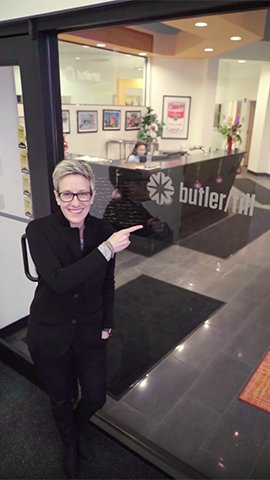
Innate Happiness
Amanda DeVito EMBA '19Vice President of Client Engagement, Butler/Till MediaHappiness of employees and driving business outcomes are DeVito's main focus at Butler Till Media and Communications. Knowing all the work and energy she puts into driving a client's business is satisfaction in itself.
-
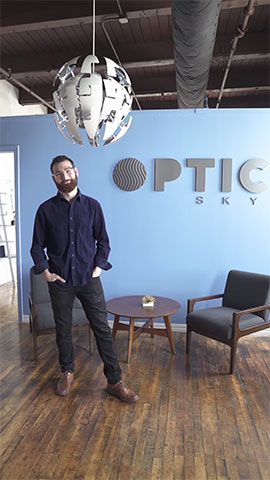
The Sky’s the Limit
Aaron GordonFilm and AnimationGordon started Optic Sky, an animation company, after graduating from RIT with a degree in film. He helps develop new talent by inviting RIT students to work on his production crews.
-
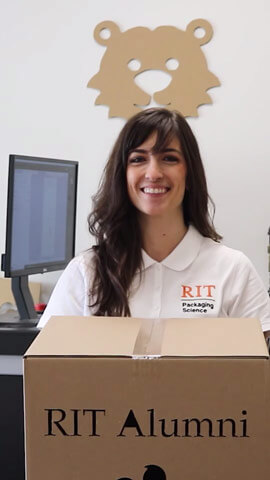
Power Combination
Diana Solt BS ’10, MS ’17Lead, Strategy DevelopmentL3/Harris Corp. Communication SystemsCombining her technology degree with liberal arts provided Diana Solt the powerful combination she needed to develop business strategies for L3/Harris.
-
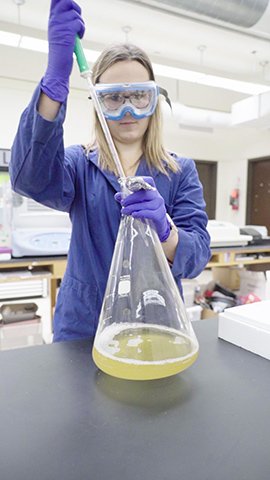
Medicine's Future
Nicole PannulloBiochemistryBy working on a faculty-guided research project, Pannullo has gained hands-on research experience to pursue a future in regenerative medicine. It’s one way Pannullo is putting experiential learning to work.
-
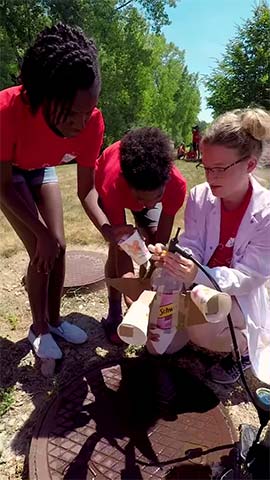
Connecting Kids to Science
Devon M ChristmanPhysicsOver the summer, Christman taught a workshop called “Experiments in Science” to a group of children from RIT’s Kids on Campus program. By helping to change their perspectives on who and what a scientist is, Christman is shaping the minds of tomorrow’s scientists.
-
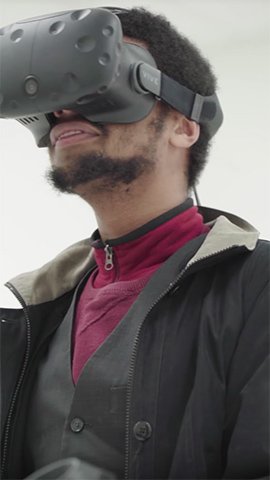
Merging Past and Present
Devin Klibanow3D Digital DesignRIT's Cary Graphics Art Collection allows students to view printing styles and graphic art from thousands of years ago. In order to preserve these artifacts, Klibanow is working with other students and faculty to create a virtual viewing experience.
-
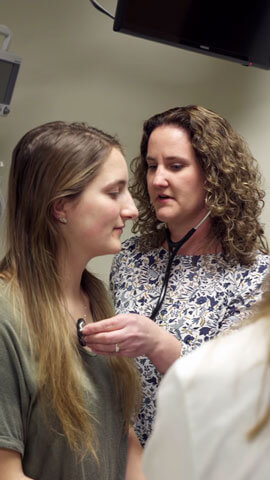
Giving Back
Jennifer Wheeler, M.D. BS ’01BiotechnologyFamily MedicineAfter 9/11, Wheeler enlisted in the US Army and served as a doctor in Afghanistan. Now, she practices family medicine and serves as a preceptor to RIT students who are embarking on their own careers in medicine.
-
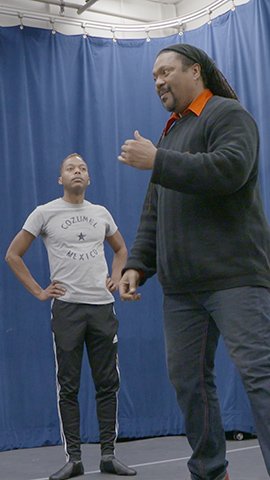
Visual Exploration
Fred Beam '85As outreach coordinator for Sunshine 2.0, a theater group at RIT's National Institute for the Deaf, Beam and his troupe provide performances and activities for deaf and hard-of-hearing children and adults that highlight the fields of deaf culture, literacy, and STEM.
-
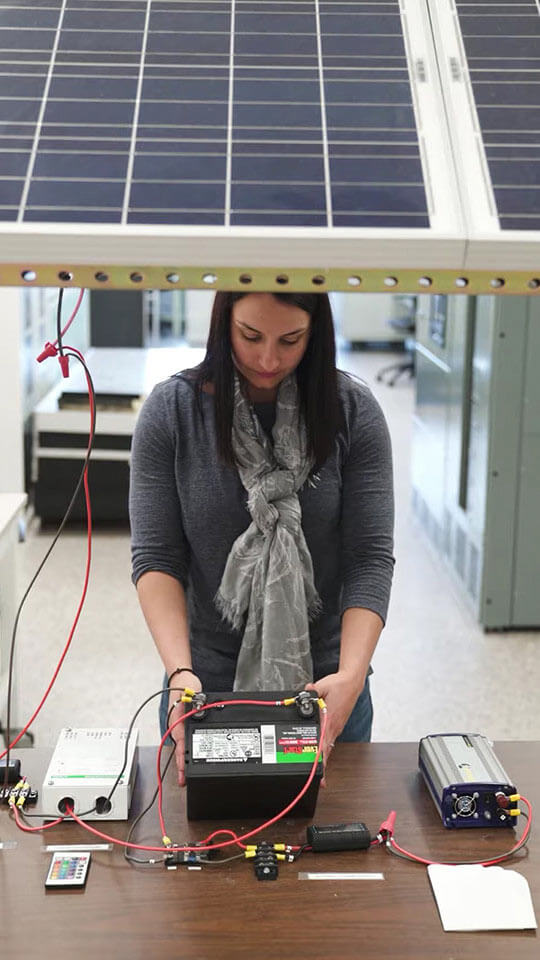
Education: A Powerful Tool for Sustainability
Elizabeth MooreSustainability Ph.D.Moore is researching nanomaterials and their use in clean energy technologies. She’s sharing this knowledge with future generations, who have the power to impact the environment.
-

Streaming Worldwide
Nate BellaviaFilm and AnimationRIT’s student-run radio station broadcasts to the Rochester community and streams worldwide. Bellavia, WITR’s music director, appreciates that RIT has a place where people who love music can bond over their passion and share that connection over the airwaves.
-
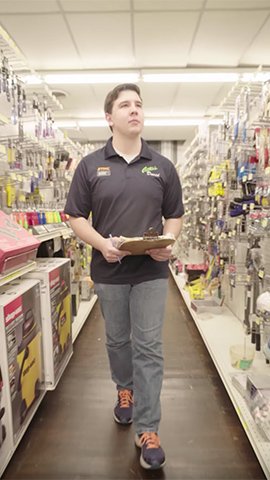
Love What You Do
David Even MBA '18Vice President, W.G. Arthur Co.Growing to love the business he began working for at 15, Even is now a vice president at W.G. Arthur Co. With a passion for helping others, Even learned from his mentors that treating people right is always the best policy.
-
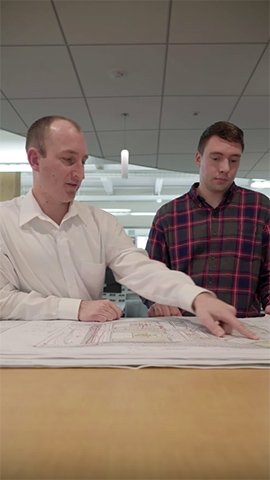
Relationships Are Key to Success
Jess Sudol '06VP/Civil Dept. Manager - Passero AssociatesBuilding relationships and honing communication skills are crucial skills for success in any field. Passero Associates has recognized the collaborative nature of RIT students. They continue to hire RIT students and graduates for their dynamic interpersonal skills as well as their knowledge.
-

Creating a Balanced, Equal World
Remy DeCausemakerCommunications and Media TechnologyPublic PolicyOpen source software is integral to building a movement toward equality. For DeCausemaker, that meant creating a degree program in the School of Individualized Studies that targeted the specific areas of expertise he needed to craft the career path he wanted.
-
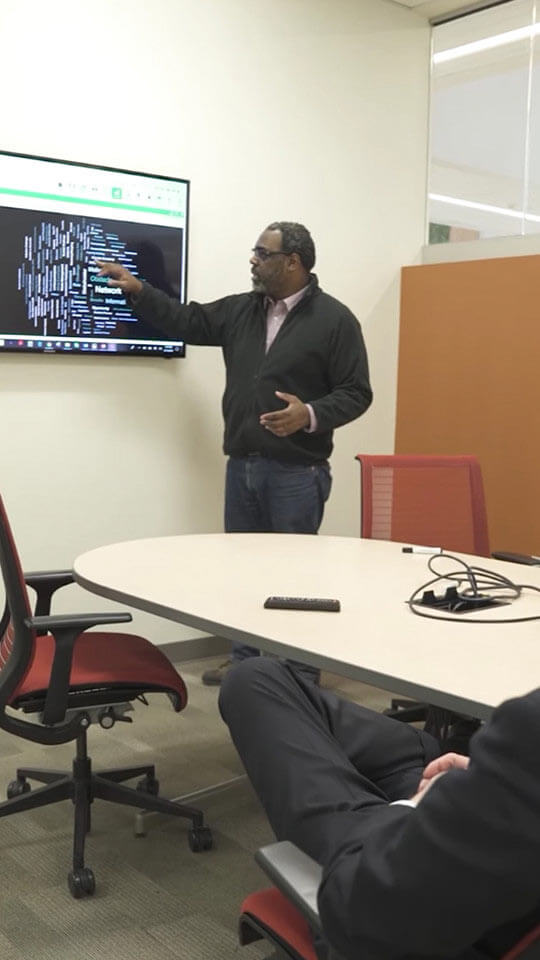
Entrepreneurial Solutions for Environmental Problems
Sherwyn MilletteSustainability Ph.D.Millette is from Trinidad and Tobago, an island nation that needs a way to manage a waste problem in a country with limited space. Millette is exploring if a circular economy can be the solution.
-
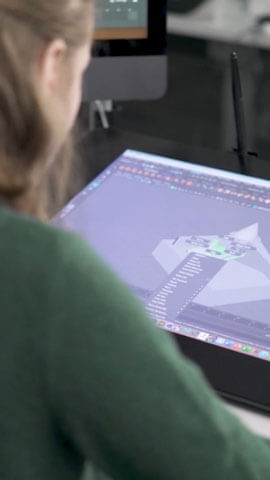
A New Way to Tell Stories
Claire WilcoxUndeclared Art and DesignBy combining the performing arts with technology and design, Claire Wilcox is creating a storytelling dynamic that engages technology to share stories on film and on stage.
-
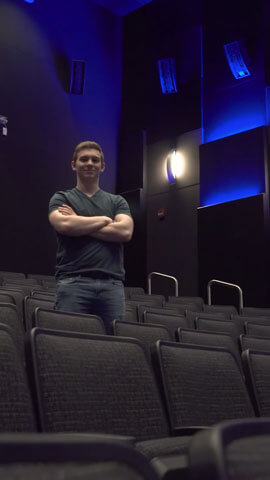
A Creative Pipeline
Andrew SevignyMotion Picture ScienceSevigny is conducting research to help filmmakers translate what they create on their computers to a full cinematic experience.
-
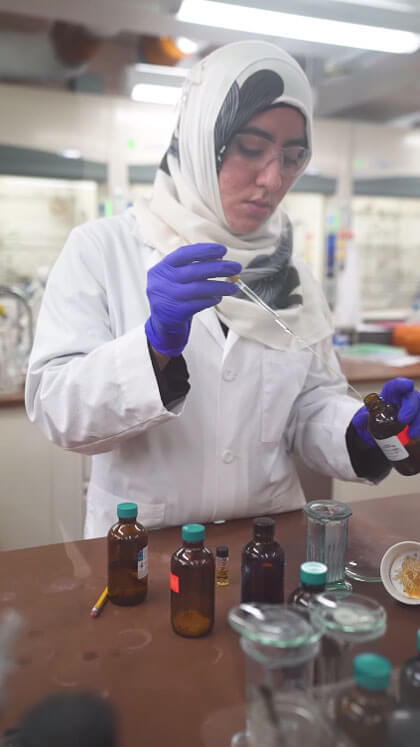
Where Science Meets Art
Zayneb JaffPre-health StudiesMetals and Jewelry DesignStudying health studies has helped Jaff develop her logic and analytical skills. Adding a dual major in metals and jewelry design will prepare her well for medical school, where today's doctors must be both knowledgeable and innovative in their approaches to patient care.
-
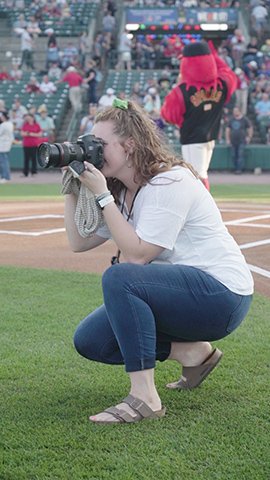
Picture Perfect
Amelia HamiltonPhotographyWith only a split second to get the perfect shot, Hamilton's passion for capturing emotion is an asset to creating authentic images in the moment.
-
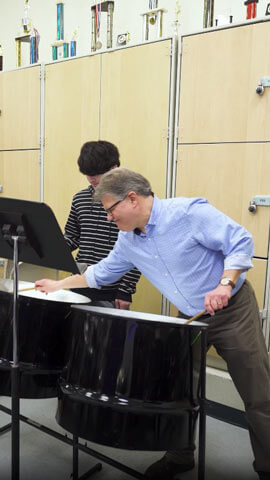
The Excitement of Live Performance
Ted CanningAdjunct facultyDirector of Steelband EnsembleFor Professor Ted Canning, music is a universal language anyone can learn. No matter your major, no matter your level of experience, you can make music part of your life at RIT.
-
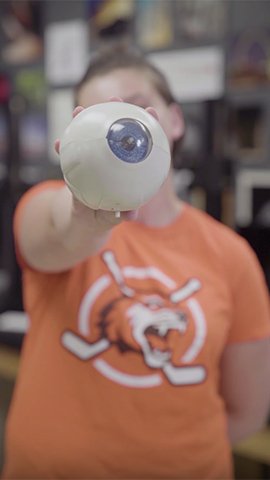
Eye on the Prize
Lily LautenschlagerBiomedical Photographic CommunicationsLautenschlager's passion for helping others drew her to a co-op opportunity in the medical science field. Through hands-on experience studying the eye, Lily has secured a part-time job while she continues her education at RIT.
-
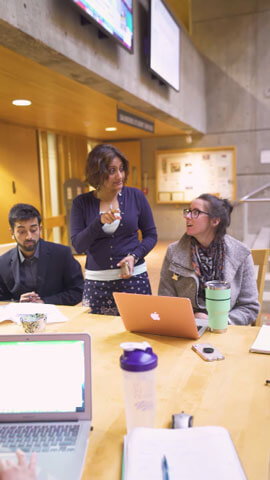
The Art of Negotiation
Shal KhazanchiDepartment Chair and Professor, Department of ManagementIt’s more than mediating a good salary, negotiation is a predictor of success and a key life skill for all professionals.
-
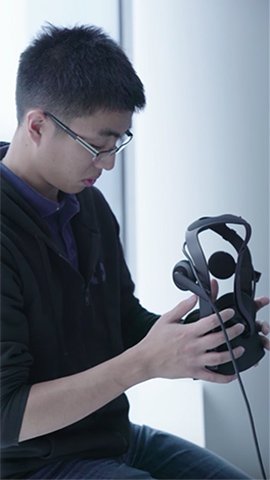
Enhancing Reality
Kevin KhaImaging ScienceKha interned with Oculus testing their next generation of VR cameras, which have the potential to aid law enforcement and impact learning in schools. The internship turned into a full-time job, and Kha plans to work on enhancing the VR experience.
-
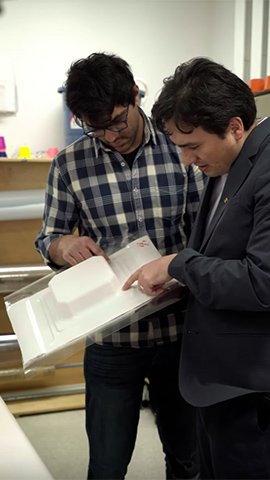
Biodegradable Packaging
Carlos Diaz AcostaAssociate ProfessorDiaz Acosta's research in sustainable packaging led his class to a biodegradable solution. Developing corn-based packaging is not only being used to counteract the amount of food waste going into landfills, but also making the world a more sustainable place.
-
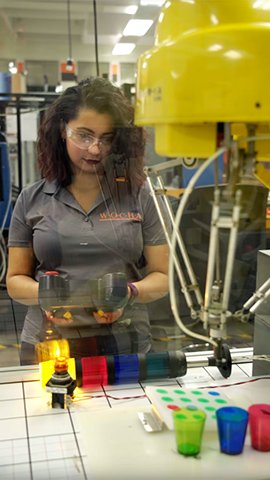
Where You Belong
Corinne MendietaMechanical Engineering TechnologyMendieta has found a home in student government. As vice president she makes sure that all students have what they need to succeed.
-
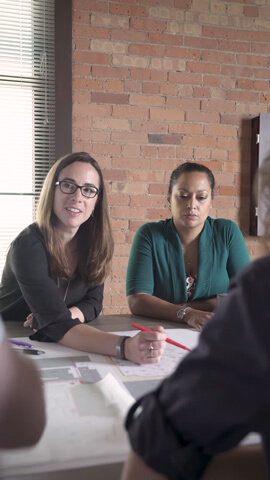
Architecture Is Awesome
Blair BensonArchitecture M.Arch.When Blair changed careers she realized that it is never too late to pursue your passion. Now she embraces the collaborative nature of the design process, combining functionality, aesthetic appeal, and responsible practices in her architectural work.
-
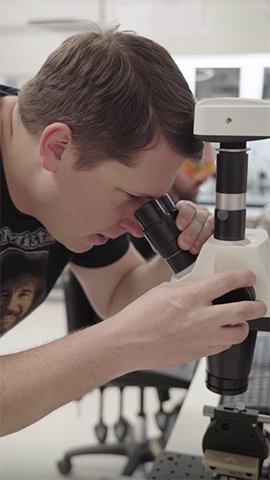
Take the Leap
Michael Oshetski '03CEO, Micatu Inc.Focused on making the utility grid more efficient and sustainable, Oshetski, an RIT alum, has a passion for entrepreneurship. Turning a start-up into reality led him to sharing a key piece of advice: Just go for it.
-
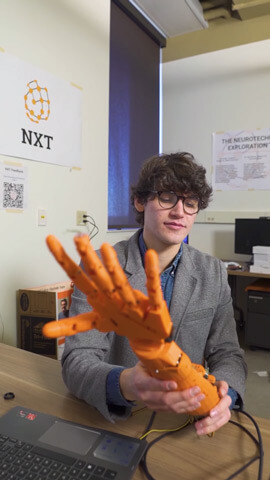
Advancing Neurotechnology
Harrison CanningInnovation Science in NeurotechnologyThe School of Individualized Studies enabled Canning to create a degree that combines studies in computer science, business, and neuroscience so he can build a business that can mass produce brain-computer interfaces to help people with disabilities.
-
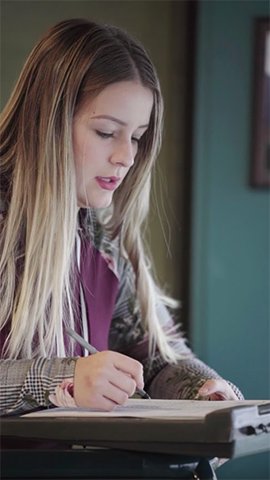
Beyond Human
Jessica WegmanPsychology MajorSeeing the world through the eyes of a different species is just one way we connect with the world around us. Through faculty-led research, Wegman is working to improve the quality of life for North American River Otters by studying their visual perception.
-
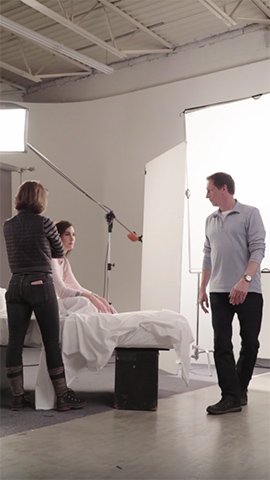
Learning to Learn
John Myers '83PhotographyFor Myers, who has traveled the world to photograph people and places, RIT was key to preparing him to adapt to an ever-changing industry. The skills he honed as a student – curiosity, responsibility, communication skills – have enhanced his decades-long career as a photographer.
-
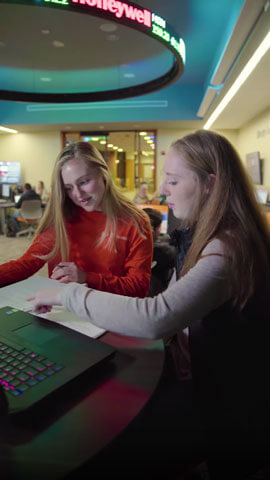
The Spice of Life
Kate FergusonFinance and International BusinessVariety is what Ferguson thrives on. And no day is ever the same for this double major who plays soccer and is involved in a range of activities at RIT.
-
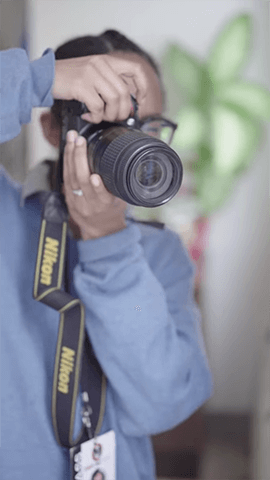
Giving a Voice to a Community
Tianna Manon '15CommunicationAs an alum of the journalism program, Manon has put into practice the storytelling platforms and opportunities She took advantage of at RIT. Today, Manon serves as editor-in-chief of Open Mic Rochester, an online magazine that gives a voice to Rochester’s black community.
-
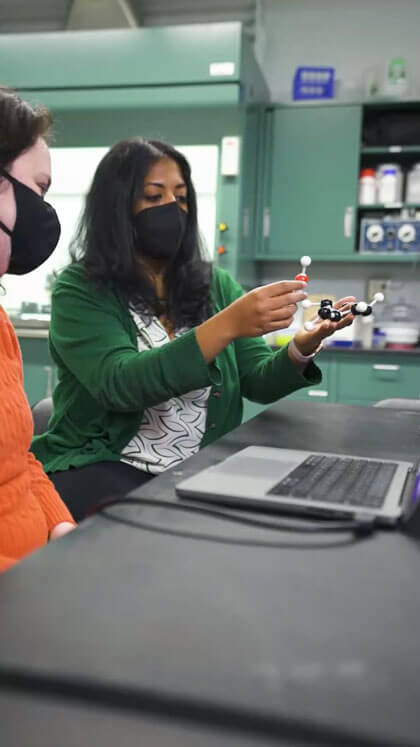
Engineering Better Solutions
Poornima PadmanabhanAssistant ProfessorProfessor Padmanabhan’s students engage in hands-on research experiences that help build a better future through the creation of advanced complex materials that can solve problems in solar energy, health care, agriculture, and more.
-
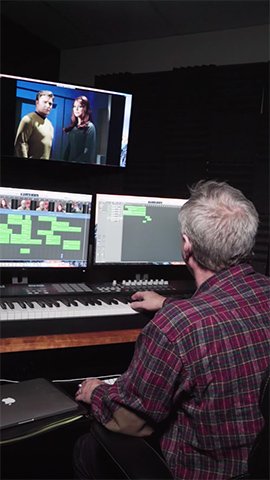
Evoking Emotion Through Music
Jonathan KrugerProfessorA difficult task to accomplish, yet a joy to teach, Kruger enjoys composing for visual mediums. As chair of the Department of Performing Arts, Krugar focuses on enhancing a scene with music while keeping the audience immersed in the medium.
-
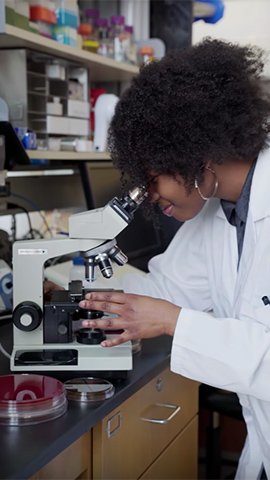
A Spit Take
Diamond GuyBiomedical SciencesGuy's biomedical science research is analyzing microbes linked to cardiac disease. She's hoping to keep the population healthy one vial of saliva at a time.
-
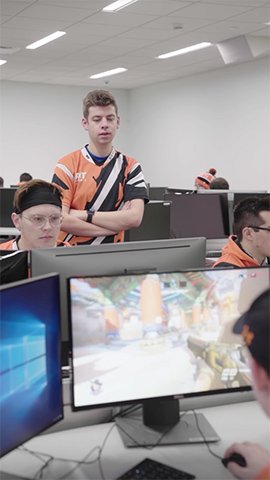
Online Face-Off
Evan HirshComputer ScienceTrading gloves and helmets for a monitor and a mouse has ushered in a new era in sports: competitive, organized gaming. By mirroring professional eSports, the RIT eSports team pursues competitive gaming at the highest possible level, rivaling the excitement of traditional sports teams.
-
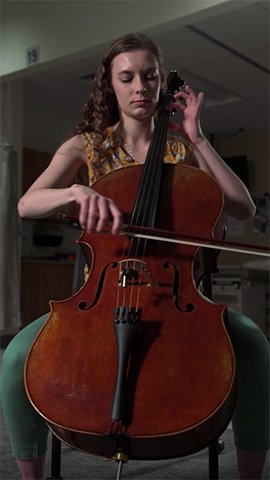
The Power of Music
Becky JasenPhysician AssistantJasen is a physician assistant major and the music director for RIT Players. She is applying her passion for music to research that studied how music can reduce pain and anxiety in pediatric patients.
-
Headed to Google
Ethelia LungNew Media DesignThe skills Lung learned in the new media design major prepared her for an internship at Google. This career-related work experience, which turned into a full-time job, is just one of the ways experiential learning shapes a student’s future.
-
Advancing the Success of Women
Shannon McHaleCybersecurityAs head of public relations for Women in Computing, McHale strives to organize professional opportunities for its members, advancing women’s experience in computing majors, and giving back to a club that has given her so much.
-
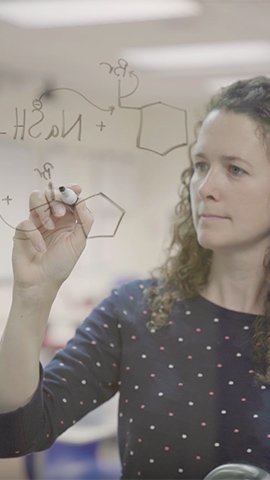
Expanding ASL
Tina Goudreau CollisonProfessor of ChemistryA complicated vocabulary and a lack of dedicated signs in American Sign Language makes Organic Chemistry a challenge for deaf and hard of hearing students. Collison worked with interpreters to develop new ASL signs, leading to profound learning improvements for her students.
-

The AI Gateway
Humza SyedComputer EngineeringSyed is pushing the world forward by developing algorithms that apply artificial intelligence to make everyday tasks easy and more efficient.
-
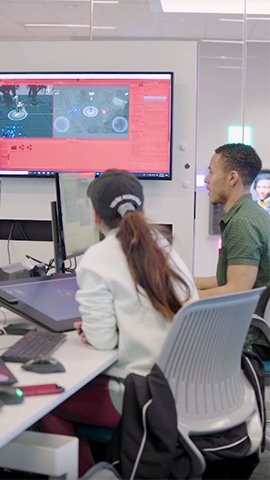
MetroGnome
Barrington CampbellGame Design and DevelopmentTinkering, testing, designing, coding – it's what he does. Through RIT's game design program, Campbell and his team created a game that garnered attention from 20th Century Fox, leading him to an internship with the company.
-
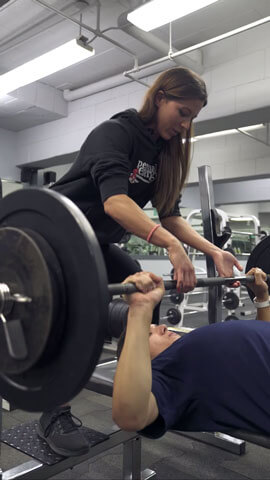
Protecting Those Who Protect Us
Rachael AhoExercise Science ’17Aho is putting her exercise science degree to work as a personal trainer who works with first responders. She helps firefighters stay in shape and prevent on-the-job injuries.
-
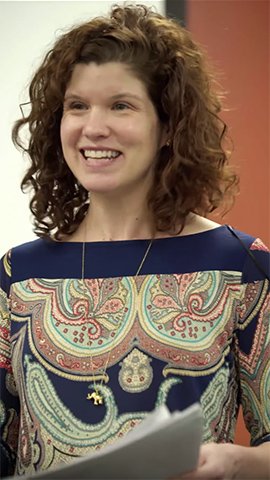
Always Evolving
Elizabeth RuderAssistant ProfessorThe field of nutrition is an ever-changing field where knowledge is always evolving. Ruder enjoys watching her students question what they know as they use hands-on experiences to contribute to future nutritional guidelines.
-

Stepping Up
Ashley KosakMechanical EngineeringIt might be just a stool, but it represents more than reaching equipment in the Machine Shop. It’s a symbol of the heightened awareness and inclusivity of women in engineering at RIT. After graduation, Kosak wants to influence change by helping women pursue careers in engineering.
-
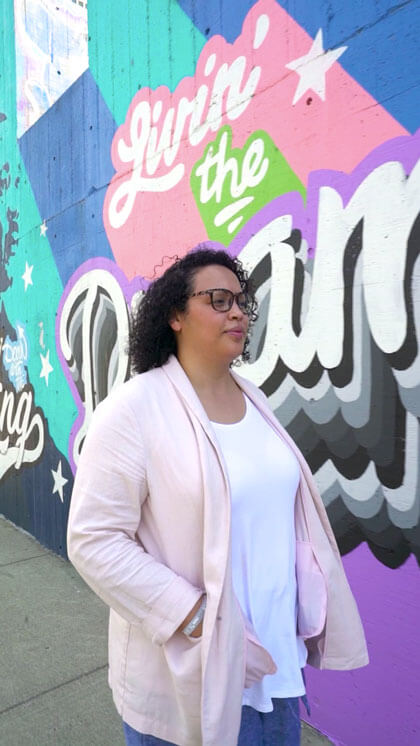
More Than One Path
Berta RiveraApplied Arts and SciencesWith the flexibility to shape her education around her professional and personal lives, Rivera has found the School of Individualized Study to be the pathway toward a fulfilling degree and a rewarding career that pays it forward.
-
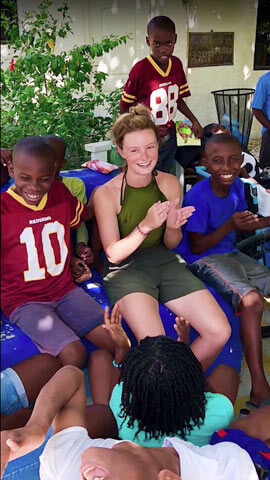
Making a Positive Impact
Katherine DuffySociology and International RelationsShe’s a professional ballet dancer and a humanitarian who spends her free time volunteering at a children’s home in Haiti. Duffy created a degree program in the School of Individualized Study so she can one day establish a non-profit of her own.
-
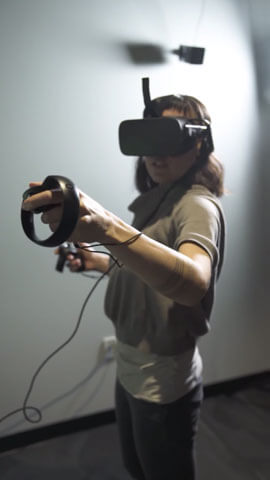
The Physics of Animation
Mari Jaye BlanchardAssistant ProfessorSchool of Film & AnimationTo create movement, Blanchard’s classes are full of motion, with students jumping, crawling, and walking to better understand the physics they are trying to draw.
-
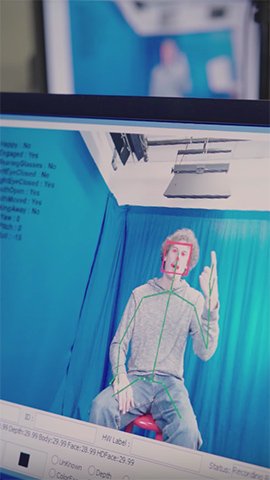
Improving Human-computer Interactions
Matt HuenerfauthProfessorImproving interactions with online platforms for those with disabilities is the ultimate goal behind Huenerfauth’s research. By training designers to create and develop more accessible websites and mobile networks, a wider audience can connect to and benefit from these technologies.