Home Page
The world of work is changing.
We're preparing students for what comes next.
Technology expands what we can do, but human skills determine how thoughtfully, creatively, and responsibly we use it.
In a workplace shaped by rapid advances in AI and technology, liberal arts graduates—equipped to think critically, adapt, communicate, and lead ethically—are more needed than ever, across nearly every industry and in jobs that have yet to be imagined.

Meet Us on Campus
Learn about academics, co-op and internships, financial aid, and more.

Apply for Fall 2027
Early Decision I and Early Action deadlines are November 1.


Meet the Dean

Our world, our workplaces, and our everyday lives are increasingly shaped by technology. That’s why studying a liberal arts discipline at RIT—a technical university known for innovation and creativity—is a smart choice for your future. Here, students develop the enduringly valuable human skills that technology can’t replace and employers seek: critical thinking, creativity, communication, collaboration, ethical judgment, and adaptability.
Research that Pushes the Status Quo
-
October 2, 2026

Hinda Mandell on … Crocheting in the Classroom?
Hinda Mandell, professor of journalism, appeared on Notre Dame's Designed for Learning podcast to discuss using crochet and other hands-on activities to engage students, support learning, and draw their attention away from digital spaces.
-
September 22, 2026
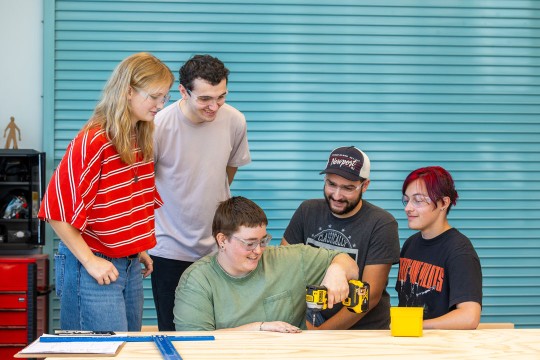
Technical Theatre Pathways course helps students navigate RIT’s performing arts community
Technical Theatre Pathways, a new course offered by RIT’s School of Performing Arts, gives students a full picture of the varied behind-the-scenes roles that help bring a stage performance to life.
-
September 18, 2026

Saenz named Hispanic Business Person of the Year
Rochester Business Journal highlights RIT School of Communication lecturer Julio Sáenz, WXXI’s chief content officer, who was named the 2026 Hispanic Business Person of the Year by the Rochester Hispanic Business Association.
-
September 17, 2026

New DHS rule stirs concern at higher ed campuses
Rochester Beacon speaks with Amit Batabyal, the Arthur J. Gosnell Professor of Economics and interim director of the Golisano Institute for Sustainability, about concerns over new federal visa rules and their potential impact on international students, university programs, and recruitment.
