Home Page

The 2023 National Academies report defines digital twins (DTs):
“A digital twin is a set of virtual information constructs that mimics the structure, context, and behavior of a natural, engineered, or social system (or system-of-systems), is dynamically updated with data from its physical twin, has a predictive capability, and informs decisions that realize value. The bidirectional interaction between the virtual and the physical is central to the digital twin.”
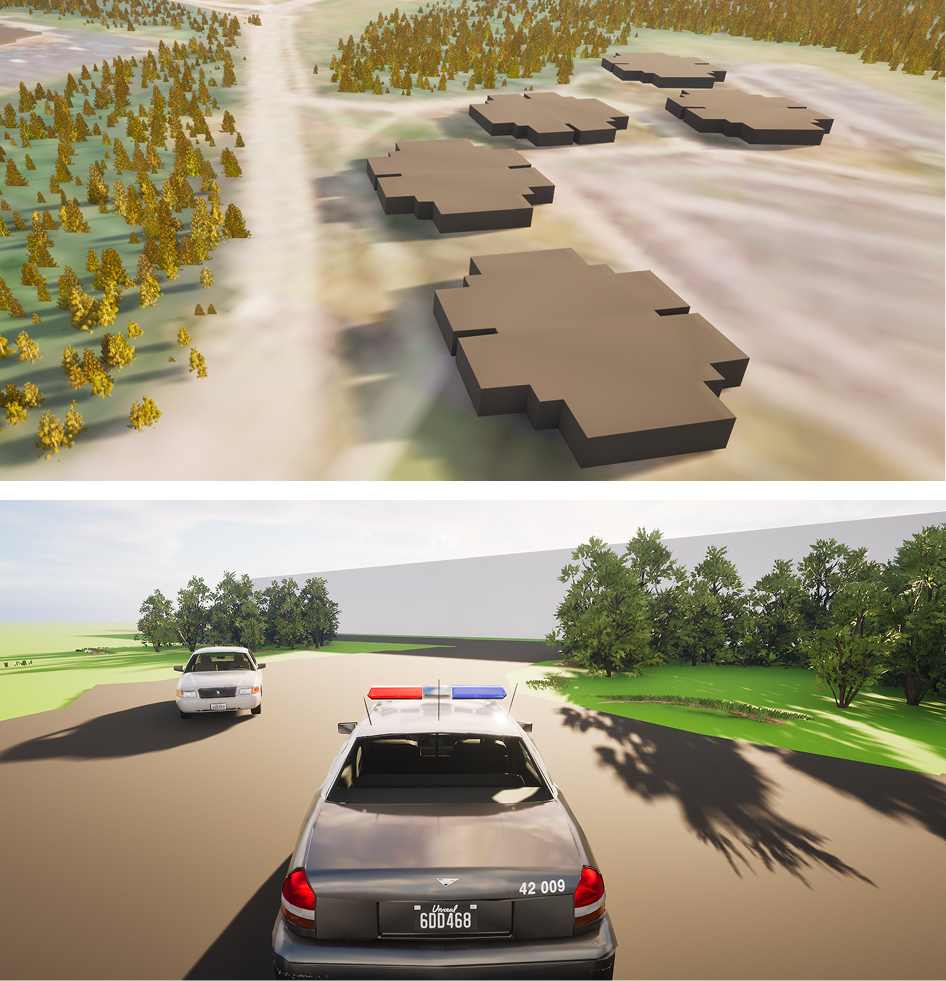
DTs can bridge the gap between the digital and physical worlds by leveraging large datasets and methods akin to AI’s data modeling and acquisition to improve and update realistic models and representations of the world, scaling far beyond their physical counterparts. DTs can produce high-fidelity, interactive visual twins of the physical world, digitally showcasing the natural world as accurate, dynamic, and responsive. This convergence presents new possibilities for urban planning, supply chain management, critical infrastructure, cybersecurity, and public safety, particularly in connection with Smart Cities, Smart Transportation, Industry 4.0, AI, and other emerging technologies. We envision DTs as providing more nuanced and realistic ways to evaluate potential policies not currently used by governments.
Several RIT faculty members from multiple disciplines have engaged in DT research, mainly related to connected and autonomous vehicles, visualizations, geospatial data, 3-D environments, space exploration, cyber-physical systems, photographic arts and sciences, exercise and health, performing arts (e.g., virtual beings/avatars), immersive interfaces and complex systems modeling (e.g., DIRSIG). We highlight semiconductor manufacturing as an exceptional growth area. For example, a DT of the CEMA lab’s electronics manufacturing can share data between actual manufacturing and training environments.