
Health Informatics

Overview
The Credit-bearing micro-credential in Health Informatics at RIT Dubai is a 12-credit program tailored for professionals aiming to bridge the gap between healthcare and information technology. This interdisciplinary program prepares students to analyze, manage, and implement healthcare information systems, with a focus on digital transformation, data analytics, clinical systems, and regulatory frameworks. Designed for working professionals, the program emphasizes real-world applications, regional healthcare needs, and emerging technologies and interoperability in healthcare systems.
Pathway to MS Degree
The course work in Credit-bearing micro-credential in Health Informatics can be applied toward the MS in human-computer interaction or the MS in information technology and analytics. For more information, please contact an academic advisor or an admissions counselor.
in collaboration with the
Mohammed Bin Rashid University of Medicine and Health Sciences (MBRU)
Typical Job Titles
| Health Informatics Specialist | Clinical Systems Analyst |
| Digital Health Consultant | EHR Implementation Specialist |
| Healthcare Data Analyst | Information Governance Officer |
| Health IT Project Coordinator |

Program Goals
The Health informatics program is designed to equip learners with the essential knowledge and practical skills needed to begin a meaningful career in the field of health informatics. In line with RIT Dubai's commitment to academic excellence and global reach, the program is built around the following core goals:
- Build Foundational Competence in Health Informatics
Introduces learners to key principles, tools, and systems in health informatics, laying the groundwork for continued growth as knowledgeable and capable professionals. - Deliver High-Quality, Rigorously Taught Curriculum
Maintains the same academic standards and learning outcomes as on-campus programs at RIT Dubai, with instruction led by experienced faculty that bring real-world insight to every course. - Extend Accessible, Hands-On Learning to a Global Audience
Offers a practical, application-focused learning experience that enables students from diverse backgrounds and locations to contribrute value to healthcare organizations from the outset.
Admission Criteria
Enrollment in this Credit-Bearing Micro-Credential program is open to all prospective students. This program is specifically tailored for individuals seeking to obtain comprehensive and rigorous education in the field of health informatics while maintaining their current employment, all while ensuring the highest level of quality. The required documents for the admission for the Credit-Bearing Micro-Credential in Health Informatics program are the following:
- Passport Copy
- Emirates ID (only for UAE residents)
- Bachelor’s degree (Diploma & Transcript)
- English Languages test (IELTS=6.0 Overall score or TOEFL IBT 79 or TOEFL PBT 550)
- One letter of recommendation
- CV
GPA Requirements
Cumulative GPA (CGPA) of 3.0 (on a 4.0 scale or its established equivalent) in the applicant’s BS degree program. In addition, the Credit-Bearing Micro-Credential program may consider conditional admission (see sections below on Conditional Admission and Mature Entry Admissions).
English Proficiency Requirements
Students must achieve the minimum scores in standardized English exams. A minimum IELTS academic score of 6.0 or the equivalent of another standardized test is required of all students admitted to the Credit-Bearing Micro-Credential program. The program may consider on a case-by-case-based conditional admission (see section below on Conditional Admission). Students who have completed their undergraduate education in an English-medium institution might be allowed admission into a graduate program at RIT Dubai without providing an IELTS academic score of 6.0 or equivalent. This exemption applies only to the students who have completed their schooling (K-12) and bachelor degree in English medium in a reference English-speaking country such as UK, USA, Australia or New Zealand.
Conditional Admission
A student with a CGPA of 2.5 or higher and/or an IELTS academic score of 5.5 or equivalent (using a standardized test approved by Ministry of Education) may be conditionally admitted to a Credit-Bearing Micro-Credential program.
Conditional admission based on English requirement
- May take a maximum of six credit hours in the first semester of study, not including intensive English courses.
- The student must achieve a B cumulative average grade in the first 6 credits.
- The student achieves an IELTS score of 6.0 or equivalent by the end of the student’s first semester of study.
- If either (B.) or (C.) are not met, the student will not be allowed to continue in the program.
Conditional admission based on cumulative average score
- The student must achieve a B cumulative average grade in the first 9 credits.
- May take a maximum of 9 credit hours in the first semester of study.
- If either provision is not met, the student must be dismissed.
Mature Entry Admissions
RIT Dubai may in some programs conditionally admit mature students who do not meet the minimum conditional admission CGPA requirement of 2.5 (but do have an above 2.0 CGPA) provided he/she passes the admission committee interview and the standard English test requirements. Related work experience can support a student's application. These students must also be aware that extra remedial courses may be required if they eventually intend to stack their Credit-Bearing Micro-Credential towards the full Master’s program.
Program Learning Outcomes
By the time students complete the Health Informatics program, they will have acquired essential skills, knowledge, and professional behaviors necessary for success in the field. These outcomes guide their development throughout the program, ensuring a strong foundation in health informatics. Each course is designed to support and align with these overarching learning objectives.
- Evaluate the role of information technology in the practice of medicine.
- Analyze typical clinical information systems and how they interact.
- Interpret healthcare data by applying data analytics and visualization techniques.


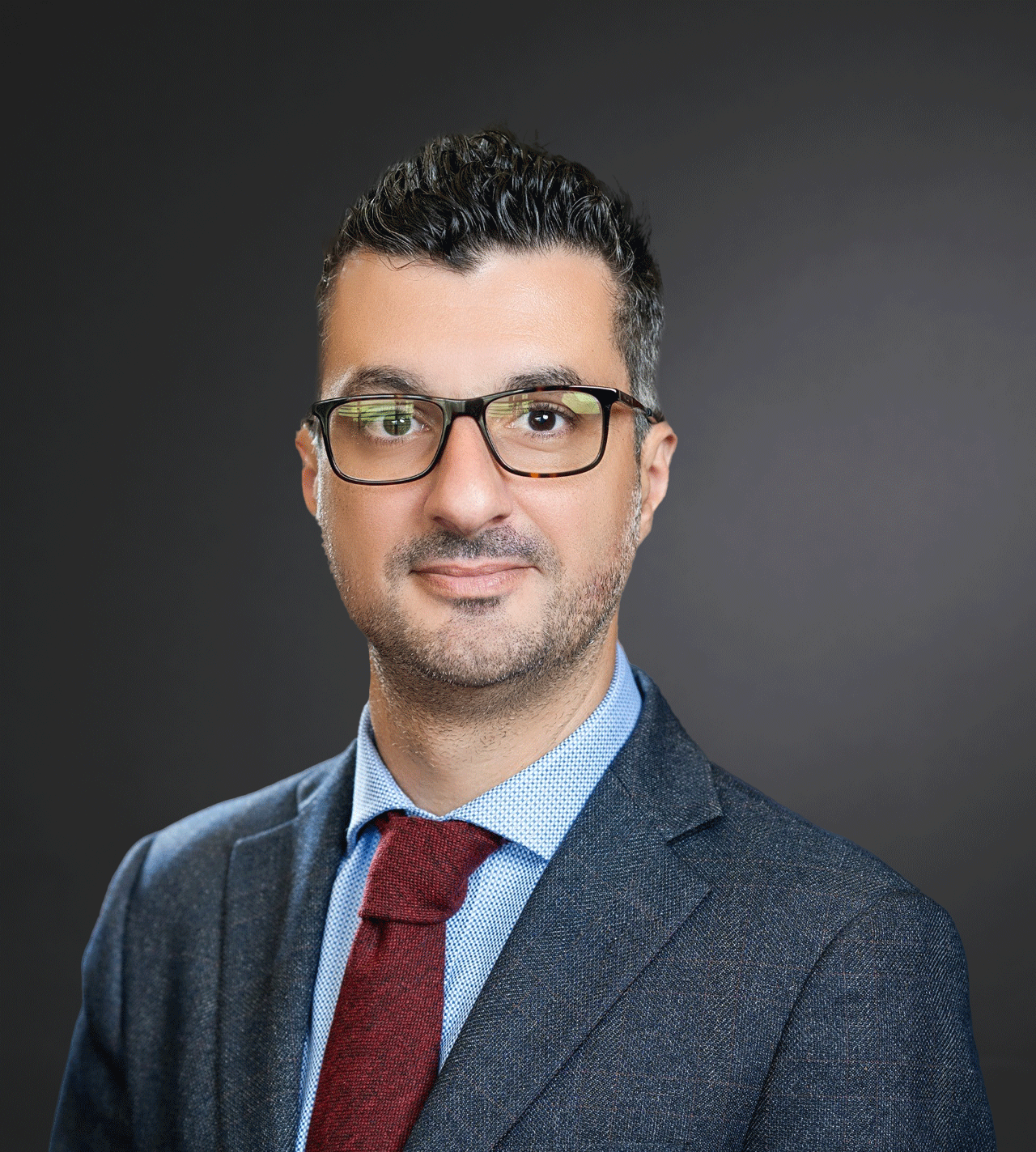

Advisory Board
|
Dr. Dima Abdelmannan |
Dr. Muhaned Attaullah |
|
Dr. Mohamed Al Shanti |
Dr. Badr Qahtany |
|
Dr. Hammou Messatfa |
|