
Adaptive Grasping of Unknown Objects
A deep learning and regrasping–based approach enhances robotic grasping and manipulation in cluttered, real-world environments
Team Members:
- Haitham Yaghi
- Nour Eddin Alkateeb
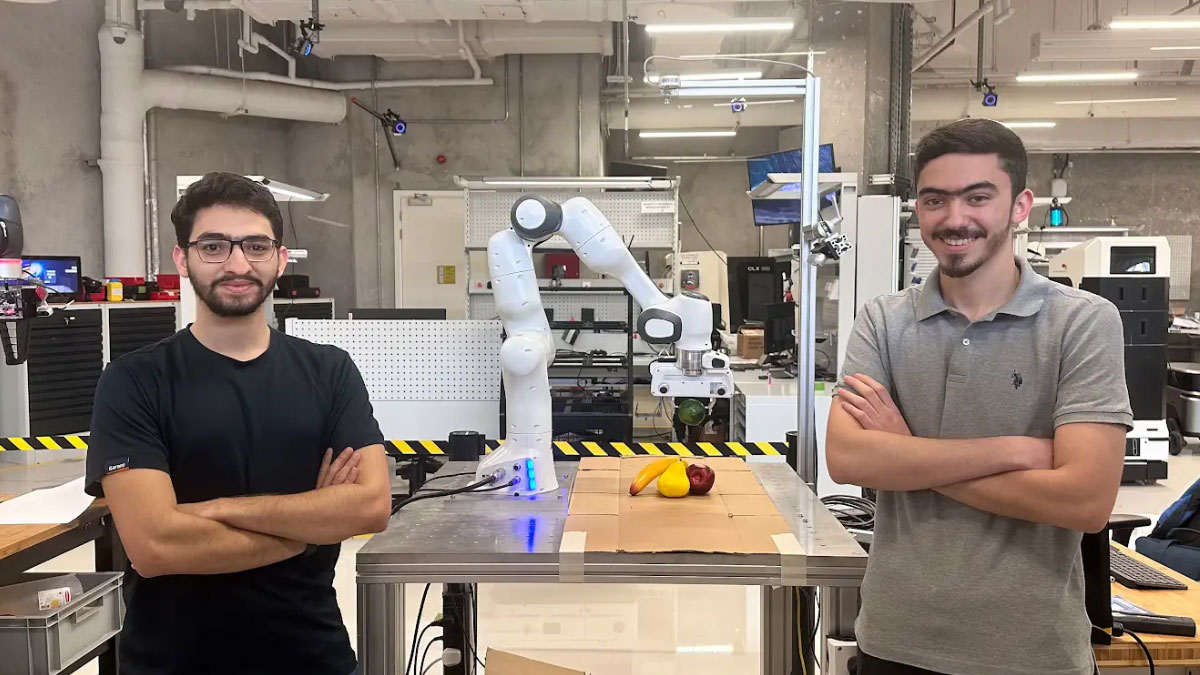
Robotic grasping and manipulation in cluttered environments are critical for automation in applications like warehouses and manufacturing but remain challenging due to object variability, occlusions, and dynamic interactions. Deep learning offers robust grasp detection by learning from visual data such as RGB, depth, and point clouds, enabling the identification of grasp point seven in complex scenes.
However, these models often lack adaptability in dynamic environments. Regrasping techniques complements deep learning by separating objects in clutter to optimize the deep learning detection and enable dealing with high clutter levels. This capstone project aims to combine deep learning and regrasping techniques to develop a robust grasping system for unknown uniform objects in clutter using a Panda robot with an eye-to-hand camera. By integrating precise grasp detection with adaptive execution strategies, the project seeks to enhance robotic manipulation capabilities in real-world unstructured settings.