Home Page

Meet Us on Campus
Learn about academics, co-op and internships, financial aid, and more.


Meet the Dean

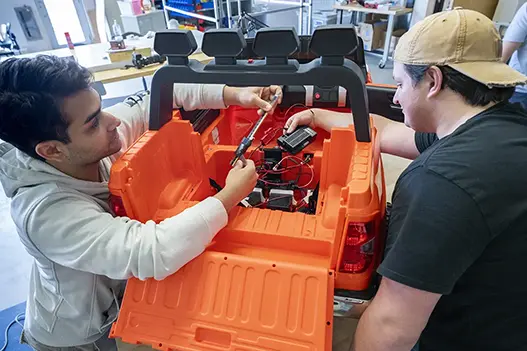
Engineers are creative problem solvers who can have a profound impact on the world. In addition to providing an outstanding technical foundation, the Kate Gleason College of Engineering encourages students to understand the many ways in which their work affects society. Because we believe that students learn by doing, we provide them an abundance of opportunities to design, build, and innovate both inside and outside the classroom.
Faces of RIT
-

Stepping Up
Ashley KosakMechanical EngineeringIt might be just a stool, but it represents more than reaching equipment in the Machine Shop. It’s a symbol of the heightened awareness and inclusivity of women in engineering at RIT. After graduation, Kosak wants to influence change by helping women pursue careers in engineering.
-

The AI Gateway
Humza SyedComputer EngineeringSyed is pushing the world forward by developing algorithms that apply artificial intelligence to make everyday tasks easy and more efficient.
-
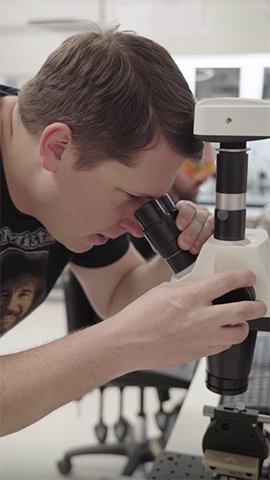
Take the Leap
Michael Oshetski '03CEO, Micatu Inc.Focused on making the utility grid more efficient and sustainable, Oshetski, an RIT alum, has a passion for entrepreneurship. Turning a start-up into reality led him to sharing a key piece of advice: Just go for it.
-
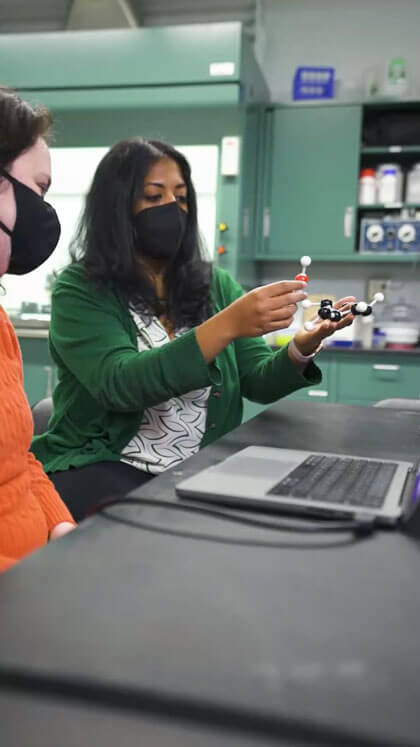
Engineering Better Solutions
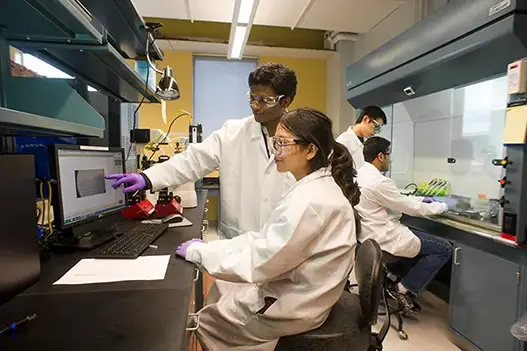
Poornima PadmanabhanAssistant ProfessorProfessor Padmanabhan’s students engage in hands-on research experiences that help build a better future through the creation of advanced complex materials that can solve problems in solar energy, health care, agriculture, and more.
Latest News
-
September 3, 2026

RIT’s Destler/Johnson Rochester City Scholars program helps students achieve college goals
For over 15 years, the Rochester City Scholars program has helped Rochester students turn college aspirations into successful careers, with alumni becoming doctors, designers, executives, sonographers, artists, teachers, and more.
-
August 28, 2026

Bioprinting and smart sensors converge in new RIT prosthetic prototype
3D Printing Industry reports on RIT research combining bioprinting, hybrid materials, smart sensors, and mechanical design to create more customizable finger and hand prosthetics. The collaboration among researchers at RIT’s Rochester and Dubai campuses could lead to more affordable devices with improved movement and a functional sense of touch.
-
August 28, 2026
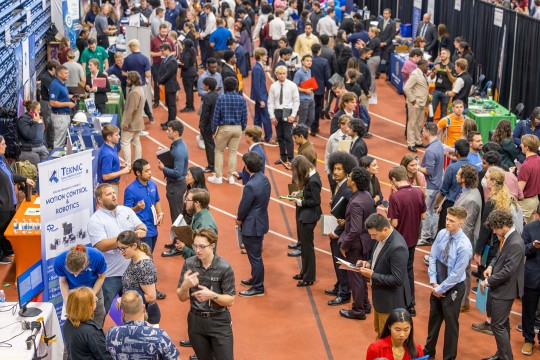
The Princeton Review cites RIT as a top university for career outcomes
RIT once again made The Princeton Review Best Colleges list and was ranked among the top 50 schools for “Colleges that Create Futures” in its Best 392 Colleges 2027 edition.
-
August 20, 2026

RIT Researchers Aim to Improve Prosthetic Devices with Bioprinting Breakthroughs and More
O&P Almanac highlights RIT research advancing 3D-bioprinted finger prostheses that combine flexible, biocompatible materials, smart sensors, and mechanical properties designed to enable more natural movement and a sense of touch.
