Tiger Heritage Alumni Spotlight
Jewish Heritage Month, 2025
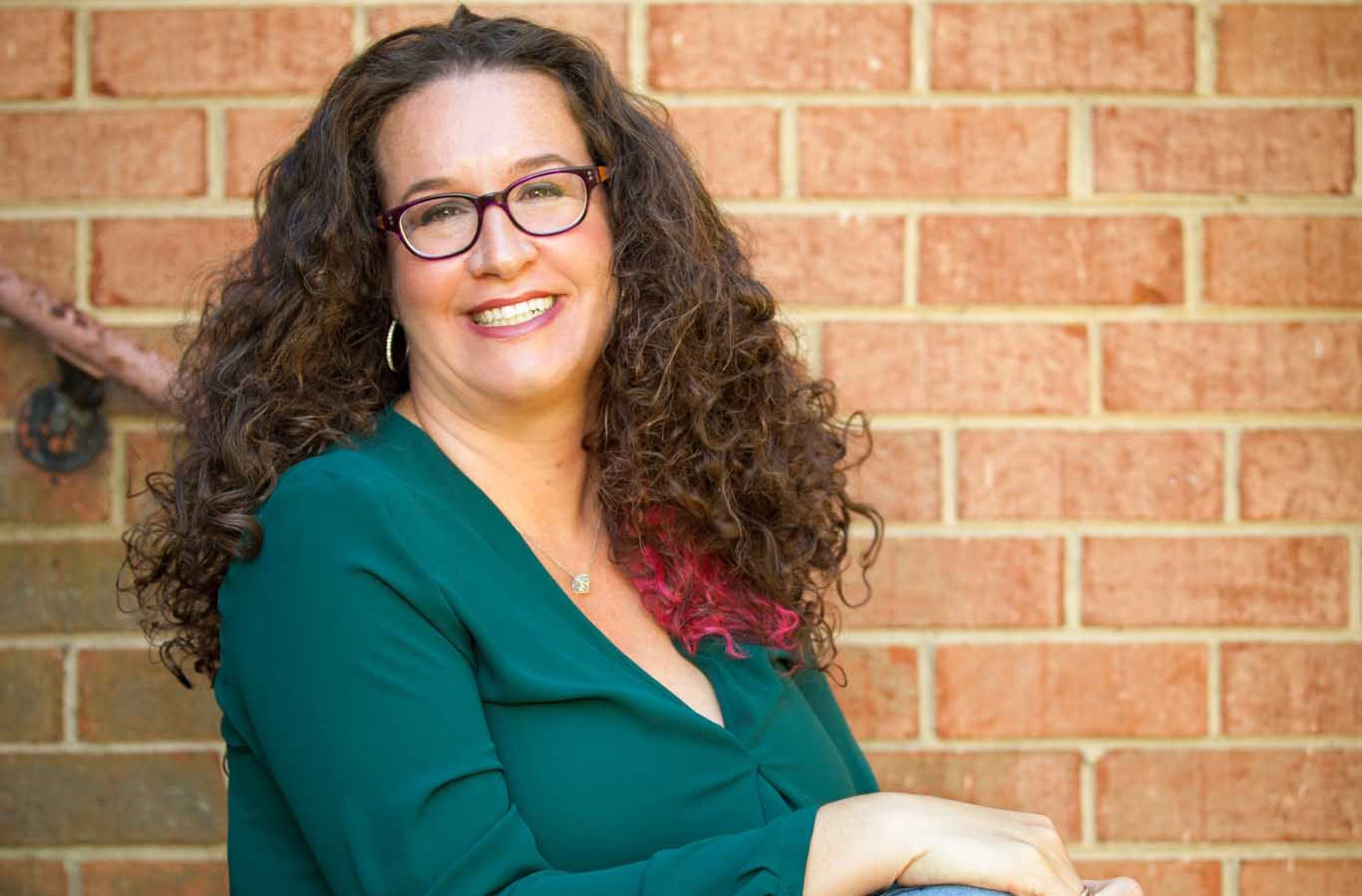
Dana Marlowe
AAS '96 BS '98
Dana Marlowe can turn a moment into a movement. What began with her spontaneous question of “What can I do with my old bras?” led to the creation of I Support the Girls, a non-profit organization that provides a source of dignity, self-esteem, empowerment, and support to marginalized women via the donation of bras and menstrual hygiene products.
As a human rights advocate in the intersections of feminism, menstrual equality, health, and dignity, Dana works tirelessly to better the lives of the most invisible populations. These women and girls are often overlooked by mainstream society. Dana can’t fix the larger societal issues that create insecurity, like homelessness and living paycheck-to-paycheck, but she can combat feelings of worthlessness by encouraging an accommodated period and properly fitting bra.
In her tenure as the Executive Director and Founder at I Support the Girls, Dana has worked behind the scenes and beyond borders, not only facilitating donations, but also visiting countless shelters to connect with women experiencing homelessness, hearing their stories and using these experiences to become a stronger advocate.
I Support the Girls is Dana’s passion project. She is also the founder and principal partner of Accessibility Partners, an IT company making technology accessible for people with disabilities. Dana promotes equal access to technology and full inclusion of people with disabilities in technology usage. When she is not sorting bras or striving for inclusivity, she can be found at playgrounds with her sons, walking her new puppy, or attending early morning dance raves.
Why did you choose to attend RIT?
Dana Marlowe of the 90s (and obviously still today) shoots for the stars. RIT has a premiere American Sign Language (ASL) interpreting track. At that time, there were few programs where a student could achieve an interpreting degree alongside a bachelor’s degree. When I visited RIT, I was starstruck by the breadth of courses within my field of study, but also the ability to explore classes outside of the set curriculum. I will always be grateful for not just the structure of the program, but also the flexibility that enabled me to become more curious about the world at large.
What about college were you least prepared for?
I am the type of person who likes to stay organized and control as many variables as I can. Not that I think I’m all-powerful enough to control the weather, but I was least prepared for the extended winters and gray skies. I may provoke people by saying I grew up in downstate New York in Rockland County (that doesn’t count as upstate New York!) so I experienced all four seasons. I love spring and summer especially. Snow and cold temperatures spanning from October through May some years were tough to swallow.
Who influenced you most during your time at RIT?
During my first quarter of the Professional and Technical Communications program, I was fortunate to take a class by the esteemed Dr. Diane Hope. “Toxic Sludge is Good For You” was on the syllabus for her social movements class. First of all—that title! Dr. Hope used the material to expand and challenge how we thought about communications. I don’t know if social justice pioneer was part of our lexicon then, but Dr. Hope certainly was the epitome of one. She was an inspiration to many, a human with powerful insight. I was fortunate to have as a professor for multiple college classes during my time at RIT. As a special dimension, Dr. Hope was one of my thesis advisors.
What were your favorite classes and why?
“Visual Communications” stretched my creativity in a few different ways. Diane Hope also taught this class as well and was a shaker of the status quo. She pushed all her students to think outside the box and then take our knowledge further. We were challenged to sit on the box, stand on it, smash it, and then recycle it while creating a new mechanism.
For example, I created a large dollhouse with all the traditional gender roles of the toys reversed. Think of GI Joe frying eggs in the kitchen and Barbie with her toolbelt repairing the roof. After watching the recent Barbie movie, I got a chuckle from the recollection. This class was provocative—perfect for enhancing my budding sense of activism.
On the other hand, no pun intended, I also loved my sign language interpreting COOP experiences and classes. It was such a privilege to get real-world experience as an interpreter in the community. I was able to learn from my fellow students during their COOP time, all which enabled me to improve my ASL interpretation skills.
What is something about your heritage you would like to others to know?
Like many religions and cultures, Judaism is a wide spectrum of history and observance. How one affiliates with Judaism is very personal and individual. Not one Jewish person has an identical connection to their faith and practice. Because Judaism is a religion, history, and a culture, it can be fascinating to discuss the notion of Jewish identity. There is no one way to check the box to define Jewish heritage.
Tell us about I Support the Girls and how you came up with the idea.
I started the organization by accident. An associate had casually remarked “homeless women need bras” as she assisted me in a fitting room. Some conversations just stick in your brain. This one had the tenacity of super glue. When I got home, I reached out to a local DC homeless shelter to verify. Then I inquired what else they needed that I hadn’t thought about. They mentioned menstrual products were frequently requested and rarely donated. I’ve taken for granted the ability to put on a bra that fits alongside clean underwear each day. I possess spare pads and tampons in my bathrooms and purse.
I took a moment to recalibrate and muse. Could I imagine how difficult it would be to not have these “luxuries”? Once I realized the huge impact of lack of access to bras and menstrual products has on those in need, there was no turning back.
I posted my findings on Facebook and had a call for donations. This resulted in more than 8,000 products being dropped off on my porch in 3 weeks. The supply was great and so was the demand. Instead of being overwhelmed, I saw the potential. There is so much need, and there is so much desire to help in the world. People truly want to do good and support others, but they may not know how or what to give.
I didn’t mean to start a global non-profit. Truly! In nearly 10 years since that dressing room, we have donated 39 million products to more than 5,200 social service agencies. I Support the Girls has expanded worldwide from my porch to a powerhouse of 60 incredible global affiliates.
Fun facts about yourself you’d like to share.
I enjoy early morning dance raves. They play club bangers and serve juice, and then you leave invigorated for the workday. As a seemingly useless skill except as a party trick, I can recite the alphabet backwards. I am a total bird nerd. I will squeal with glee when I see or hear a bird I haven’t encountered before. I love Crocs and Dunks and wear them proudly.
Tiger Heritage Alumni Spotlight
Jewish Heritage Month, 2025
Dana Marlowe
AAS '96 BS '98
Dana Marlowe can turn a moment into a movement. What began with her spontaneous question of “What can I do with my old bras?” led to the creation of I Support the Girls, a non-profit organization that provides a source of dignity, self-esteem, empowerment, and support to marginalized women via the donation of bras and menstrual hygiene products.
As a human rights advocate in the intersections of feminism, menstrual equality, health, and dignity, Dana works tirelessly to better the lives of the most invisible populations. These women and girls are often overlooked by mainstream society. Dana can’t fix the larger societal issues that create insecurity, like homelessness and living paycheck-to-paycheck, but she can combat feelings of worthlessness by encouraging an accommodated period and properly fitting bra.
In her tenure as the Executive Director and Founder at I Support the Girls, Dana has worked behind the scenes and beyond borders, not only facilitating donations, but also visiting countless shelters to connect with women experiencing homelessness, hearing their stories and using these experiences to become a stronger advocate.
I Support the Girls is Dana’s passion project. She is also the founder and principal partner of Accessibility Partners, an IT company making technology accessible for people with disabilities. Dana promotes equal access to technology and full inclusion of people with disabilities in technology usage. When she is not sorting bras or striving for inclusivity, she can be found at playgrounds with her sons, walking her new puppy, or attending early morning dance raves.
Why did you choose to attend RIT?
Dana Marlowe of the 90s (and obviously still today) shoots for the stars. RIT has a premiere American Sign Language (ASL) interpreting track. At that time, there were few programs where a student could achieve an interpreting degree alongside a bachelor’s degree. When I visited RIT, I was starstruck by the breadth of courses within my field of study, but also the ability to explore classes outside of the set curriculum. I will always be grateful for not just the structure of the program, but also the flexibility that enabled me to become more curious about the world at large.
What about college were you least prepared for?
I am the type of person who likes to stay organized and control as many variables as I can. Not that I think I’m all-powerful enough to control the weather, but I was least prepared for the extended winters and gray skies. I may provoke people by saying I grew up in downstate New York in Rockland County (that doesn’t count as upstate New York!) so I experienced all four seasons. I love spring and summer especially. Snow and cold temperatures spanning from October through May some years were tough to swallow.
Who influenced you most during your time at RIT?
During my first quarter of the Professional and Technical Communications program, I was fortunate to take a class by the esteemed Dr. Diane Hope. “Toxic Sludge is Good For You” was on the syllabus for her social movements class. First of all—that title! Dr. Hope used the material to expand and challenge how we thought about communications. I don’t know if social justice pioneer was part of our lexicon then, but Dr. Hope certainly was the epitome of one. She was an inspiration to many, a human with powerful insight. I was fortunate to have as a professor for multiple college classes during my time at RIT. As a special dimension, Dr. Hope was one of my thesis advisors.
What were your favorite classes and why?
“Visual Communications” stretched my creativity in a few different ways. Diane Hope also taught this class as well and was a shaker of the status quo. She pushed all her students to think outside the box and then take our knowledge further. We were challenged to sit on the box, stand on it, smash it, and then recycle it while creating a new mechanism.
For example, I created a large dollhouse with all the traditional gender roles of the toys reversed. Think of GI Joe frying eggs in the kitchen and Barbie with her toolbelt repairing the roof. After watching the recent Barbie movie, I got a chuckle from the recollection. This class was provocative—perfect for enhancing my budding sense of activism.
On the other hand, no pun intended, I also loved my sign language interpreting COOP experiences and classes. It was such a privilege to get real-world experience as an interpreter in the community. I was able to learn from my fellow students during their COOP time, all which enabled me to improve my ASL interpretation skills.
What is something about your heritage you would like to others to know?
Like many religions and cultures, Judaism is a wide spectrum of history and observance. How one affiliates with Judaism is very personal and individual. Not one Jewish person has an identical connection to their faith and practice. Because Judaism is a religion, history, and a culture, it can be fascinating to discuss the notion of Jewish identity. There is no one way to check the box to define Jewish heritage.
Tell us about I Support the Girls and how you came up with the idea.
I started the organization by accident. An associate had casually remarked “homeless women need bras” as she assisted me in a fitting room. Some conversations just stick in your brain. This one had the tenacity of super glue. When I got home, I reached out to a local DC homeless shelter to verify. Then I inquired what else they needed that I hadn’t thought about. They mentioned menstrual products were frequently requested and rarely donated. I’ve taken for granted the ability to put on a bra that fits alongside clean underwear each day. I possess spare pads and tampons in my bathrooms and purse.
I took a moment to recalibrate and muse. Could I imagine how difficult it would be to not have these “luxuries”? Once I realized the huge impact of lack of access to bras and menstrual products has on those in need, there was no turning back.
I posted my findings on Facebook and had a call for donations. This resulted in more than 8,000 products being dropped off on my porch in 3 weeks. The supply was great and so was the demand. Instead of being overwhelmed, I saw the potential. There is so much need, and there is so much desire to help in the world. People truly want to do good and support others, but they may not know how or what to give.
I didn’t mean to start a global non-profit. Truly! In nearly 10 years since that dressing room, we have donated 39 million products to more than 5,200 social service agencies. I Support the Girls has expanded worldwide from my porch to a powerhouse of 60 incredible global affiliates.
Fun facts about yourself you’d like to share.
I enjoy early morning dance raves. They play club bangers and serve juice, and then you leave invigorated for the workday. As a seemingly useless skill except as a party trick, I can recite the alphabet backwards. I am a total bird nerd. I will squeal with glee when I see or hear a bird I haven’t encountered before. I love Crocs and Dunks and wear them proudly.