Research
The electrification revolution of the 21st century has resulted in a massive global demand for critical elements to power electric motors, devices, and vehicles.
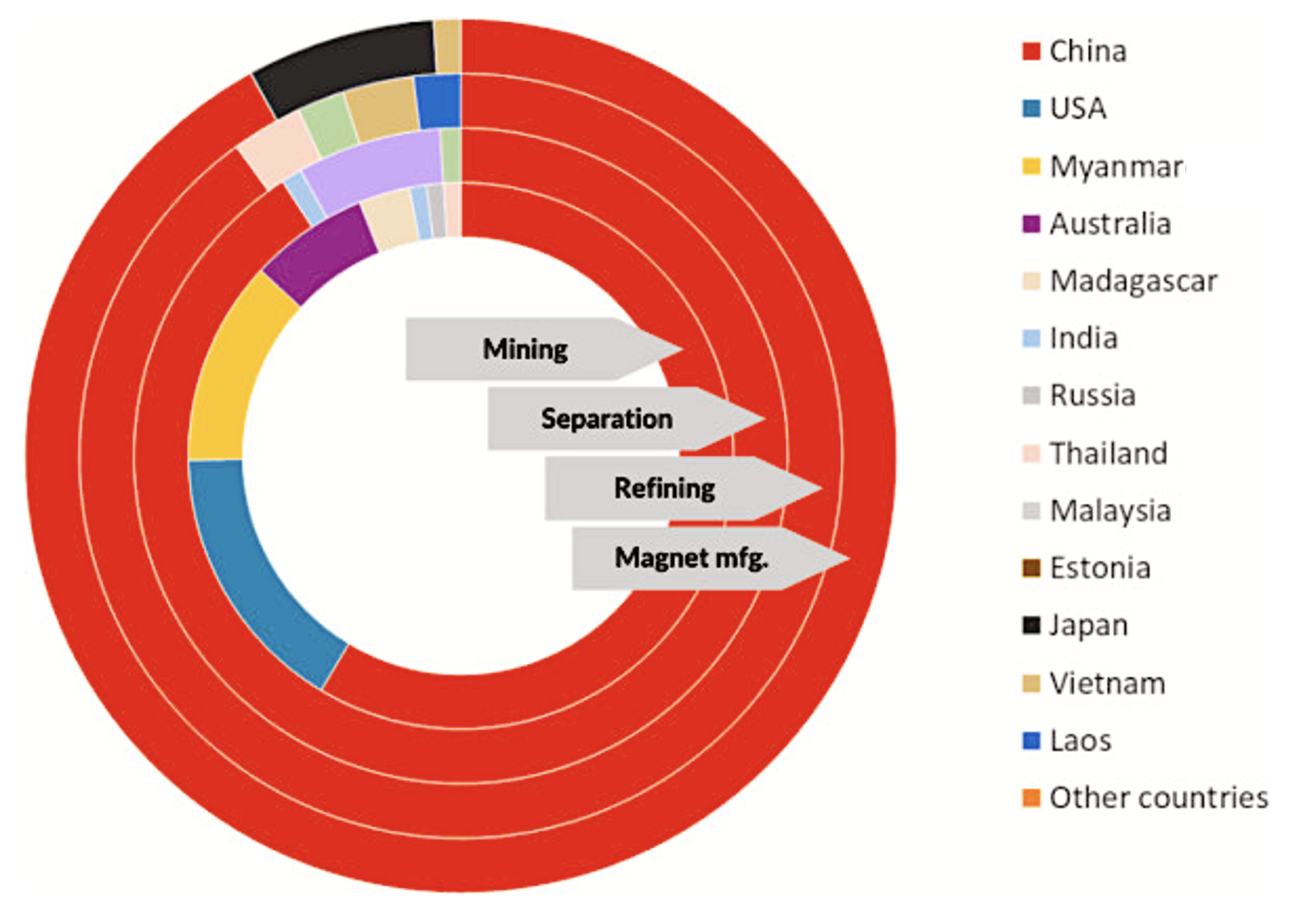
Critical Elements
Global supply chains for sintered Nd-Fe-B rare-earth permanent magnets in terms of raw material mining, ore separation, elemental refinement, and magnet manufacturing. Source: US DoE, “Supply Chain Deep Dive Assessment”, 2019. CCBY 4.0 License.
However, this scarcity has the effect of creating price volatility and international conflict in a race to electrify sectors like transportation, aerospace, and defense. To solve this, there is a demand to make new types of electric devices free of critical elements. Our lab aims to develop the materials and methods to enable such devices.
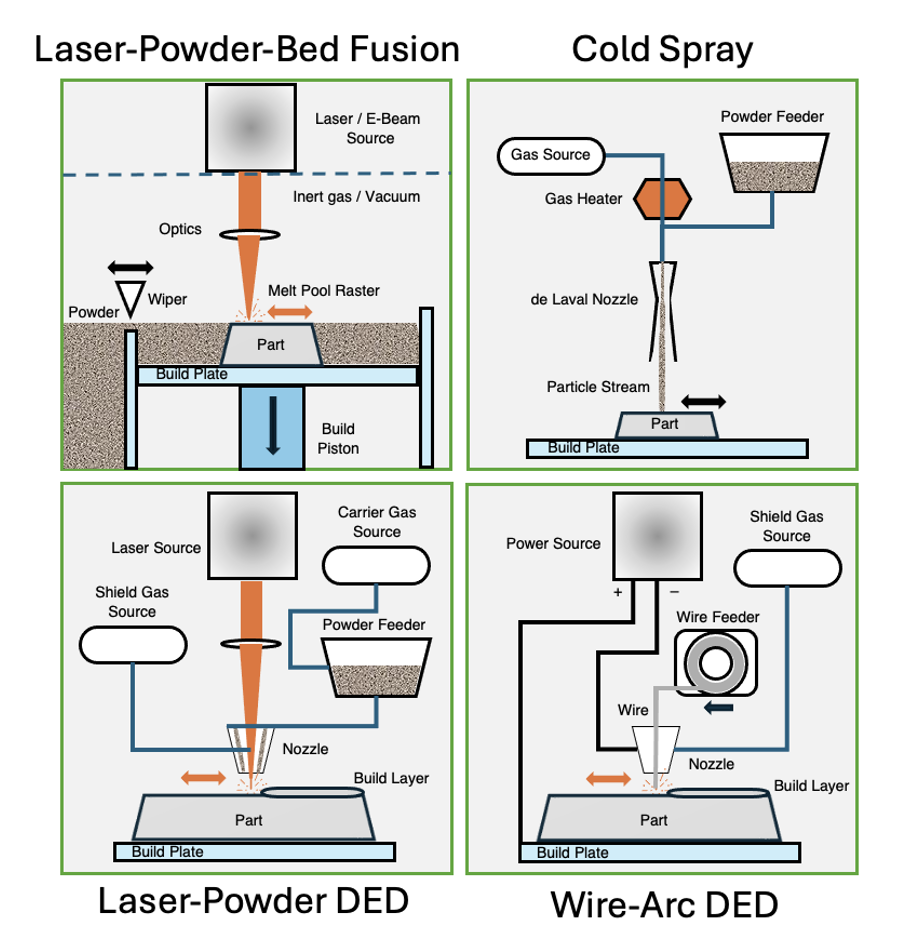
Advanced Manufacturing Overcomes Conventional Limits
One solution to the crisis of critical elements is to design new material systems that can replace critical elements while minimizing the loss in performance. This balances the tradeoff of using less expensive materials against the loss in performance. Advanced manufacturing methods allow for more precise control of material microstructure and functional properties. By tailoring the manufacturing method to the material, new materials can be commercialized with properties rivaling those of their conventional counterparts.
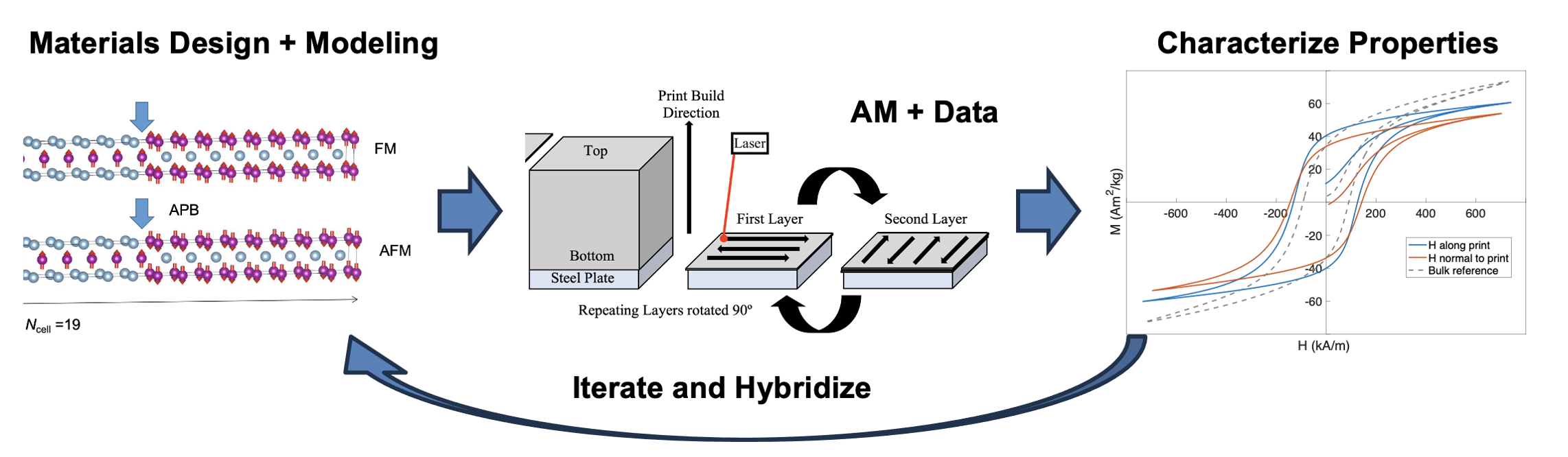
Process-Structure-Property Iterative Materials Design
At the atomic level, materials design and computational modeling allows us to rapidly screen material systems for a desired property and develop an understanding of functional defects. The processing method allows us to control the microstructure of the material, ensuring that the material properties best match theoretical levels. Careful characterization of the material properties and microstructure allow us to understand why material properties deviate from theory and develop iterative methods to improve the properties by manipulating the microstructure.
Elements of a material’s microstructure, including the crystal structure, grain size, and the presence of functional defects like vacancies and dislocations control its functional properties, allowing us to tailor its real-world properties to a specific application.