Research
Research at CAIR focuses on computing accessibility for people with disabilities.
Projects vary from understanding how blind, low vision, and deaf and hard of hearing people use software to improving caption usability. Researchers have worked with people with a range of disabilities, with collaborators at a variety of other departments and universities, and with a wide variety of technologies. Our research has won Best Paper Awards and been presented at conferences such as ASSETS, CHI, HCII, Web4All, and published in top tier journals, such as TACCESS. Our work has been supported by NSF, Meta, and Google.
Projects
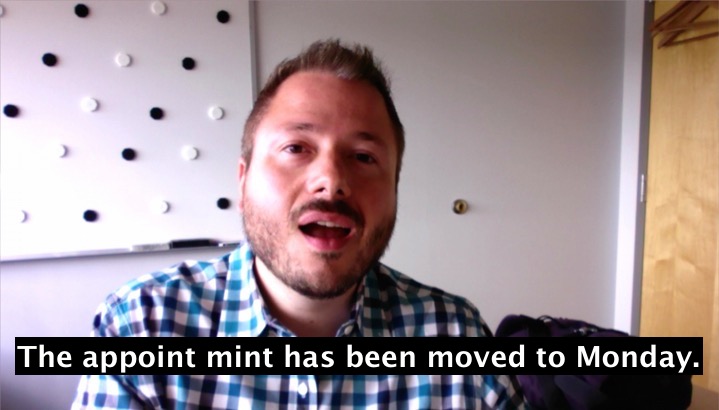
Design of Future Captioning Technology
Collaborators: Utkarsha Kshirsagar, Matt Huenerfauth, Roshan Peiris, Caluã de Lacerda Pataca (Birmingham City University)
Captioning plays an important role in making video and other media accessible for many people who are Deaf or Hard of Hearing. What are the requirements and preferences of Deaf and Hard of Hearing users for captioning technology for video programming or for captioning in meetings? We are investigating the preferences of users for captioning, including how to best convey expressive aspects visually and haptically.
Publications:
- Caluã de Lacerda Pataca, Stephanie Patterson, Roshan L Peiris, and Matt Huenerfauth. 2026. Fuzzy Feelings: Arousal’s Interpretive Noise and the Case for Acoustic-Based Haptics. In Proceedings of the 2026 CHI Conference on Human Factors in Computing Systems (CHI '26). Association for Computing Machinery, New York, NY, USA, Article 242, 1–13. https://doi.org/10.1145/3772318.3793421
- Caluã de Lacerda Pataca, Saad Hassan, Lloyd May, Michelle M Olson, Toni D'aurio, Roshan L Peiris, and Matt Huenerfauth. 2025. Tactile Emotions: Multimodal Affective Captioning with Haptics Improves Narrative Engagement for d/Deaf and Hard-of-Hearing Viewers. In Proceedings of the 2025 CHI Conference on Human Factors in Computing Systems (CHI '25). Association for Computing Machinery, New York, NY, USA, Article 68, 1–17. https://doi.org/10.1145/3706598.3713304
Project Years: 2018–current
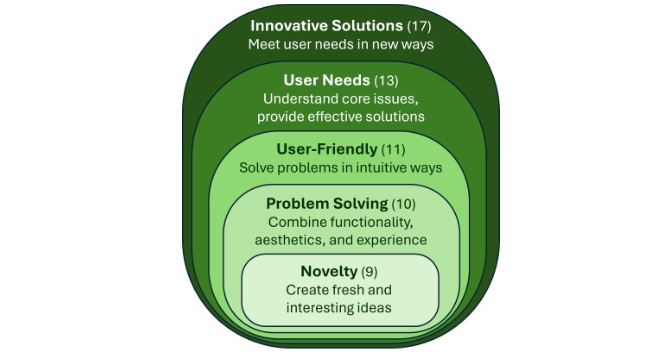
Creative Accessibility Design Tools for Mobile App Creators: Enhancing Inclusion through Innovative Design Methods
Collaborators: Dr. Garreth W. Tigwell, Dr. Anne Ross (Bucknell University), Sarah Andrew, Anisa Callis.
Funding Source(s): NSF
This project works with app designers and digital accessibility specialists to explore tools that can link accessibility and creative design, with the goal of improving both the accessibility of apps and designers' experience of designing for accessibility. We identify critical features necessary for effective Creative Accessibility Design Tools (CADTs), focusing on visual design and navigation accessibility. We use diary studies, interviews, and design workshops to understand current design practices and challenges faced by mobile app creators to guide the development of CADTs.
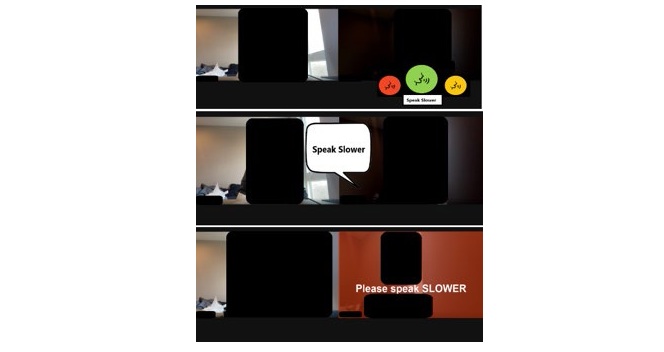
Critical Factors for Automatic Speech Recognition in Supporting Small Group Communication Between People who are Deaf or Hard of Hearing and Hearing Colleagues
Collaborators: Matt Huenerfauth, Roshan Peiris, Caluã de Lacerda Pataca, Lisa Elliot, Michael Stinson
Funding Source(s): NSF
To identify human-computer interaction design and evaluation guidelines for the use of ASR in small group communication, we investigate the use of Automatic Speech Recognition (ASR) technology for automatically providing captions for impromptu small-group interaction.
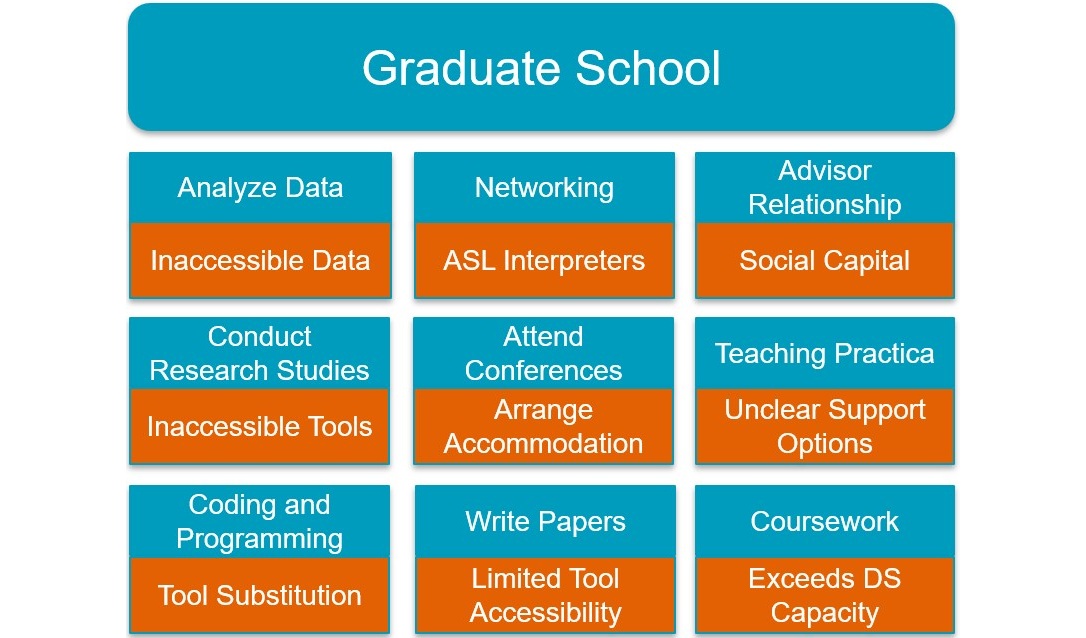
Ethical Approaches to Empower Disabled Graduated Students in STEM
Collaborators: Kristen Shinohara, Michael McQuaid (University of Texas, Austin), Murtaza Tamjeed, Nayeri Jacobo, Paul Ezeamii
Funding Source: NSF
Project Abstract: This project showed that academic culture creates gaps in access between disabled and non-disabled computing PhD students, systematically disadvantaging disabled students. We identified how ableism—the act of privileging nondisabled people over those with disabilities—manifests across academic systems and culture. We initialized guidance for future students, faculty, and disability services staff for how to support PhD computing students with disabilities.
Project Years: 2019-2025
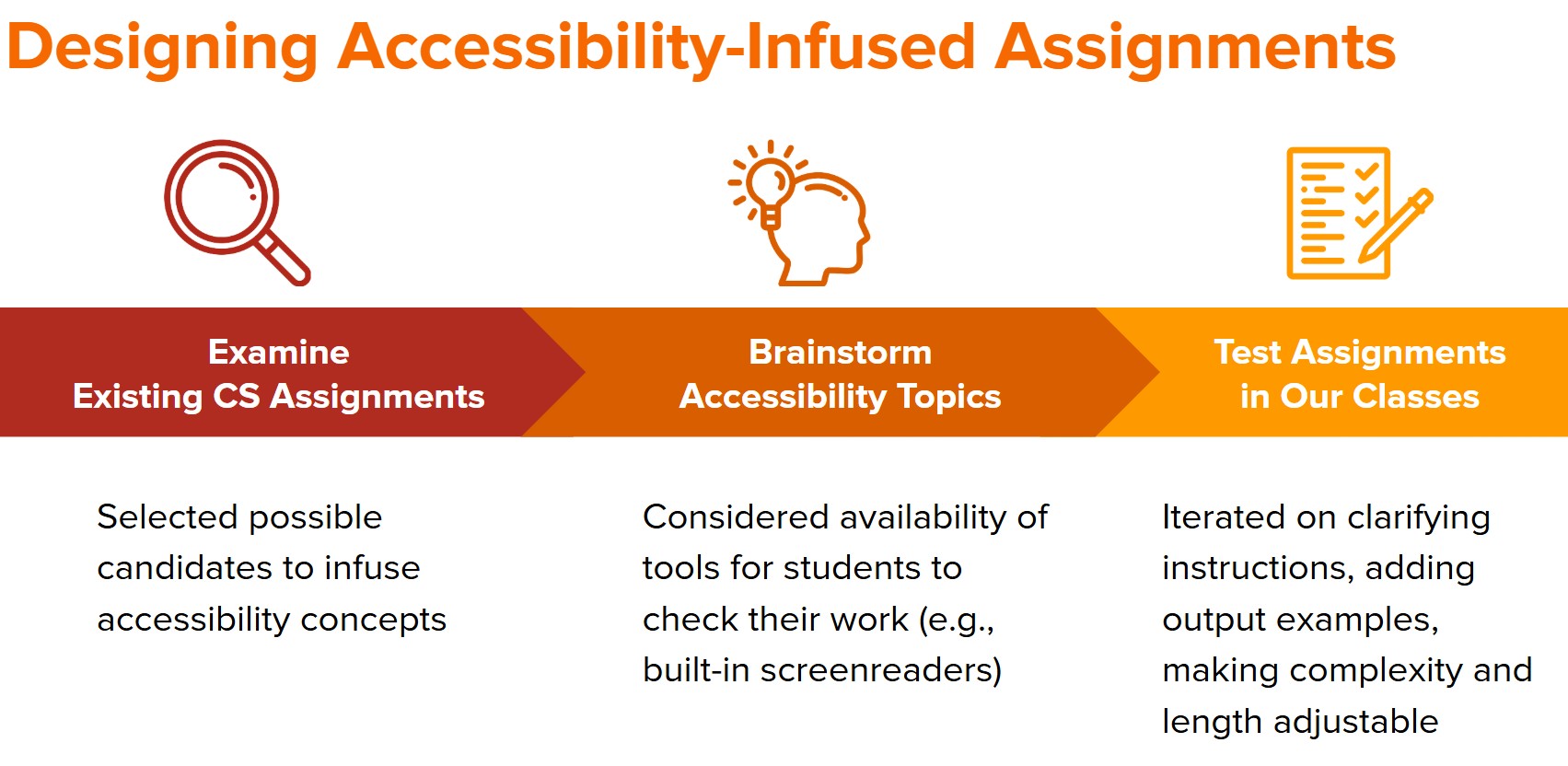
Helping Computer Science Students Learn How to Build Accessible Computing
Collaborators: Kristen Shinohara, Catherine Baker (Creighton University), Yasmine Elglaly (Western Washington University), Emily Kuang (York University), Paul Ezeamii, Sara Andrew, Liya Thomas, Kripa Kundaliya
Funding Source(s): NSF
Creating accessible technology that can be used by people with disabilities is an important skill that is often left out of computer science curriculums. In this project, we infuse accessibility in existing courses to: (1) effectively include accessibility-congruent technical skill and knowledge into computing topics; (2) facilitate accessibility know-how for faculty across a range of foundational computing topics, while (3) maintaining conceptual integrity in core topics. We have made these modules available for use by other instructors.
Generative AI as an Assistive Technology for College Students who are Neurodivergent
Collaborators: Elissa Weeden, Alex Kalomiris
Funding Source: RIT GCCIS FEAD grant
Neurodivergent students may face challenges during the writing process. This mixed methods study investigates generative Artificial Intelligence (AI) as a writing support for neurodivergent college students. The research questions include:
- RQ1: What impact does the use of generative AI have on the quality of writing by neurodivergent college students?
- RQ2: How do neurodivergent college students utilize generative AI to assist with writing tasks?
- RQ3: What are the perceptions of neurodivergent college students on the use of generative AI to assist with writing tasks?
The experimental study is a pretest-posttest control-group design with 50 neurodivergent RIT student participants randomly assigned to an experimental or control group. Participants will compose a baseline written artifact, attend an AI workshop, and compose a final artifact, with the experimental group using generative AI. Survey results, written artifacts, and Zoom recordings of writing sessions will be analyzed to address the research questions.
Generative AI to Support English as a Second Language College Students
Collaborators: Elissa Weeden, Catherine Beaton, Mamadou Bah
Funding Source: RIT AI Seed Funding
Project Abstract:
Composing written work in English can pose challenges for English as a Second Language (ESL) students. This mixed-methods investigation investigates the application of generative Artificial Intelligence (AI) as a means of support for ESL college students in their writing endeavors. This study seeks to answer the following research questions:
- RQ1: What is the impact of generative AI usage on the writing quality of ESL college students?
- RQ2: How do ESL college students employ generative AI to aid them in their writing tasks?
- RQ3: What are the perceptions of ESL college students regarding the utilization of generative AI for writing assistance?
In this experimental study, a pretest-posttest control-group design is employed, with 50 ESL students from RIT being randomly assigned to either an experimental or control group. Participants will initially produce a baseline written piece, attend an AI workshop, and then create a final written work, with the experimental group utilizing generative AI. To address these research questions, survey responses, written pieces, and recorded Zoom sessions of the writing process will be analyzed.
Generative AI as an Assistive Technology for College Students who are Deaf and Hard-of-Hearing
Collaborators: Elissa Weeden, Kathryn Schmitz, Isaac Zhang
Funding Source: RIT AI Seed Funding
Deaf and hard-of-hearing (DHH) students may face challenges during the writing process. This mixed methods study investigates generative Artificial Intelligence (AI) as a writing support for DHH college students. The research questions include:
- RQ1: What impact does the use of generative AI have on the quality of writing by DHH college students?
- RQ2: How do DHH college students utilize generative AI to assist with writing tasks?
- RQ3: What are the perceptions of DHH college students on the use of generative AI to assist with writing tasks?
The experimental study is a pretest-posttest control-group design with 50 RIT DHH student participants randomly assigned to an experimental or control group. Participants will compose a baseline written artifact, attend an AI workshop, and compose a final artifact, with the experimental group using generative AI. Survey results, written artifacts, and Zoom recordings of writing sessions will be analyzed to address the research questions.