
Automated Systems for Composting Paper Towels
Smart composting meets sustainability
Team Members:
- Basil Al Tanjy
- Jomana Eljazzazi
- Bisma Haji Muhammad
- Yazan Atout
- Mohammad Anas Neirabi
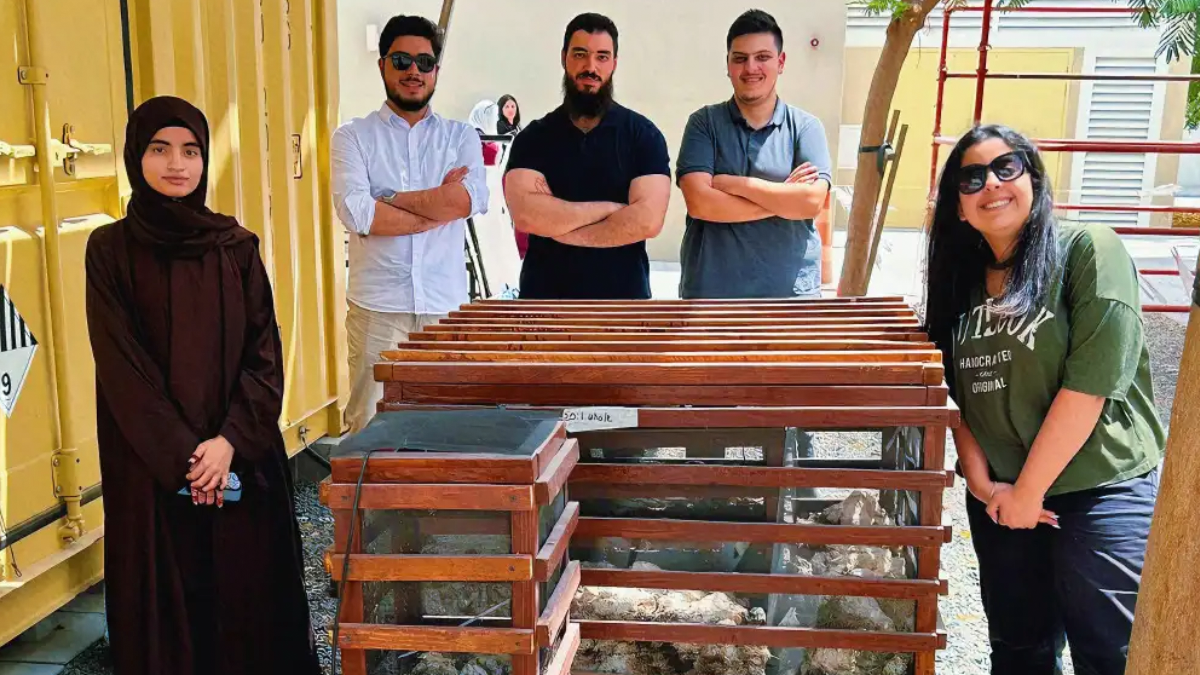
This project explores the implementation for a novel design of automated composting system at RIT Dubai as a sustainable solution to the growing waste management challenges faced by Higher Education Institutions (HEIs). Despite rising awareness of environmental concerns, many institutions continue to fall short in addressing the disposal of single-use hygiene products like paper towels.
This project aims to assess the scalability, costeffectiveness, and environmental benefits of an automated composting initiative. This initiative introduces an auto aerobic composting system enhanced by microcontrollerbased automation and sensor ration, including NPK (nitrogen, phosphorus, potassium) sensors, temperature sensors, and humidity sensors, to optimize the composting process. The system monitors key compost variables in real time, ensuring ideal conditions for microbial activity and efficient decomposition. Data from 104 UAE institutions revealed poor tracking of paper towel usage, with only three providing relevant data, highlighting a widespread lack of sustainable waste practices.
At RIT Dubai, students generate over 91% of paper towel waste annually. The study concludes that composting paper towels using such smart technology is not only feasible and cost-effective but also contributes to greenhouse gas reduction, resource recovery. This aligns with the Greening Education Partnership from the UAE Ministry of Higher Education plans to integrate sustainability into educational institutions and campuses, through sustainability-focused Greening in Schools, Curriculum, Capacities, and Communities.
To amplify its societal and institutional impact, the project recommends launching student-focused awareness campaigns, collaborating with waste management authorities, and building a shared sustainability framework among UAE universities. The inclusion of microcontroller technology allows for data collection and automation that enhances system reliability and scalability. Beyond institutional boundaries, the project contributes to broader community benefits—reducing landfill waste, improving soil quality for urban landscaping and agriculture, and promoting cleaner air.
By engaging students and faculty in a hands-on, tech-driven environmental initiative, the system also cultivates a culture of eco-conscious innovation. This project serves as a replicable model not only for HEIs but also for municipalities and organizations aiming to integrate smart composting solutions and circular waste management into everyday operations.