Home Page

DP3: Digital Print Preservation Portal
Welcome
Welcome to the Digital Print Preservation Portal. The purpose of this website is to provide you with the information, skills, and tools you need to care for your digitally printed collection assets.
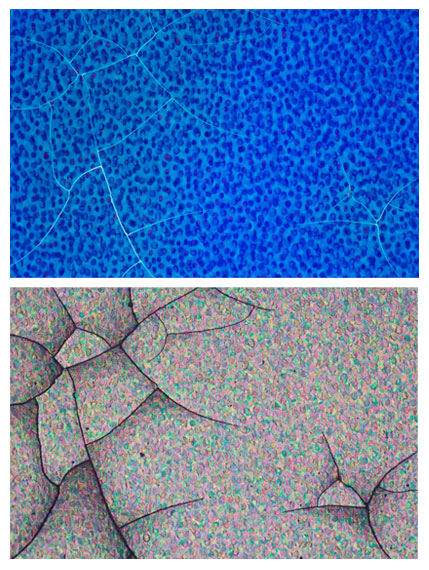
Ozone-induced cracking. The top image is a micrograph created using 45-degree illumination and the bottom image was created using axial illumination.
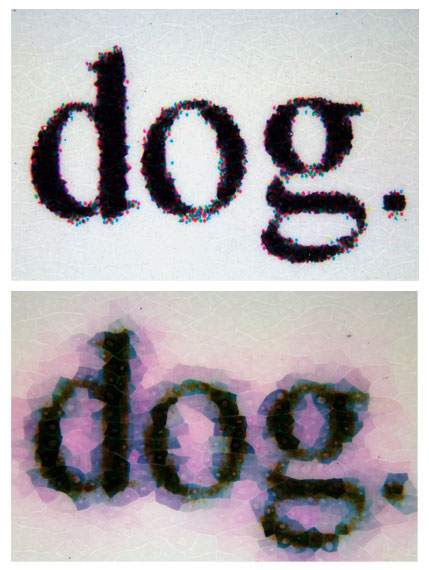
Nitrogen dioxide-induced colorant bleed (Print: inkjet dye on microporous)
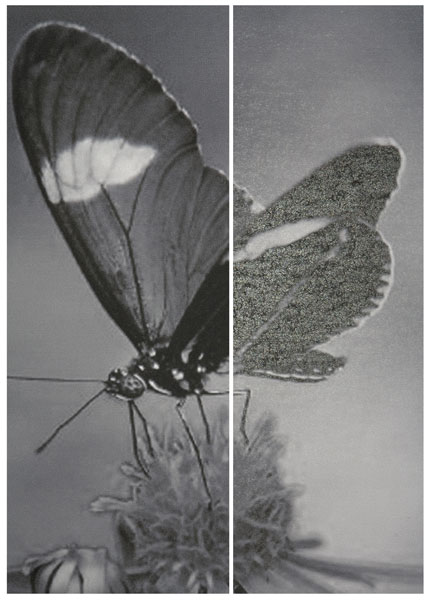
Abrasion-induced gloss change. The right side wing is abraded. (Print: inkjet pigment on fine-art paper).
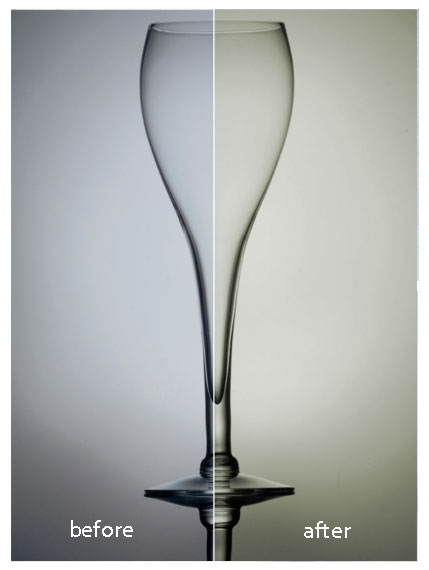
High humidity-induced colorant bleed. The original image has a neutral tone and after the high humidity exposure the image became more yellow. (Print: inkjet dye on polymer RC)
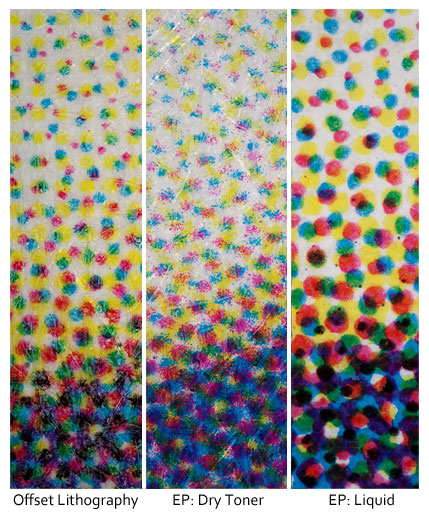
Illustrates the different dot patterns produced by traditional offset lithography, dry toner electrophotography, and liquid toner electrophotography printers.
Virtually all forms of individual scholarly communication and artistic creation of images now depend on a few technologies for creating hard copy output. Inkjet, electrophotographic (laser), and dye sublimation materials account for the overwhelming majority of desktop documents and an increasing portion of short-run publications and monographs. The lines between imaging media and document media are disappearing, as documents are becoming a seamless blend of text and image. An enormous volume of digital output media is now entering institutional collections. Professionals need guidance even to determine what portion of the collections has been digitally printed.
This site is intended to be didactic and not just a reference, and so it is designed with a curriculum-like structure. Each of the following menu headings contains what can be considered a lesson that becomes a building block for the next.
- Technologies – descriptions of the major digital printing technologies
- Identification – learn methods to identify the various digital print types to ensure accurate care for each object type
- Deterioration – descriptions of the forces of deterioration and their manifestations in digital print collections materials
- Preservation – results of IPI’s research into the stability and preservation of your digitally printed collection materials
Be sure to use the Glossary to help you understand terms that may unfamiliar. It can be found in the Resources section, which also provides links to the DP3 Newsletter archive, suggestions for additional reading, and links to IPI’s other websites.
After learning about the care of these modern materials through this website, we hope you keep coming back to get the answers you need as well as find out what new has been added. IPI’s research in this area is ongoing. While the original projects, begun in 2007, have been completed, IPI has started two new three-year studies to refine our understanding of how these materials change over time and develop the necessary strategies to mitigate their decay. We also recommend signing up for the DP3 Newsletter which will keep you up-to-date on the progress of the projects, provide interesting articles related to digital print preservation, highlight other important web-resources, and announce our upcoming talks on our research at conferences around the country.
Our Mission
The Image Permanence Institute (IPI) is a recognized world leader in the development and deployment of sustainable practices for the preservation of images and cultural property. IPI accomplishes this through a balanced program of research, education, products and services that meet the needs of individuals, companies, and institutions.
IPI is a nonprofit, university-based laboratory devoted to preservation research. It is the world’s largest independent laboratory with this specific scope. IPI was founded in 1985 through the combined efforts and sponsorship of the Rochester Institute of Technology and the Society for Imaging Science and Technology. Funding for IPI's preservation research and outreach efforts has come primarily from the National Endowment for the Humanities, the Institute of Museum and Library Services, and the Andrew W. Mellon Foundation. IPI provides information, consulting services, practical tools and preservation technology to libraries, archives, and museums worldwide. The imaging and consumer preservation industries also use IPI’s consulting, testing and educational services.