Illustrated Glossary: Anti-block Backing
Polymer-coated inkjet printing papers have a soft, moisture-sensitive layer on the printing surface to receive the ink. Unfortunately, under adverse conditions such as heat, high relative humidity, and pressure, this layer can deform and bond to adjacent materials. For manufacturers, this was of great concern for stacks of the papers in packaging or loaded in printers. In order to prevent this sheet-to-sheet sticking from occurring, the manufacturers added a slight texture to the back of the prints so that the sheets underneath would not stick to the sheets on top. Some of these anti-blocking coatings can be quite pronounced to the touch, while others are subtle and difficult to detect. The best way to develop this tactile sense is by first touching the back of prints that do not have this layer such as porous-coated RC inkjet paper, dye sublimation paper, or even traditional chromogenic photo paper, then by experimenting with known polymer-coated papers to learn just how different they can feel.
Below are several examples of anti-block backings along with a paper that does not have the treatment for comparison. Note that all of these images were taken with raking light to make the texture stand out. The rough surface in anti-block example 1 is quite apparent. The textured surface in anti-block example 2 is much less obvious.
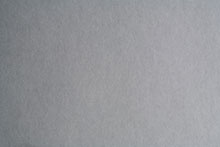
No anti-block layer
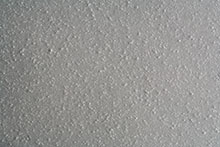
Anti-block Example 1
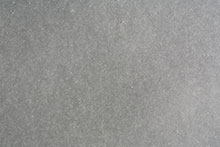
Anti-block Example 2