7,875,257
Dispersion and Separation of Nanostructured Carbon in Organic Solvents
Patent Number
Issue Date
Inventor(s)
Ryne Raffaelle; Herb Ruf; Chris M. Evans; Brian Landi
Document
Download PDF for patent 7,875,257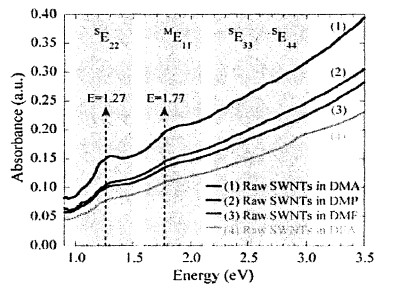
Synopsis
Patent 7,875,257 describes innovative methods for the dispersion and separation of nanostructured carbon materials, specifically emphasizing carbon nanotubes, in organic solvents. This invention addresses a critical challenge in nanotechnology: the effective and scalable dispersion of carbon nanotubes into individual or small, uniform bundles, which is essential for unlocking their remarkable electrical, mechanical, and thermal properties for practical applications.
A core novel aspect of this invention lies in its strategic use of specific amide-based organic solvents in combination with physical separation techniques. The method involves mixing nanostructured carbon, such as single-walled carbon nanotubes (SWNTs), with one or more amides, including N,N-dimethylformamide (DMF), N-methyl-2-pyrrolidone (NMP), N,N-dimethylacetamide (DMAc), formamide, or acetamide. This mixture is then subjected to one or more processes, including sonication, centrifugation, and ultracentrifugation. This synergistic approach effectively overcomes the strong van der Waals forces that typically cause carbon nanotubes to aggregate. The result is a highly stable and concentrated dispersion of individual carbon nanotubes or very small bundles, enabling high purity and even allowing for separation based on diameter and chirality, which is a significant advancement for tailored applications. This refined dispersion capability is crucial for achieving consistent and superior performance in devices and materials utilizing these nanomaterials.
The commercial potential for this nanostructured carbon dispersion and separation technology is substantial, promising to accelerate the development and commercialization of next-generation products across numerous high-growth sectors. Possible applications include:
-
Advanced Materials and Composites: This technology is invaluable for creating high-performance composites, polymers, and coatings. By enabling uniform dispersion of carbon nanotubes, it allows for the development of materials with significantly enhanced strength, stiffness, electrical conductivity, and thermal properties for applications ranging from lightweight aerospace components to durable consumer goods.
-
Electronics and Optoelectronics: It provides the foundation for fabricating next-generation electronic and optoelectronic devices. This includes transparent conductive films for advanced displays, touchscreens, and solar cells, as well as high-frequency transistors, flexible electronics, and highly sensitive sensors that depend on the precise arrangement and isolated nature of individual carbon nanotubes for optimal performance.
-
Energy Storage Devices: The invention improves the performance of advanced energy storage solutions such as lithium-ion batteries, supercapacitors, and fuel cells. Highly dispersed carbon nanotubes can act as superior electrode materials or conductive additives, leading to devices with higher energy density, faster charging capabilities, and extended cycle life, benefiting electric vehicles and portable electronics.
-
Biomedical and Pharmaceutical Applications: For developing sophisticated drug delivery systems, highly sensitive biosensors for diagnostics, and advanced tissue engineering scaffolds. The precise control over nanotube dispersion and functionalization is critical for ensuring biocompatibility and targeted functionality in these sensitive applications.
-
Filtration and Purification Systems: This technology enables the creation of highly efficient membranes for advanced water purification, air filtration, and chemical separation processes, leveraging the unique porous structure and surface chemistry of well-dispersed carbon nanotubes to remove contaminants more effectively.
-
Thermal Management Solutions: By facilitating the uniform incorporation of highly conductive carbon nanotubes, the invention supports the development of advanced thermal interface materials and heat sinks. This is critical for more efficient heat dissipation in high-performance electronic devices, data centers, and industrial systems, preventing overheating and improving reliability.
This patent presents a foundational solution for overcoming a long-standing challenge in nanotechnology, offering a compelling opportunity for licensees to integrate high-quality nanostructured carbon into a diverse range of innovative and high-value products.