8,675,269
Optical Lift Apparatuses and Methods Thereof
Synopsis
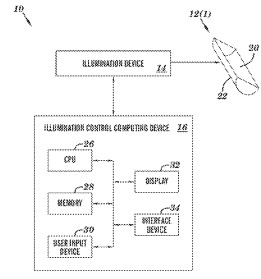
Patent US 8,675,269 B2 describes optical lift apparatuses and methods thereof. This invention presents a non-contact optical force technology for positioning and transporting objects, distinguishing itself from traditional optical tweezers by not requiring a highly focused beam or a strong intensity gradient.
A key novel aspect of this invention lies in the design of cambered refractive objects, such as semicircular rods, which possess at least two different surface profiles. These objects are configured to rotate into a position of stable rotational equilibrium and generate a lift force in a direction non-parallel to the incoming illumination. This stable lift is achieved with uniform or weakly focused light. The technology's ability to create optical lift without relying on strong field gradients, which are typically found in optical tweezers, allows for operation over larger areas and depths, and with potentially less expensive components. Notably, the stable lift force can exceed the scattering force by more than 70% in some cases.
The commercial potential for this optical lift technology is substantial across various sectors:
-
Micromachines and Micro-robotics: The ability to position and transport microscopic particles and power micromachines using non-contact optical forces opens avenues for innovative micro-robotics and precision assembly at the micro-scale. This could be crucial in fields requiring delicate handling of tiny components or operation in enclosed environments.
-
Microfluidics and Lab-on-a-Chip Systems: Transporting microscopic particles in a liquid without physical contact is highly valuable for laboratory automation, diagnostic tools, and drug delivery systems. The optical structures can even be chemically functionalized to attach other bodies like proteins or DNA strands, enabling transport of biological tissue or precise manipulation within biological systems.
-
Space Propulsion (Solar Sails): The invention explicitly discusses the application of this technology to augment the design of solar sails for interstellar space travel. By creating optical sails with arrays of these cambered refractive objects, simultaneous propulsion and steering can be achieved by controlling exposure to incident light, such as sunlight. This offers a new approach to efficient and controlled spacecraft propulsion without consuming chemical propellants.
-
Industrial Material Handling: The technology's capability to lift and transport objects with non-contact forces could find applications in various industrial settings where delicate or sterile material handling is required, or where traditional mechanical means are impractical.
This invention provides a versatile and efficient non-contact optical force solution, capable of meeting the demands of diverse applications where precise control, sterile environments, or remote manipulation are paramount. Its unique approach to generating stable optical lift positions it as a compelling alternative to current optical manipulation technologies.