8,870,770
Low-cost Device For C-scan Acoustic Wave Imaging
Patent Number
Issue Date
Inventor(s)
Navalgund A. H. K. Rao (Rochester Institute of Technology); Vikram S. Dogra (University of Rochester)
Document
Download PDF for patent 8,870,770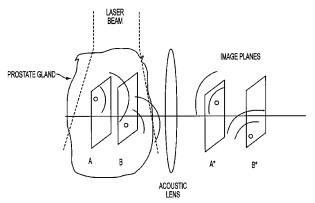
Synopsis
Patent US 8,870,770 B2 describes a low-cost device for C-scan acoustic wave imaging. This invention offers a novel and accessible approach to photoacoustic imaging, enabling the visualization of tissue structures and abnormalities, such as tumors, by detecting acoustic waves generated from light absorption. The system's design emphasizes cost-effectiveness and ease of use, making advanced diagnostic imaging more widely available.
A key novel aspect of this invention is the combination of a laser source and an acoustic sensor in a configuration that allows for C-scan imaging, which provides cross-sectional views of a sample at a specific depth. Unlike traditional imaging modalities, photoacoustic imaging offers high optical contrast at depths beyond the reach of conventional optical microscopy, while retaining the high resolution of ultrasound. This patent specifically details a system that uses a relatively low-cost laser and a single acoustic transducer, simplifying the hardware requirements and reducing the overall cost compared to more complex photoacoustic systems that might employ multiple transducers or advanced beamforming techniques. The system effectively generates acoustic waves by shining pulsed laser light onto the tissue, which then absorbs the light and expands, producing detectable ultrasonic waves. These waves are then used to reconstruct an image of the light-absorbing structures.
The commercial potential for this low-cost C-scan acoustic wave imaging device is substantial across various medical and industrial applications:
-
Early Cancer Detection: The ability to visualize tumors and other abnormalities with high contrast and resolution makes this technology highly promising for early cancer detection, particularly in tissues where conventional imaging methods may be limited, such as in breast cancer screening or prostate cancer diagnosis. Its low cost could facilitate more widespread screening programs.
-
Dermatology and Skin Imaging: For the diagnosis and monitoring of skin conditions, including melanoma and other skin cancers, this device can provide detailed images of subsurface structures without invasive procedures.
-
Vascular Imaging: The technology can be used to visualize blood vessels and monitor blood flow, which is crucial for diagnosing and managing cardiovascular diseases, peripheral artery disease, and diabetic retinopathy.
-
Pre-Clinical Research: Researchers in biology, medicine, and pharmacology can utilize this cost-effective imaging tool for studying disease progression, drug delivery, and tissue response in animal models, accelerating the development of new therapies.
-
Industrial Non-Destructive Testing: Beyond medical applications, the principles of photoacoustic imaging can be applied to non-destructive testing of materials, such as detecting defects or analyzing the composition of opaque materials in manufacturing and quality control.
-
Point-of-Care Diagnostics: The low-cost and simplified design make this system suitable for point-of-care diagnostics in clinics or remote settings where access to expensive, complex imaging equipment is limited. This could expand access to advanced diagnostic capabilities globally.
This invention provides a practical and economically viable solution for high-resolution photoacoustic imaging, opening new opportunities for early disease detection, research, and material analysis. Its focus on affordability and simplicity makes it an attractive proposition for broad adoption in various fields.