9,339,224
Event Dosimeter Devices And Methods Thereof
Patent Number
Issue Date
Inventor(s)
David A. Borkholder (RIT); Gregory T. A. Kovacs (DARPA); Jeffrey Rogers (DARPA)
Document
Download PDF for patent 9,339,224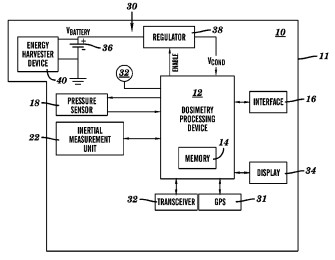
Synopsis
Patent US 9,339,224 B2 describes an event dosimeter device and methods for its use. This invention introduces a novel wearable sensor system designed to detect and quantify potentially injurious events, particularly those involving physical impacts or exposures, and assess the associated risk of injury based on individualized thresholds.
A key novel aspect of this invention is its ability to identify and characterize various types of physical events, such as impacts, and provide a real-time or near real-time assessment of injury risk. The device incorporates multiple sensors, which may include pressure sensors, inertial measurement sensors (e.g., accelerometers, gyroscopes), and potentially others, to capture comprehensive data related to an event. Unlike simple accelerometers, this system processes the raw sensor data in conjunction with individualized injury thresholds to provide a nuanced risk assessment. It can also determine the location of the event on the body and log data for post-event analysis. The capability to correlate sensor data with individualized injury risk, rather than just measuring impact force, is a significant advancement.
The commercial potential for this event dosimeter device is substantial across numerous sectors where monitoring and mitigating injury risk are paramount:
-
Sports and Athletics: This device could be invaluable for athletes in contact sports (e.g., football, hockey, rugby), extreme sports, or training. It can provide coaches and medical staff with objective data on impacts, helping to identify sub-concussive events, assess accumulated exposure, and guide return-to-play decisions, thereby reducing the risk of serious brain injury or other trauma.
-
Military and Law Enforcement: Personnel in combat, training, or high-risk operational environments are exposed to various physical stressors. This dosimeter could monitor blast exposure, impact forces, and other events, providing critical data for post-event medical evaluation and long-term health monitoring. It could also aid in developing safer equipment and protocols.
-
Industrial Safety: In construction, manufacturing, and other heavy industries, workers are susceptible to impacts, falls, and vibrations. The device could monitor these exposures, alert workers to high-risk situations, and help companies implement targeted safety measures, potentially reducing workplace injuries and associated costs.
-
Rehabilitation and Physical Therapy: For individuals recovering from injuries or undergoing physical therapy, the device could provide objective feedback on movements, impacts, or stresses on specific body parts, helping therapists optimize recovery plans and prevent re-injury.
-
Elderly Care and Fall Prevention: The device could be adapted for use by the elderly to detect falls and assess the severity of impact, automatically alerting caregivers or emergency services. This could significantly improve response times and outcomes for fall-related injuries.
-
Automotive Safety and Crash Reconstruction: While not explicitly mentioned, the underlying technology could contribute to advanced automotive safety systems by providing more granular data on occupant impact during collisions, informing passive safety system design and potentially aiding in crash reconstruction analysis.
This invention offers a sophisticated, data-driven approach to personal injury risk assessment, moving beyond simple event detection to provide meaningful, individualized insights. Its versatility and potential to enhance safety and well-being across high-risk environments make it an attractive technology for various industries.