9,372,530
Aspect-Ratio Independent, Multimedia Capture and Editing Systems and Methods Thereof
Patent Number
Issue Date
Inventor(s)
Ian Gatley, Mitchell Rosen, James Meyer, Robert A. Clark, Jonathan Schull
Document
Download PDF for patent 9,372,530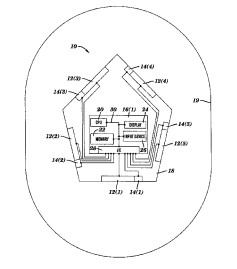
Synopsis
Patent US 9,372,530 B2 describes aspect-ratio independent multimedia capture and editing systems and methods. This invention presents a novel approach to capturing and manipulating multimedia content, particularly addressing the challenge of seamlessly integrating images and videos from multiple cameras with varying aspect ratios and resolutions into a single, cohesive presentation.
A key novel aspect of this invention is its ability to capture and process multimedia content in a manner that is independent of the native aspect ratios of the input devices. The system can capture images and video from multiple cameras simultaneously, each potentially having different resolutions and aspect ratios, and then combine them into a single panoramic or composite presentation. The patent details methods for mapping these disparate inputs onto a unified virtual scene, allowing for seamless stitching, calibration, and editing. This aspect-ratio independence allows for greater flexibility in camera placement and selection, enabling the creation of immersive and comprehensive multimedia experiences without the limitations imposed by individual camera specifications. The system also supports real-time or near real-time processing, making it suitable for live events.
The commercial potential for this multimedia capture and editing system is substantial across various industries that rely on advanced visual content creation and presentation:
-
Immersive Media and Virtual Reality (VR): The core capability of seamlessly stitching multiple camera feeds into a unified presentation is highly valuable for creating immersive VR experiences, 360-degree video content, and interactive virtual tours. Licensees in the entertainment, gaming, and real estate sectors could leverage this for high-fidelity content generation.
-
Live Event Broadcasting and Production: For concerts, sports events, conferences, or news reporting, this system could enable broadcasters to capture a more comprehensive view of an event using multiple cameras and seamlessly switch or combine feeds in real-time, offering dynamic and engaging perspectives to viewers.
-
Security and Surveillance: In large-scale surveillance operations, integrating feeds from numerous cameras with different fields of view can be challenging. This invention could provide a unified, panoramic view of an area, allowing operators to monitor wide spaces more effectively and track subjects seamlessly across camera boundaries.
-
Film and Television Production: Filmmakers and content creators could use this system for advanced visual effects, creating complex composite scenes or panoramic shots that would be difficult or impossible with traditional single-camera setups. It could also streamline post-production workflows by simplifying the integration of multi-camera footage.
-
Mapping and Surveying: For applications requiring detailed visual documentation of environments, such as urban planning, construction progress monitoring, or disaster assessment, the system could efficiently capture comprehensive visual data that is aspect-ratio independent, allowing for highly accurate 2D and 3D reconstructions.
-
Distance Learning and Remote Collaboration: In educational or professional settings, the system could create immersive virtual classrooms or meeting spaces, allowing remote participants to experience events as if they were physically present, with the ability to view various aspects of the scene simultaneously.
This invention offers a versatile and robust solution for capturing and integrating diverse multimedia inputs, breaking down technical barriers related to aspect ratios and resolutions. It empowers creators and users to generate highly adaptable, comprehensive, and immersive visual content, opening new possibilities in content production, analysis, and experience.