9,840,782
Electrochemical Process for Producing Graphene, Graphene Oxide, Metal Composites, and Coated Substrates
Patent Number
Issue Date
Inventor(s)
Kalathur S. V. Santhanam; Satish G. Kandlikar; Valentina Mejia; Yang Yue;
Document
Download PDF for patent 9,840,782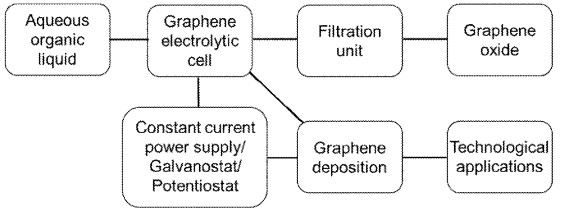
Synopsis
Patent US 9,840,782 B2 describes an electrochemical process for producing graphene, graphene oxide, metal composites, and coated substrates. This invention offers a cost-effective and scalable method for synthesizing various forms of graphene materials, which are highly sought after for their exceptional electrical, thermal, and mechanical properties.
A key novel aspect of this invention is its electrochemical approach, particularly the use of exfoliation in a graphite anode. This method allows for the production of high-quality graphene flakes or sheets directly from graphite in an aqueous electrolyte, avoiding harsh chemical treatments often associated with other graphene synthesis methods. The patent details a process that can control the degree of oxidation, enabling the creation of both graphene and graphene oxide, as well as the ability to form metal composites and directly coat substrates. This versatility in material output, combined with the efficiency of an electrochemical process, represents a significant advancement in graphene manufacturing.
The commercial potential of this electrochemical graphene production method is substantial across numerous industries due to the material's unique properties:
Electronics and Optoelectronics: Graphene's high electrical conductivity and transparency make it ideal for next-generation electronics such as flexible displays, transparent electrodes, high-frequency transistors, and high-performance sensors. The ability to directly coat substrates opens avenues for creating advanced conductive films and circuits.
Energy Storage and Conversion: The high surface area and conductivity of graphene and graphene oxide are highly advantageous for energy applications. This includes improved electrodes for batteries (e.g., lithium-ion, solid-state) and supercapacitors, leading to faster charging, higher energy density, and longer lifespans. It can also enhance the performance of fuel cells and solar cells.
Composite Materials: Graphene's exceptional mechanical strength allows for its use as a reinforcement in various composite materials, including plastics, metals, and ceramics. This can lead to lighter, stronger, and more durable components for industries like automotive, aerospace, and construction.
Filtration and Separation: Graphene oxide membranes exhibit excellent selective permeability, making them highly effective for water purification, desalination, and gas separation. The ability to produce these materials efficiently could lead to breakthroughs in environmental technologies.
Biomedical Applications: Graphene and its derivatives show promise in drug delivery systems, biosensors, and bioimaging due to their biocompatibility and unique surface properties. The clean electrochemical synthesis method could be particularly beneficial for these sensitive applications.
Corrosion Protection and Coatings: Graphene's barrier properties make it an excellent material for anti-corrosion coatings. The electrochemical deposition described in the patent allows for uniform and robust graphene-based coatings on various substrates, extending the lifespan of materials in harsh environments.
This invention offers a scalable, efficient, and versatile manufacturing pathway for graphene and its related materials, providing a foundation for numerous disruptive technologies that leverage the extraordinary properties of graphene.