US 10,191,194
Spectral Target For Macroscopic and Microscopic Reflectance Imaging
Patent Number
Issue Date
Inventor(s)
Jennifer D. T. Kruschwitz; Roy S. Berns
Document
Download PDF for patent US 10,191,194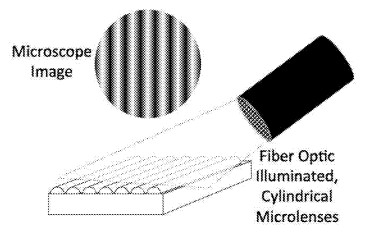
Synopsis
Patent US 10,191,194 B2 describes a novel spectral target for macroscopic and microscopic reflectance imaging, designed and fabricated using microlens arrays and color mirrors. This invention offers significant advancements in spectral and colorimetric imaging applications due to its ability to create an infinite number of spectral reflectance profiles.
A key innovation lies in the use of color mirrors, which are optical interference coatings, and microlenses. The microlenses are specifically designed to ensure that light reflected from the color mirror is effectively incident onto a detector. This integrated system of microlenses and color mirrors enables the imaging of different colored specular highlights.
One of the notable features of this technology is its versatility across various wavelength regions. While designed for the visible spectrum, the targets can also be adapted for use in the ultraviolet and infrared wavelength regions, significantly expanding their potential applications.
The commercial potential of this invention is substantial, particularly in fields requiring precise spectral and colorimetric analysis.
Possible applications include:
Materials Science and Engineering: The ability to accurately characterize the spectral reflectance of surfaces at both macroscopic and microscopic levels could be invaluable for quality control, material identification, and research in diverse industries such as coatings, textiles, and advanced materials. For instance, manufacturers could use these targets to ensure color consistency in products or to analyze the spectral properties of novel materials.
Art Conservation and Restoration: Art conservators often need to understand the precise spectral properties of pigments and materials used in artworks to guide restoration efforts. This invention could provide a non-invasive and highly accurate tool for such analysis, aiding in the identification of original pigments, overpaintings, and material degradation.
Forensics: In forensic analysis, the spectral characteristics of evidence can provide crucial information. This technology could be applied to analyze fibers, residues, or other microscopic evidence, potentially revealing details about their composition and origin that are not visible to the naked eye.
Biomedical Imaging: While the patent mentions ultraviolet and infrared applications, further development could explore its utility in biomedical imaging. The precise control over spectral reflectance could be leveraged for diagnostic purposes, such as analyzing tissue samples or identifying specific biological markers based on their spectral signatures.
Display Technology and Color Management: The invention's capacity to generate an infinite number of spectral reflectance profiles makes it highly relevant for calibrating and characterizing displays, printers, and other color reproduction systems. This could lead to more accurate color rendition and improved color management workflows in graphic arts, photography, and consumer electronics.
Remote Sensing and Environmental Monitoring: For applications involving remote sensing, particularly at a micro-level, these spectral targets could be used for calibration and validation of sensors. This might include analyzing environmental samples, such as pollutants on surfaces, or characterizing the spectral properties of small-scale biological or geological features.
The core advantage of this invention lies in its precise control over spectral reflectance and its adaptability to various imaging scales and wavelength ranges. This makes it a versatile tool for any industry or research area where accurate and detailed spectral characterization is critical.