US 10,622,654
Apparaatus, System andMethod for Compact Moile Fuel Cell System
Patent Number
Issue Date
Inventor(s)
Michael Waller, Mark Walluk, Thomas Trabold, Michael Bradley
Document
Download PDF for patent US 10,622,654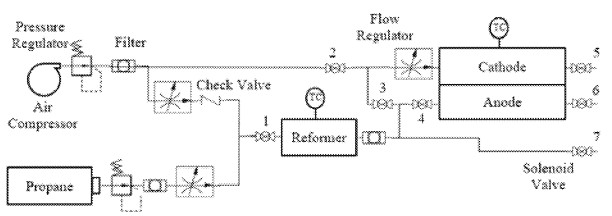
Synopsis
Patent US 10,622,654 B2 describes an apparatus, system, and method for a compact mobile fuel cell system, focusing on efficient and portable power generation. The invention addresses the critical need for smaller, more reliable, and easily deployable fuel cells by integrating and optimizing key components into a single, compact unit.
The novel aspects of this invention center on its integrated design and control mechanisms that enable a highly efficient and compact mobile fuel cell system.
Key innovations include:
Integrated Design: The system combines an air compressor, a reformer, and a fuel cell stack into a single, compact unit. This integration minimizes the footprint and weight, making the system highly portable and suitable for mobile applications.
Optimized Reactant Delivery: The system features a sophisticated flow control strategy for both air and fuel. This includes a pressure regulator and filter for the air compressor, and flow regulators for precise delivery of reformate to the anode and air to the cathode. This ensures optimal stoichiometric ratios for efficient operation and maximizes energy conversion.
Thermal Management: The system incorporates a heat recovery mechanism where excess heat generated by the fuel cell is strategically used to preheat the incoming air for the reformer. This internal energy recycling significantly improves overall system efficiency by reducing external heating requirements and minimizing energy waste.
Automated Control: The inclusion of temperature sensors (TC) and solenoid valves enables automated monitoring and control of the system, allowing for stable operation and rapid response to changing load demands.
The ability to create a compact, efficient, and mobile fuel cell system has significant commercial potential across various sectors that require portable and reliable power.
Possible applications include:
Portable Power Generation: For remote locations, emergency response, or outdoor activities, this system could provide a clean and quiet alternative to traditional generators, powering communication equipment, medical devices, or small tools.
Unmanned Aerial Vehicles (UAVs) and Robotics: The lightweight and compact nature of the fuel cell system makes it an ideal power source for extending the operational range and endurance of drones and other robotic platforms compared to conventional battery systems.
Military and Defense Applications: Soldiers and field operations require reliable and portable power for communication, surveillance, and other electronic equipment. This technology could reduce reliance on heavy battery packs and improve logistical efficiency.
Backup Power Systems: For critical infrastructure, telecommunications, or residential use, the system could serve as a compact, quiet, and efficient backup power source during grid outages.
Specialty Vehicles: Integration into electric bicycles, scooters, or other small vehicles could extend their range and reduce charging times, enhancing user convenience and expanding market adoption.
Remote Sensors and Monitoring Stations: Powering environmental sensors, surveillance cameras, or weather stations in off-grid locations where continuous and long-term power supply is essential.
This invention provides a compelling solution for portable and efficient power generation, offering a competitive edge for licensees seeking to enter or expand within markets demanding compact, reliable, and sustainable energy solutions.