US 10905339
OPPORTUNISTIC PLETHYSMOGRAPHY USING VIDEO CAMERAS
Synopsis
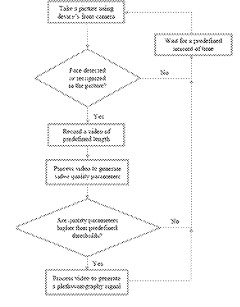
Patent US 10,905,339 B2 describes an opportunistic plethysmography system and method utilizing video cameras. The invention addresses the growing demand for non-contact, continuous physiological monitoring, particularly for cardiac activity, without requiring specialized medical equipment or direct patient interaction.
A key novel aspect of this patent is its ability to extract plethysmography signals (indicative of blood volume changes and thus cardiac activity) from standard video camera feeds. This is achieved by analyzing subtle color changes in the skin, which are caused by blood flow variations with each heartbeat. The system employs sophisticated algorithms to process video data, identify regions of interest (e.g., face, neck), and then extract the plethysmography signal. Crucially, the invention is designed to operate "opportunistically," meaning it can derive these physiological insights from video streams captured during routine activities, such as video calls, watching content on a device, or simply being in the camera's field of view. This contrasts with dedicated medical devices that require specific setup and patient compliance. The patent details methods for optimizing video capture functions (like auto-gain, white balance, and auto-focus) to ensure video quality is sufficient for accurate signal extraction, while maintaining a "pleasurable user experience" by not intruding on the primary use of the device.
The commercial potential of this invention is substantial across various sectors, particularly in consumer health, telemedicine, and security. The non-invasive, ubiquitous nature of video cameras makes this technology highly scalable and accessible.
Possible applications include:
Consumer Health and Wellness: Integrating into smartphones, tablets, laptops, and smart mirrors to provide continuous, passive monitoring of heart rate, stress levels, and other cardiovascular metrics during daily activities. This can empower individuals to track their health trends and encourage proactive wellness management.
Telemedicine and Remote Patient Monitoring: Enabling healthcare providers to remotely monitor patients' vital signs during virtual consultations or for chronic disease management without requiring patients to wear specific sensors. This can improve accessibility to care, especially for elderly or geographically isolated individuals.
Elderly Care and Assisted Living: Implementing in smart home systems or dedicated monitoring devices in assisted living facilities to passively track the cardiac health of residents, providing alerts for anomalies and enhancing safety.
Fitness and Sports Performance: Analyzing video from workouts or training sessions to provide real-time heart rate feedback to athletes, optimizing training intensity and recovery.
Security and Surveillance: Potentially identifying physiological states (e.g., stress, agitation) of individuals in public spaces or secure environments by analyzing video feeds, which could aid in threat detection or crowd management.
Automotive Safety: Integrating into in-car camera systems to monitor driver fatigue or stress levels by analyzing facial plethysmography, providing alerts to prevent accidents.
Gaming and Entertainment: Creating interactive experiences where a user's physiological state (e.g., excitement, calm) influences gameplay or content, enhancing immersion and personalization.
This patent offers a versatile and non-intrusive solution for physiological monitoring, providing a pathway to integrate health insights seamlessly into everyday technology and enabling broad-scale, opportunistic health assessment.