11,234,651
Apparatus, System and Method for Medical Analysies of Seated Individual
Patent Number
Issue Date
Inventor(s)
David A. Borkholder,
Nicholas J. Conn,
Massoumeh Haghpanahi
Licensed/Under Negotiation
Document
Download PDF for patent 11,234,651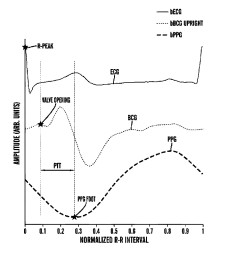
Synopsis
Patent US 11,234,651 B2 describes an apparatus, system, and method for conducting medical analyses of an individual while seated. The invention focuses on utilizing a combination of physiological measurements—specifically, a ballistocardiogram (BCG), electrocardiogram (ECG), and photoplethysmogram (PPG)—to derive various cardiovascular parameters non-invasively, even when the individual is seated and potentially in different postures.
A key novel aspect of this patent is its integrated approach to non-invasive cardiovascular assessment in a seated position. It captures BCG signals via sensors embedded in a seat, which measure the mechanical forces generated by the heart's pumping action. Concurrently, it can acquire ECG signals (electrical activity of the heart) and PPG signals (blood volume changes in the periphery). The invention's ingenuity lies in its ability to process and combine these diverse signals to derive a comprehensive set of cardiovascular metrics. For instance, it uses the BCG to identify specific features like the I-J interval, which is correlated with aortic valve opening time, and leverages the relationship between BCG, ECG, and PPG signals to calculate parameters such as pulse transit time (PTT) and pulse wave velocity (PWV). The system is designed to account for variations introduced by different seated postures, ensuring accurate measurements regardless of the user's position. This overcomes limitations of traditional methods that often require specific body positions or are susceptible to motion artifacts.
The commercial potential of this invention is substantial, particularly in the burgeoning fields of remote healthcare, continuous health monitoring, and personalized medicine. The non-invasive and user-friendly nature of this system makes it highly adaptable for both clinical and consumer applications.
Possible applications include:
Continuous Home Monitoring: Enabling individuals, especially those with chronic cardiovascular conditions like hypertension or heart failure, to continuously monitor their vital signs from the comfort of their homes. This could reduce the need for frequent clinic visits and provide early warnings of deteriorating health.
Elderly Care: Integrating the system into chairs or recliners used by the elderly to provide passive, continuous monitoring of their cardiac health, aiding caregivers and medical professionals in proactive management.
Office and Workplace Wellness Programs: Incorporating the technology into office chairs to promote employee health by providing regular, non-intrusive cardiovascular assessments during work hours.
Telemedicine and Remote Diagnostics: Facilitating remote consultations by providing healthcare providers with real-time, comprehensive cardiovascular data from patients, improving diagnostic accuracy and treatment efficacy without physical presence.
Fitness and Rehabilitation: Monitoring cardiovascular responses during exercise or physical therapy sessions, allowing for personalized adjustments and tracking progress for athletes or individuals undergoing rehabilitation.
Clinical Research: Providing a robust platform for collecting large datasets of cardiovascular parameters in various seated postures, which can accelerate research into cardiovascular diseases and the effects of lifestyle on heart health.
This patent offers a robust solution for accessible and continuous cardiovascular health monitoring, providing a pathway to significantly enhance preventative care, remote patient management, and overall wellness.