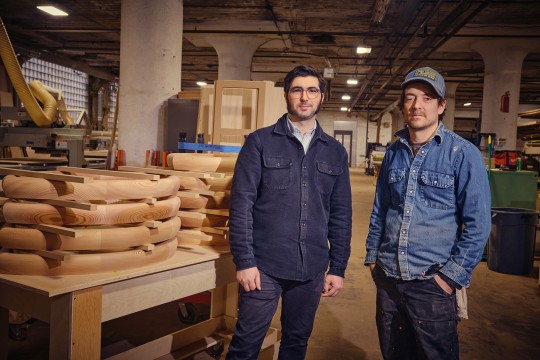
RIT furniture design alumnus uses celebrity commissions as springboard for Miami studio
Provided
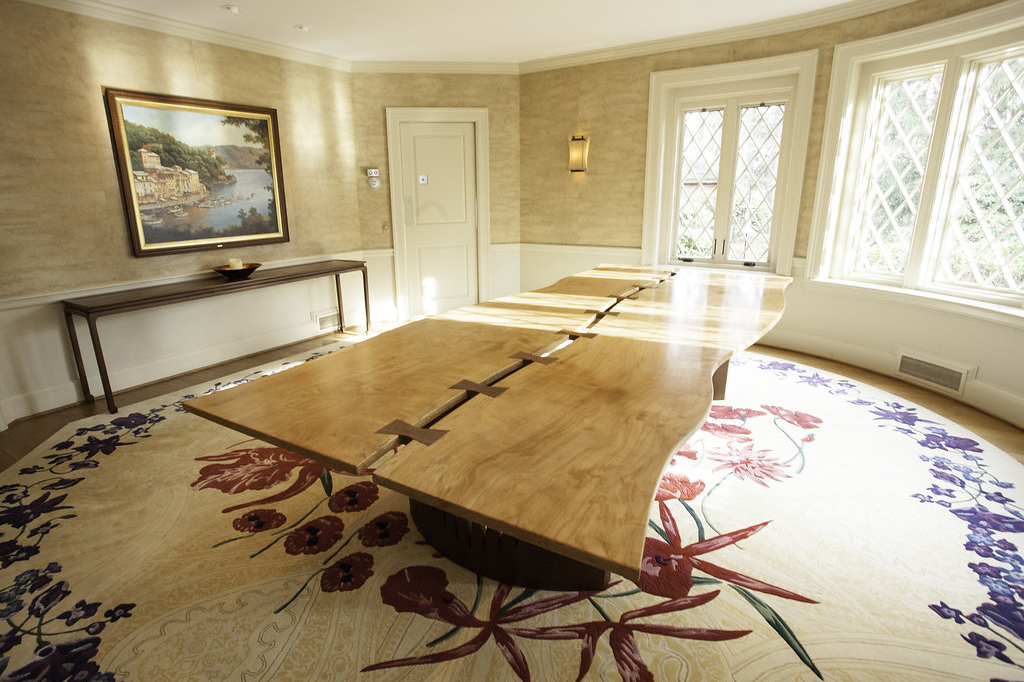
Emblematic of his passion to include storytelling elements in his work, RIT furniture design alumnus Gunther Jacobson designed this dining room table for the famous Wegman family. It was made of wood from a felled tree on the family's property and Jacobson melted gold in the wood defects as a nod to the rings worn by the Wegmans Food Markets founder.
From equestrian prodigy to furniture designer for celebrities, Rochester Institute of Technology alumnus Gunther Jacobson ’12 (furniture design) has a tale worth telling.
But he’s more interested in sharing the stories of others, with custom furniture imbued with personally meaningful features serving as the narrator.
Provided
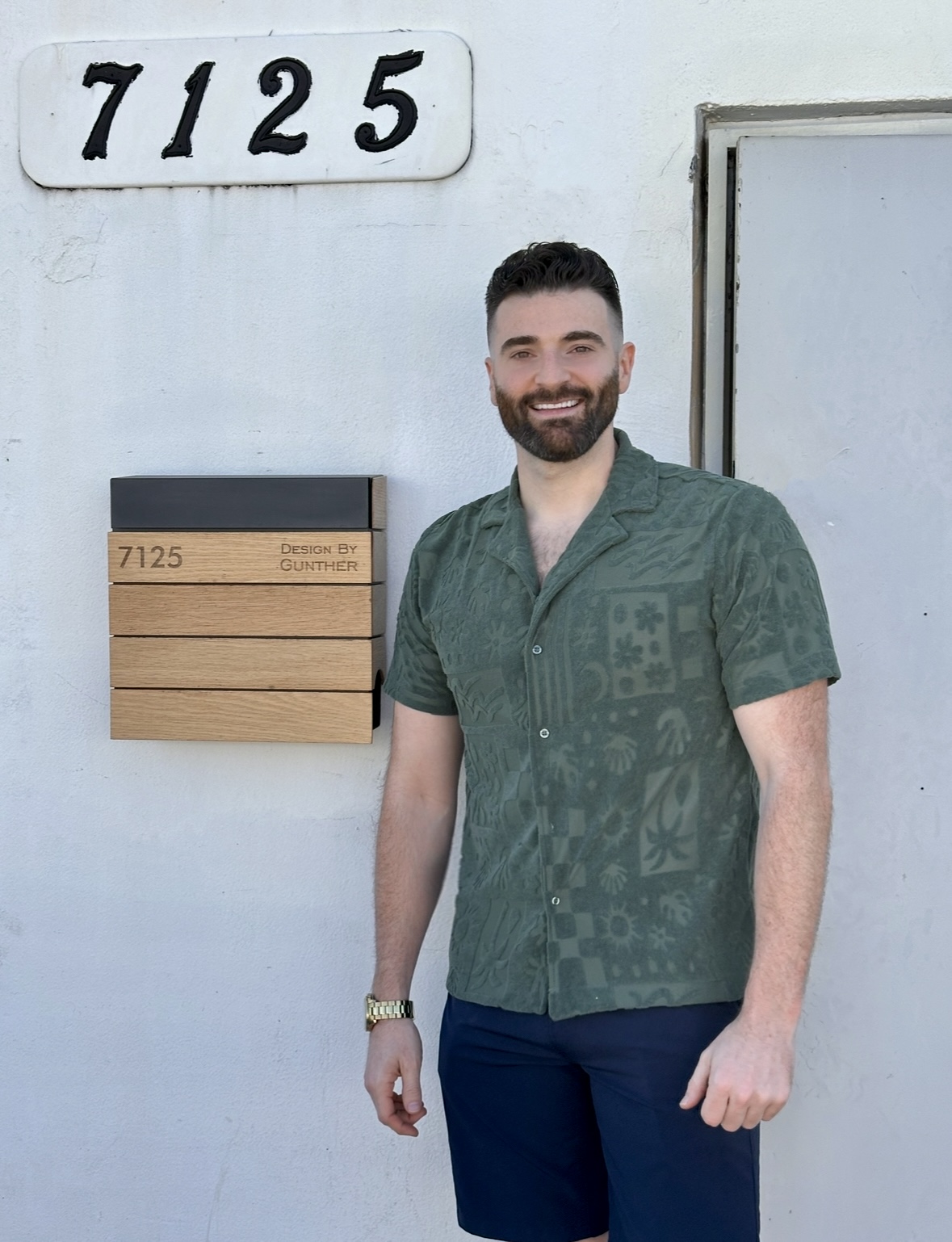
RIT furniture design alumnus Gunther Jacobson
Jacobson has operated his studio, Design by Gunther, out of Miami for more than a decade. He is a storyteller at heart, fusing the “beauty of raw wood” with elements that create attachment between his clients and the furniture.
“I take my approach to details in a different way, of having an emotional connection to the piece,” Jacobson said. “There are a million coffee table designs. But I find joy in the discovery of adding elements that are going to evoke conversation by those who view the piece.”
Jacobson had a career breakthrough moment in Miami due to his compassion.
After stopping on the road to help repair a delivery truck’s flat tire, he discovered the driver was the florist for DJ Khaled. When conversation steered toward Jacobson’s profession, the florist asked if he could assess one of Khaled’s tables he accidentally damaged and was responsible for fixing.
Jacobson was hired for that job, which led to additional projects for the well-known record producer. Khaled had a dining table, love seats and outdoor furniture designed by Jacobson, along with plenty of refinishing work.
Word of Jacobson’s work spread in the celebrity orbit. Soon enough, global music superstar Shakira, among other recognizable figures, were clients. For Shakira, Jacobson designed and built a bedroom set and living room furniture.
Provided
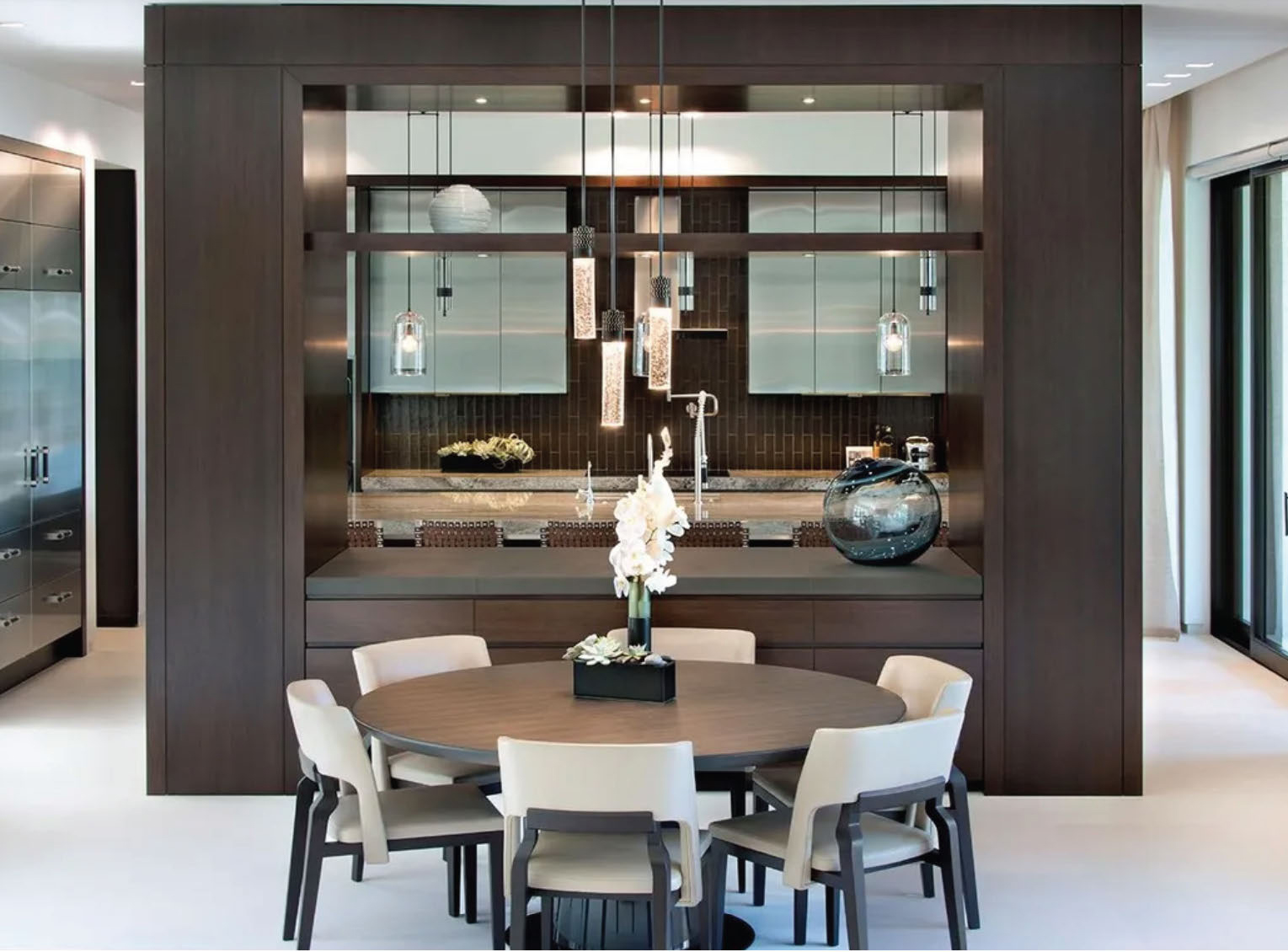
This table was among the several projects RIT alumnus Gunther Jacobson designed for DJ Khaled.
The celebrity projects also earned Jacobson the opportunity to build millwork and furniture for a client’s private-island home in the Bahamas.
“To have my work in their homes really helped build my portfolio and clientele list,” Jacobson said.
Those high-end, luxury commissions jump-started Jacobson’s growth to where he is today — operating out of a 6,000-square-foot warehouse where he executes his millwork and furniture jobs for residential and commercial clients spanning Miami and New York City. In 2024, he opened an auxiliary studio/shop in Valencia, Spain, to source his materials.
Jacobson found his passion for woodworking by chance.
He grew up surrounded by nature, on a 30-acre horse farm in Canandaigua, N.Y. By 5, he was riding horses, a skill that evolved to training with the U.S. Olympic equestrian team as a teenager. After a promising half year in the program, a back injury due to a growth spurt ended his high-level equestrian career route.
Suddenly, his future wasn’t as clear.
Jacobson graduated from high school two years early and earned an associate’s degree in English in hopes of being an editor, but he felt unfulfilled.
Provided
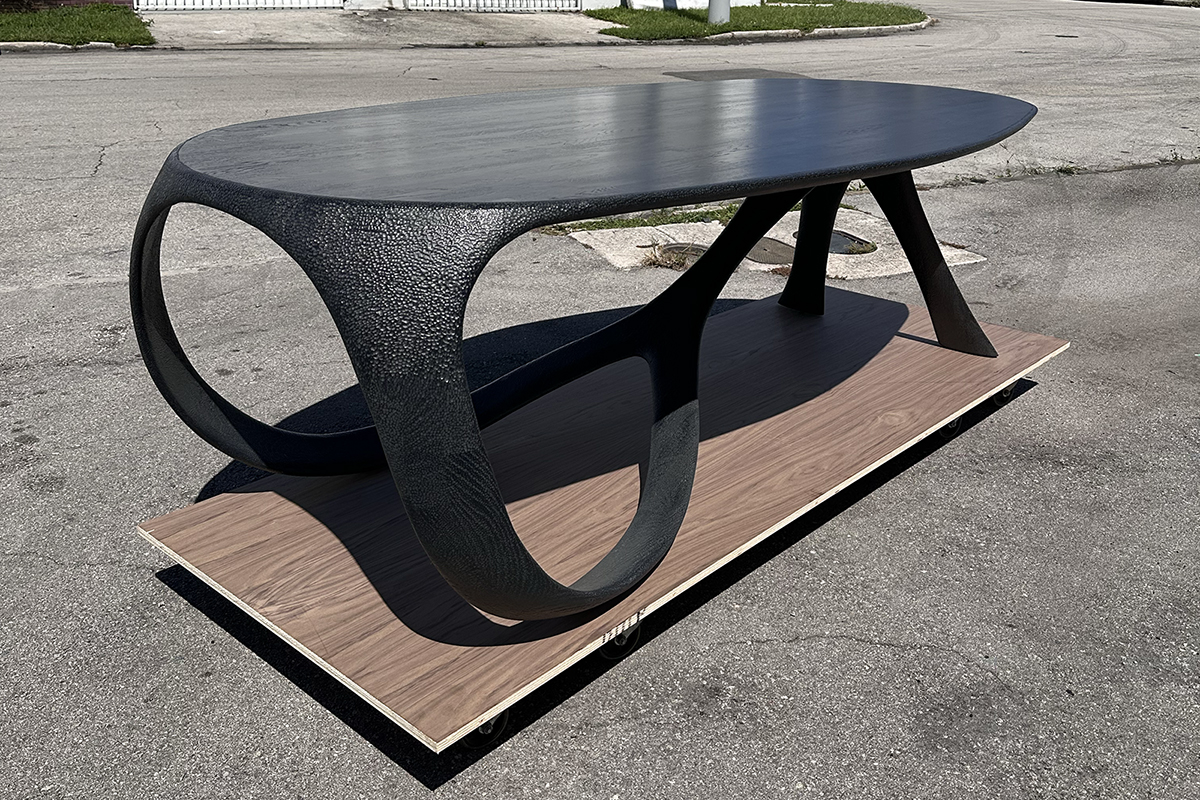
One of RIT alumnus Gunther Jacobson's recent works: a full hand-shaped, hand-carved dining table made from solid white oak hardwood with a custom ebonized finish. Jacobson describes it as an exploration piece inspired by his horse's body shape and stance.
He then recalled the wooden horse jumps he routinely made for equestrian training and the barn he built on their property. Turns out, those early construction projects were the foundation for his path to RIT and, later, a successful studio practice.
“Through my journey at RIT, I found a whole new passion that I truly am grateful for because I was lost for a few years on what I was going to do,” Jacobson said. “I became inspired to make furniture.”
Jacobson’s methodology for running his studio was passed to him by his father, Howie Jacobson, a fixture in the Rochester/Finger Lakes region’s business community.
Provided
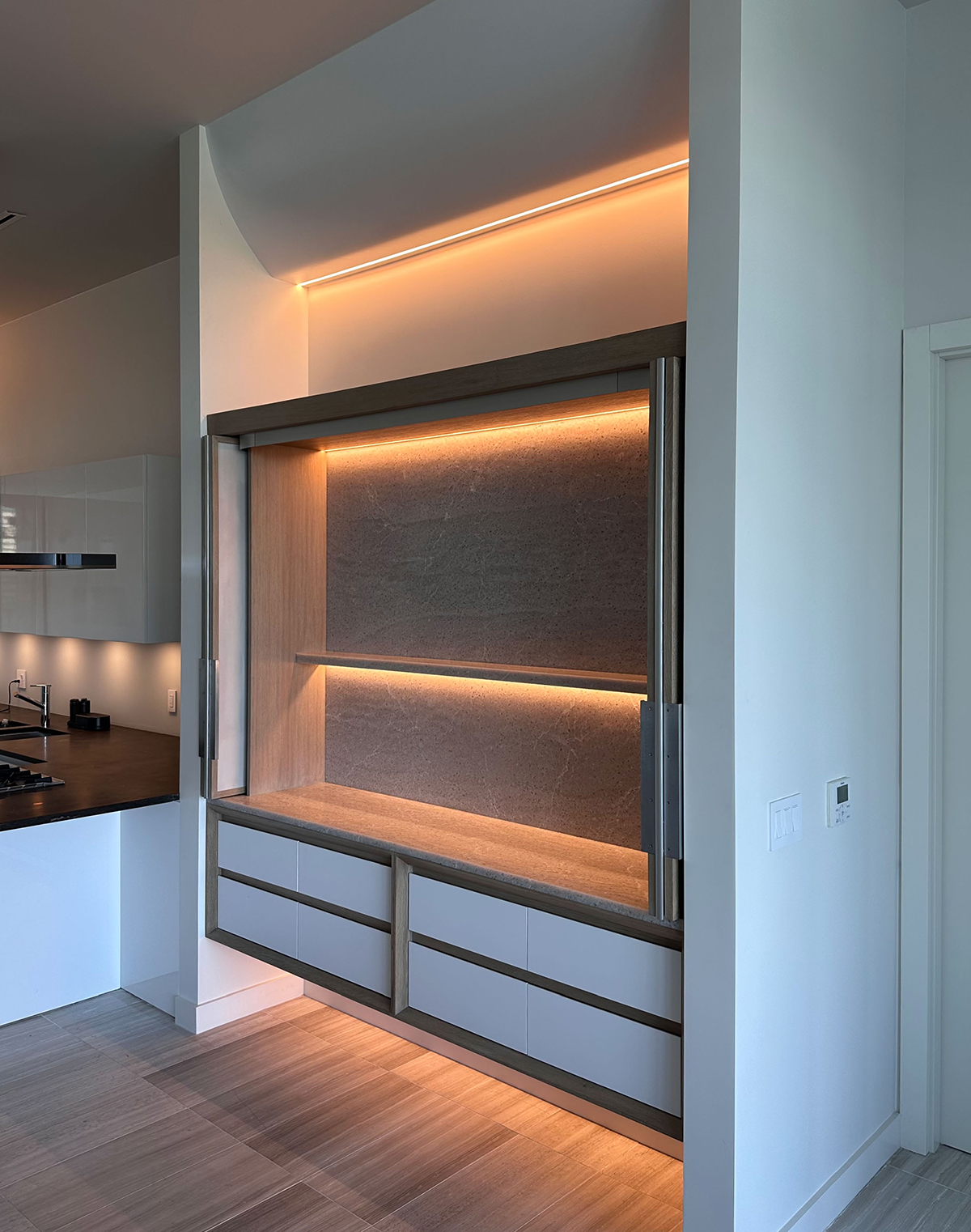
RIT alumnus Gunther Jacobson creates a range of projects out of his Miami studio.
An early example of Jacobson’s thoughtful approach to making was his design of a dining room table for the famous Wegman family. He injected sentimental value into the piece by using wood from a felled tree on their property. Further, he melted real, solid gold in the wood defects as a nod to the gold rings worn by the Wegmans supermarket founder.
“A lot of the way I got my business was to sell a story, a feeling, which is very much how my dad does business,” said Jacobson, who still draws design inspiration from his equestrian background.
Jacobson credits RIT with instilling the importance of fundamentals in him — like learning how to make furniture exclusively with hand tools before graduating to machines and technology such as CNC machinery.
“I would call anyone who went to RIT and have trust in them,” Jacobson said. “If I never had that, I wouldn't be able to get down to those details and craftsmanship that separate me in the business. It’s the difference between making a $5,000 dining room table and a $15,000 or $25,000 one. It’s the smallest details that come from old-school craftsmanship that the school taught.”