SafeSigns: Enabling Community Resilience Communication for the Deaf and Hard of Hearing

About SafeSigns
In the United States, the Deaf and Hard-of-Hearing (DHH) community faces significant communication barriers during emergencies. Traditional emergency communication methods often fail to meet their needs, leading to increased risk and marginalization.
SafeSigns is a geospatial toolkit designed to empower DHH individuals to participate in community hazard reporting and emergency management, ensuring that emergency communication is accessible, inclusive, and effective.
SafeSigns is being developed through collaborative efforts between researchers, DHH community members, and Public Safety (PS) officials, ensuring that accessibility and inclusivity are prioritized at every stage.
Challenges for the DHH Community
Communication Barriers
DHH individuals face difficulties due to the lack of accessible alerts and interpreters, limiting their access to critical emergency information.
Limited Emergency Resources
Many emergency systems are not designed with DHH accessibility in mind, increasing vulnerability during crises.
Gaps in Community Resilience
Lack of inclusive technology prevents DHH communities from participating in resilience planning and disaster response initiatives.
SafeSigns Overview
SafeSigns is a Progressive Web Application (PWA) that enables DHH individuals to map and report hazards in real-time. Built on user-centered design principles, it integrates geospatial technology and accessibility-first interfaces to create a tool that ensures DHH voices are heard during emergencies.
Users can submit hazard reports with detailed descriptions and media attachments. Public Safety officials are notified in real-time, ensuring that emergency responses are timely and inclusive.
What sets SafeSigns apart is its commitment to participatory design, involving DHH individuals not just as users but as co-creators. The platform addresses both technical and cultural barriers to ensure meaningful engagement and effective communication during emergencies.
How SafeSigns Works
-
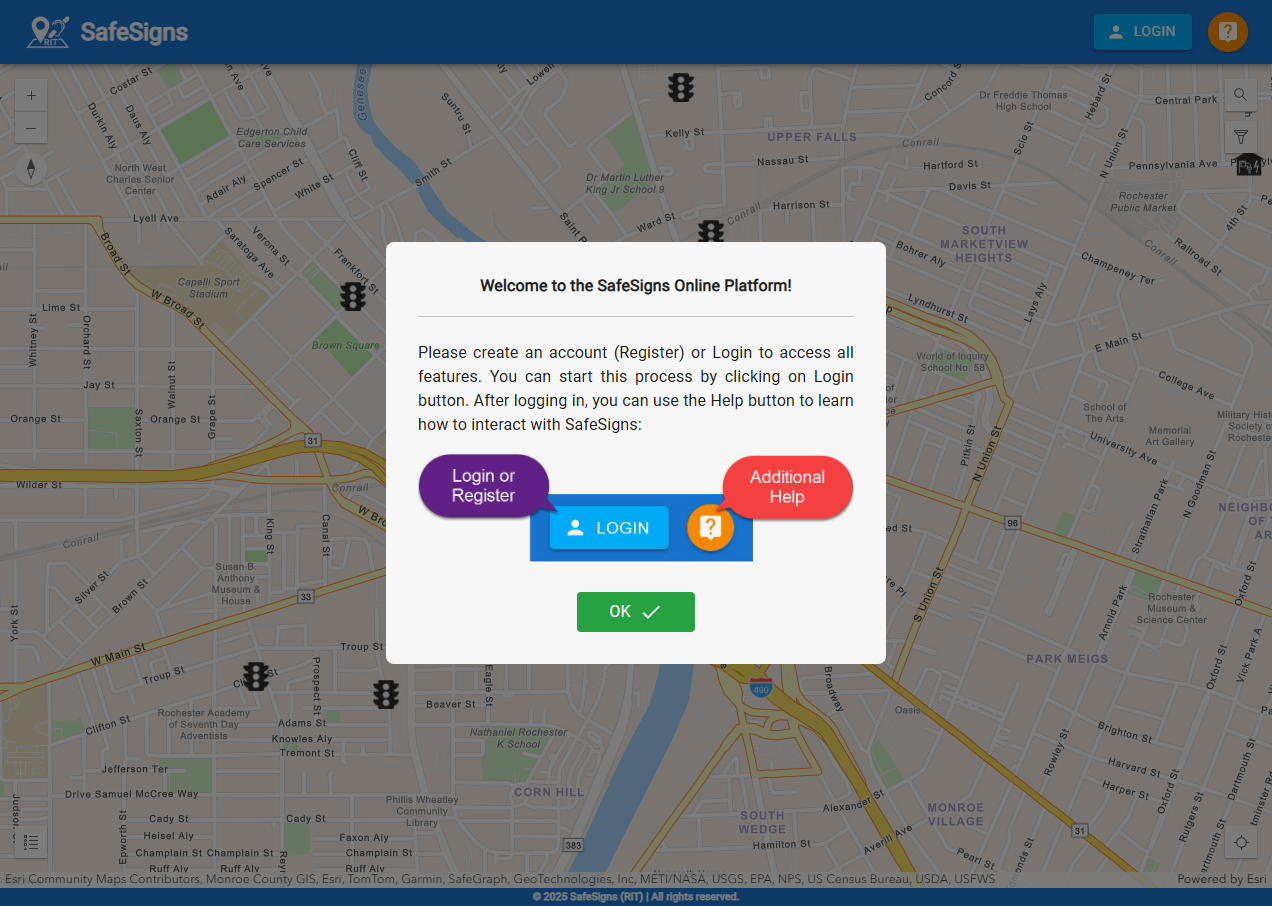
Register/Login
Create an account or log in to access reporting features securely. Registered users can submit hazard reports and track their submissions in real time.
-
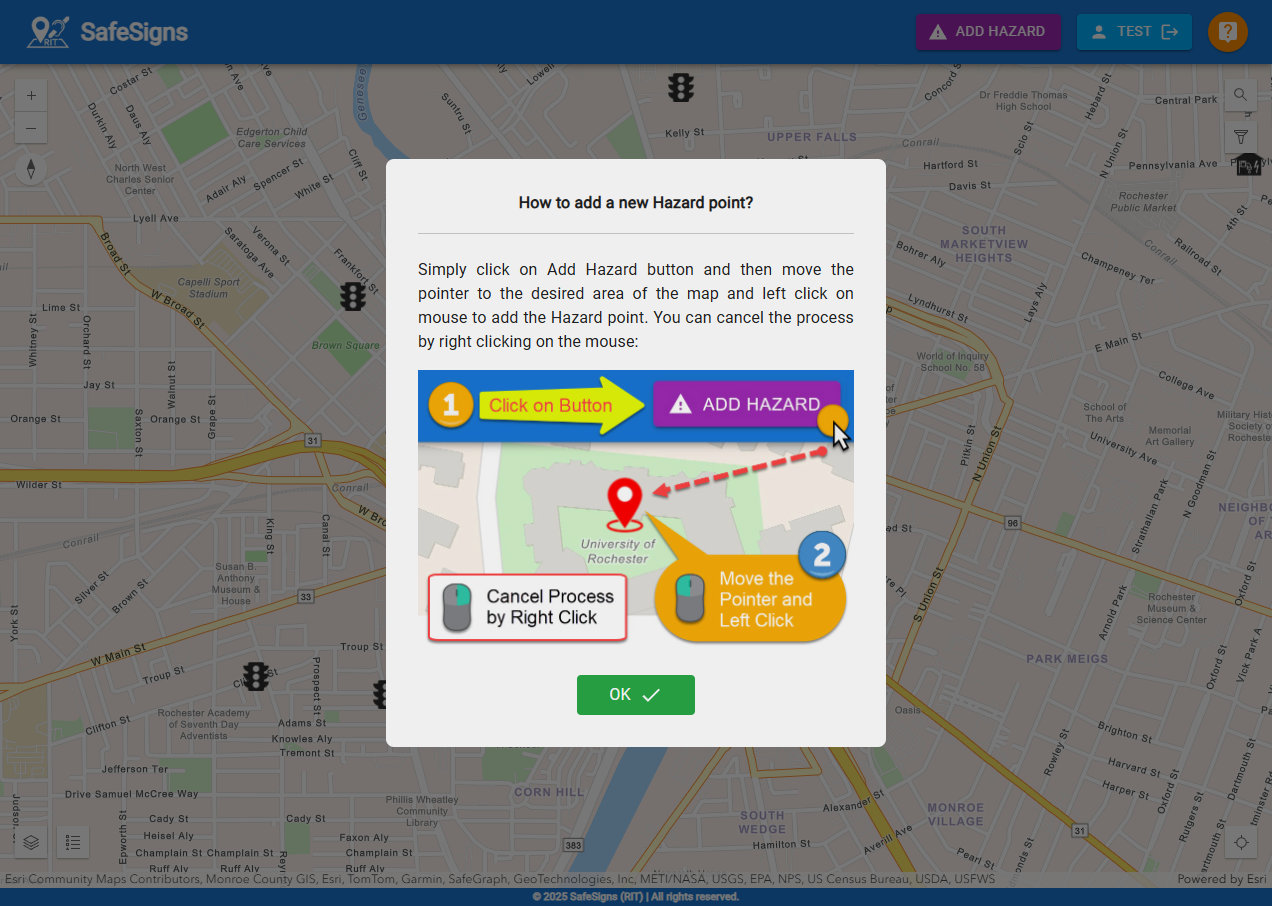
Locate and Report
Pinpoint the hazard location directly on the map, choose the hazard type, add descriptions, and attach media such as photos or videos for verification.
-
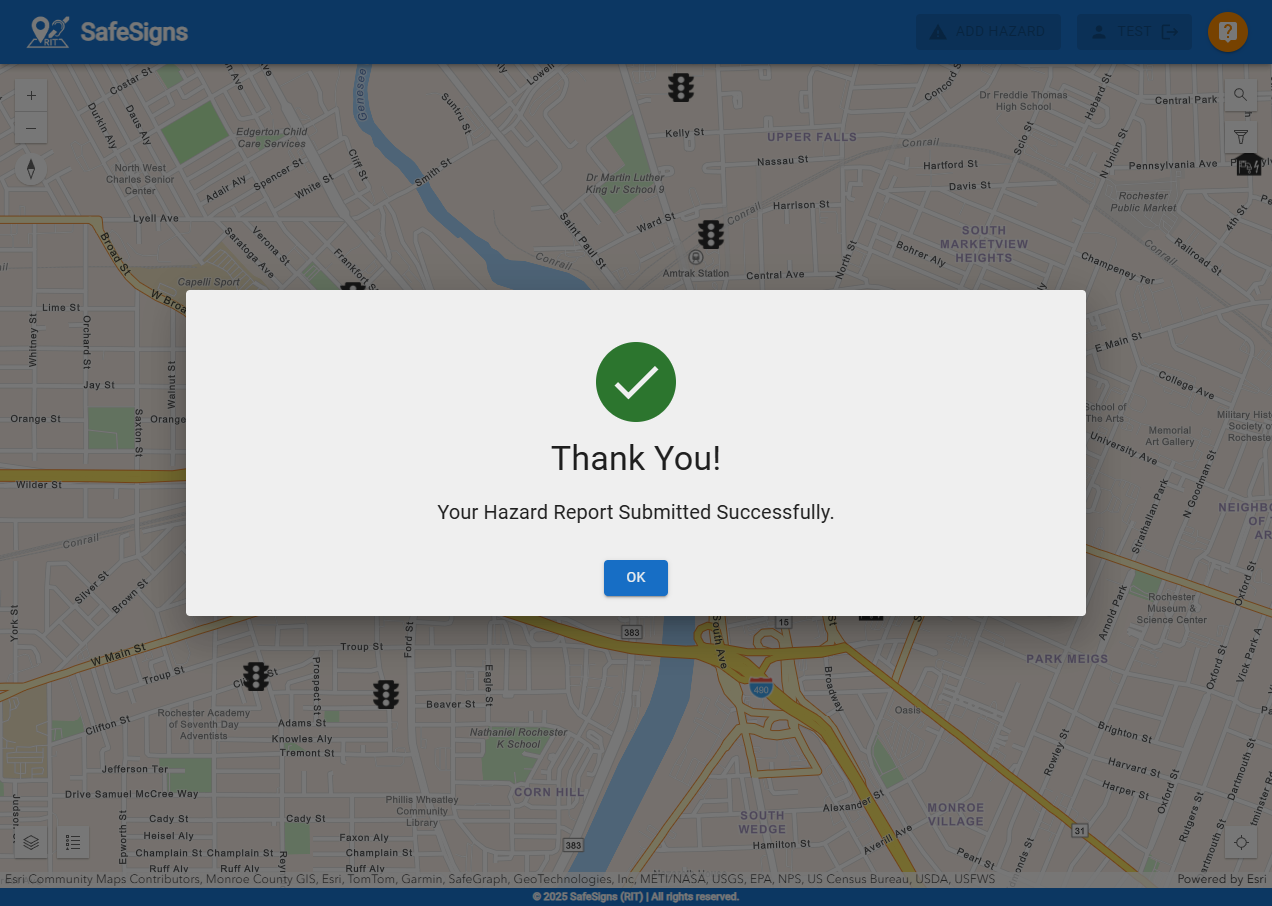
Real-Time Alerts
Public Safety officials are instantly notified when a report is submitted. They can review, confirm, and respond to hazards in real-time, improving community safety.
Technical Implementation
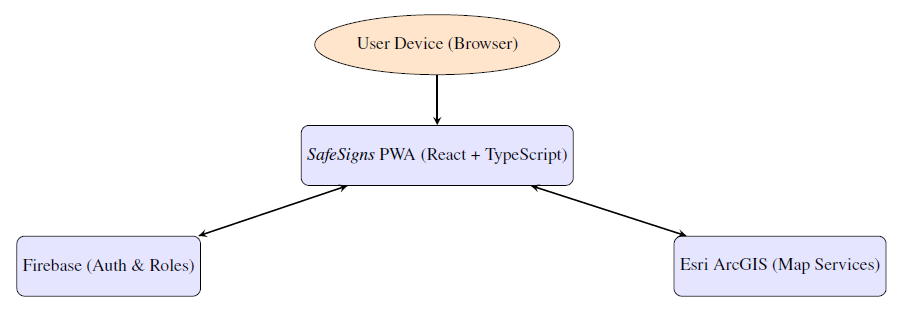
SafeSigns is built with modern web technologies to ensure accessibility, responsiveness, and scalability:

React Vite & TypeScript
Fast, responsive frontend experience with modular, maintainable code for the SafeSigns platform.

Esri ArcGIS Online
Real-time geospatial hazard mapping with powerful location-based data and services integration.

Google Firebase
Secure user authentication and role-based access control to manage users efficiently and safely.
User Roles & Permissions
SafeSigns is designed with role-based access control to ensure different users have appropriate permissions based on their responsibilities. This structure enhances security, streamlines user experience, and allows Public Safety officials to manage reports effectively while empowering DHH community members to participate fully in hazard reporting.
| Role | Permissions |
|---|---|
| Guest | View existing hazard reports |
| Registered User | Submit new hazard reports |
| Special User (PS Official) | Confirm and resolve hazard reports |
| Admin | Full system access and user management |
Ongoing & Future Work
We are expanding SafeSigns through real-world testing, community training sessions, and the creation of ASL video tutorials to enhance accessibility for DHH users. Future improvements will include integrating AI-based moderation to filter spam or invalid reports, expanding multilingual support, and continually refining the user experience based on iterative feedback from both DHH community members and Public Safety officials.
Publications and Resources
To learn more about the research behind SafeSigns, download our full conference paper published at ISCRAM 2025. The paper details the user-centered design methodology, technical implementation, and the future vision for inclusive emergency communication.
How to Cite
Hosseini Shakib, A., Ripka, M., Rotoli, J., Miao, Q., Rothenberg, S., Fugate, J., & Tomaszewski, B. (2025). SafeSigns: Enabling Community Resilience Communication for the Deaf and Hard of Hearing. Proceedings of the International ISCRAM Conference.
If you are a civil, government, private sector, or other organization or individual interested in collaborating with us on issues related to the Deaf and Hard-of-Hearing and Emergency Management, please contact Brian Tomaszewski.
For more information about the NSF CIVIC program, visit the NSF Civic Innovation Challenge Webpage.


This material is based upon work supported by the National Science Foundation and the U.S. Department of Energy under Award No. 2322255.