AI-PROWIL IRES News
-
April 23, 2021

RIT researchers using drones and artificial intelligence to help assess crop growth
The National Science Foundation awarded Guoyu Lu, an assistant professor in RIT’s Chester F. Carlson Center for Imaging Science, more than $583,000 to spearhead the project.
-
April 5, 2021
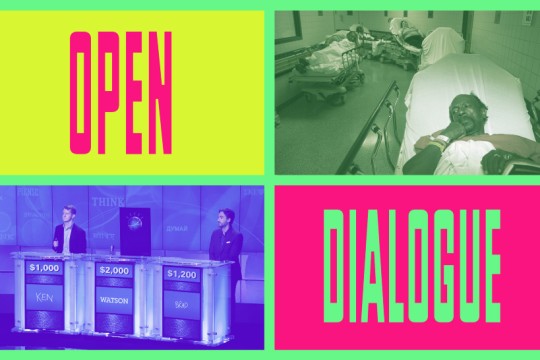
Health Care A.I. Needs to Get Real
Evan Selinger, professor of philosophy, talks with Muhammad Aurangzeb Ahmad '06 (computer science), principal research scientist at KenSci Inc., about using artificial intelligence in the medical field. Selinger has published six pieces on Medium’s OneZero platform about the intersection of technology and liberal arts.
-
April 2, 2021
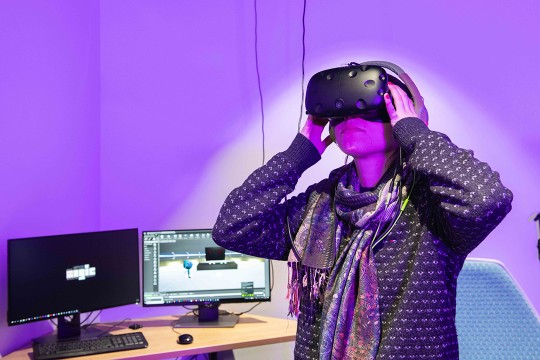
Researchers develop manufacturing training that will include AI and virtual reality technology
Researchers at RIT are using augmented and virtual reality as part of a modern training platform to help address the skilled labor shortage in manufacturing. Using artificial intelligence and augmented or virtual reality applications as a training strategy can support novice trainees and retain the knowledge of master machinists and manufacturing engineers.
-
April 2, 2021

RIT researchers are making software secure by design
With more than $4 million in support from the National Science Foundation (NSF), Defense Advanced Research Projects Agency (DARPA) and other organizations, Associate Professor Mehdi Mirakhorli and his student team are developing tools and techniques to help coders take an architectural approach to software design.
-
March 23, 2021

New AI from RIT researchers can play Starcraft II; project is DARPA-funded
WROC-TV talks to Christopher Kanan, assistant professor in the Chester F. Carlson Center for Imaging Science, about an artificial intelligence project.
-
March 12, 2021

RIT researchers helping to develop artificial intelligence systems capable of playing 'Starcraft II'
A team of researchers that develops artificial intelligence systems is putting its work to a unique new test: creating machines capable of playing the popular video game Starcraft II. Researchers think it could be an important stepping stone to advancing practical solutions such as self-driving cars, service robots, and other real-world applications.
-
March 3, 2021

IBM gift to help RIT’s Global Cybersecurity Institute enhance workforce development
IBM is making a more than $3.3 million in-kind donation to RIT to help enhance cybersecurity capabilities in the university’s new Global Cybersecurity Institute, as well as support security training and competitions for students.
-
February 24, 2021

RIT faculty using smartphones and artificial intelligence to help assess crop roots
An RIT faculty member is creating new artificial intelligence systems that could empower agricultural researchers, breeders, nurseries, and other users to analyze the roots of their crops with the power of their smartphones. Assistant Professor Guoyu Lu is receiving a $450,000 New Investigator grant from the U.S. Department of Agriculture to conduct the research.
-
February 3, 2021

This smart toilet seat might save your life one day
Forbes features Nicholas Conn '11, '13 MS (electrical engineering) and RIT trustee and 2009 alumnus Austin McChord as they team up to create Casana, formerly Heart Health Intelligence, which produces a toilet-seat based cardiovascular monitoring system.
-
January 21, 2021

Professor wins USAF Research Program Young Investigator Award
RIT engineering faculty-researcher Panos Markopoulos recently received an Air Force Young Investigator Program award to develop a more robust sensor analysis system to better evaluate data simultaneously from sources such as cameras, oscilloscopes, and other sensors.
-
January 15, 2021

New economy majors connect with emerging careers
Analytical thinking, complex problem solving, creativity, resiliency, and flexibility are among the top skills needed for emerging careers by 2025. Anticipating these rapid changes in the workplace—further accelerated by lessons learned from the COVID-19 pandemic—RIT is seizing on the opportunity to guide students to “new economy majors” that are multidisciplinary, transformative, and future-focused.
-
January 8, 2021

Engineering faculty member wins Air Force Research grant for work in improvements to neuromorphic computing systems
Faculty-researcher Cory Merkel recently received a grant from the Air Force Research Lab for developing more secure AI functionality including how it defends against system attacks, and, through training the system, how it could learn to anticipate triggers for possible system attacks.