Home Page


Expanding and exploring the frontiers of science and mathematics.
Get started by exploring our Areas of Study
We prepare the next generation of problem solvers to discover and innovate solutions for the future.
The College of Science promotes novel ways of thinking and implementation in a rapidly changing world.
We provide our scholars with hands-on experience, cross/multi-disciplinary research, and faculty and staff mentors who not only educate but inspire our scholars.

Meet Us on Campus
Learn about academics, co-op and internships, financial aid, and more.


Faces of RIT
-
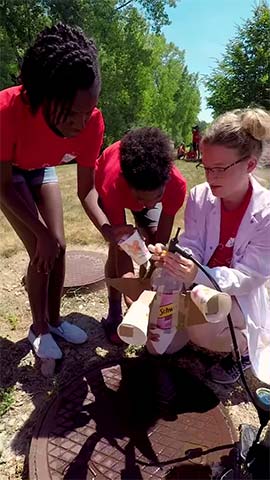
![Devon Christman conducting a science experiment with some kids.]()
Connecting Kids to Science
Devon M ChristmanPhysicsOver the summer, Christman taught a workshop called “Experiments in Science” to a group of children from RIT’s Kids on Campus program. By helping to change their perspectives on who and what a scientist is, Christman is shaping the minds of tomorrow’s scientists.
-
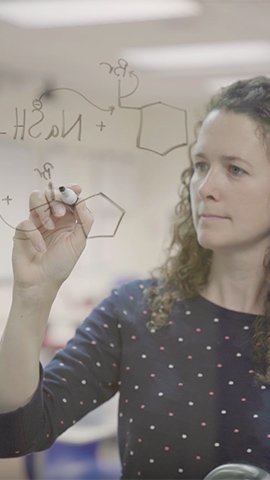
![Professor Tina Goudreau Collison writing a chemistry formula.]()
Expanding ASL
Tina Goudreau CollisonProfessor of ChemistryA complicated vocabulary and a lack of dedicated signs in American Sign Language makes Organic Chemistry a challenge for deaf and hard of hearing students. Collision worked with interpreters to develop new ASL signs, leading to profound learning improvements for her students.
-
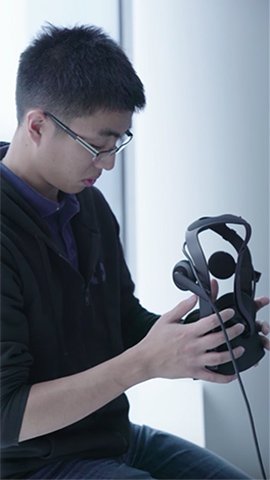
![Kevin Kha using a VR headset.]()
Enhancing Reality
Kevin KhaImaging ScienceKha interned with Oculus testing their next generation of VR cameras, which have the potential to aid law enforcement and impact learning in schools. The internship turned into a full-time job, and Kha plans to work on enhancing the VR experience.
-
![Nicole Pannullo working in a chemistry lab.]()
Medicine's Future
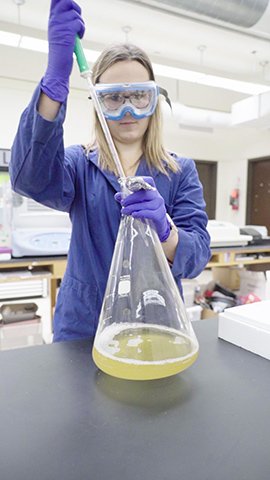
Nicole PannulloBiochemistryBy working on a faculty-guided research project, Pannullo has gained hands-on research experience to pursue a future in regenerative medicine. It’s one way Pannullo is putting experiential learning to work.
-
![Jennifer Wheeler, M.D.]()
Giving Back
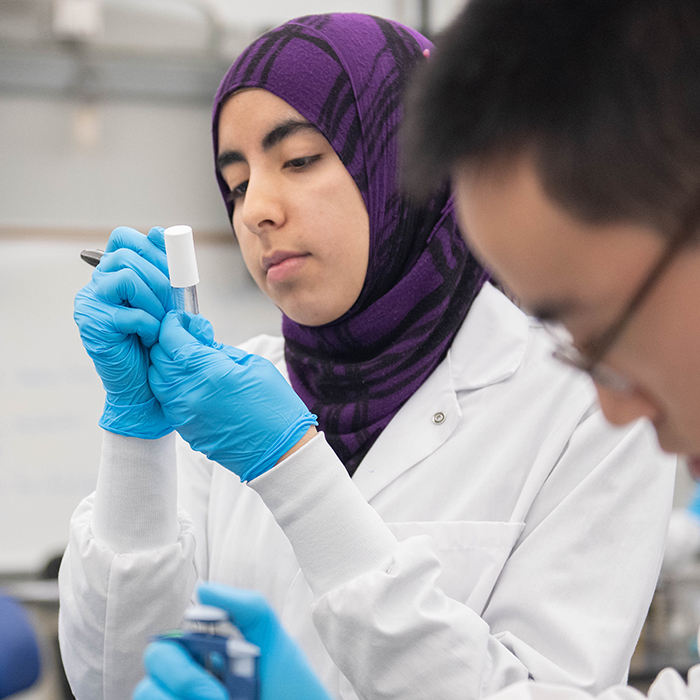
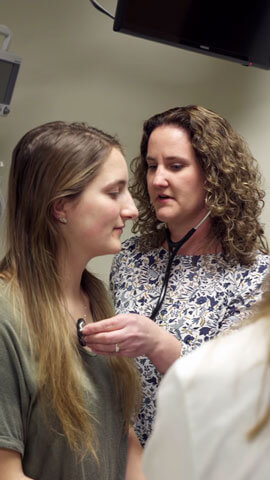
Jennifer Wheeler, M.D. BS ’01BiotechnologyFamily MedicineAfter 9/11, Wheeler enlisted in the US Army and served as a doctor in Afghanistan. Now, she practices family medicine and serves as a preceptor to RIT students who are embarking on their own careers in medicine.
Latest News
-
September 20, 2024
![Nourridine Siewe is shown in a headshot]()
RIT’s Siewe receives award for mathematical modeling research linking obesity and diabetes
RIT Assistant Professor Nourridine Siewe has received a $500,000 National Institute of General Medical Sciences (NIGMS) Support for Research Excellence (SuRE) – First Award for his work in mathematical models of obesity-induced Type 2 Diabetes Mellitus (T2DM) and chronic wound healing.
-
September 16, 2024
![Linda Viney (left) presented Daniela Lincoln with a $100 award and a sweatshirt embroidered with her winning logo on behalf of the Hilton Apple Fest board of directors.]()
Hilton Apple Fest selects 2024 logo designed by Daniela Lincoln
Westside News speaks to Daniela Lincoln '21 (materials science and engineering) about her winning design.
-
September 12, 2024
![R I T President David Munson is shown in side profile from the chest up standing at a podium. Behind him, a screen is lit up with various shares of blue resembling a computer chip.]()
RIT President says it’s ‘an extraordinary time at RIT’
RIT President David Munson delivered his annual Welcome and State of the University address Sept. 12, where he also highlighted a strong enrollment, research milestones, the initial stages of a new strategic plan, and achievements by students, faculty, and staff.
-
September 9, 2024
![a student in a blue long sleeve shirt writes a math equation on a whiteboard.]()
Universitywide effort hopes to improve math readiness and success for incoming students
RIT is making strides to better prepare first-year students for math coursework through the implementation of a revamped math placement examination. The new exam helps determine areas of strength and those requiring additional attention, focusing on tackling individual students’ gaps in learning.