College of Science News
-
October 6, 2026
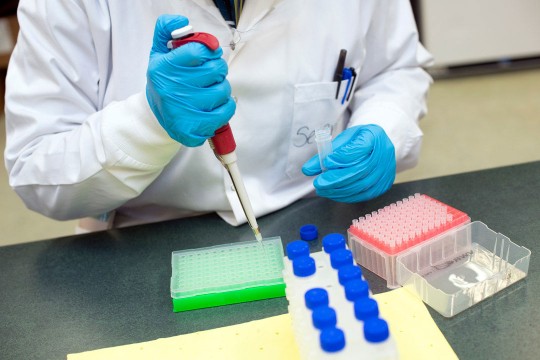
RIT announces new biological sciences master’s program
RIT will launch a new master's degree in biological sciences in fall 2027.
-
October 6, 2026
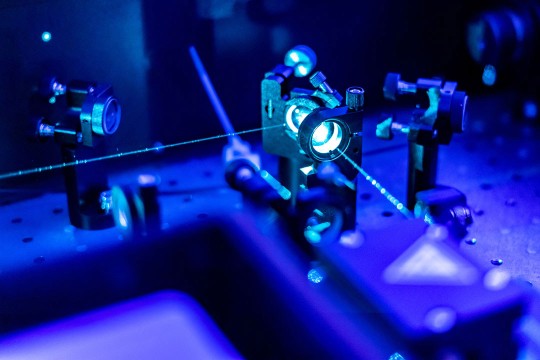
$31M UR-led NSF STELLAR Engine initiative names CEO
Rochester Business Journal reports that Sujatha Ramanujan has been named CEO of the STELLAR Engine, which brings RIT together with regional partners to advance next-generation laser technology, workforce development, and economic growth.
-
October 5, 2026
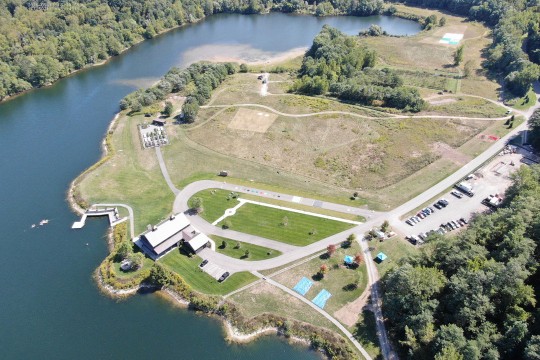
RIT receives NASA support for community-driven remote sensing experiments
NASA has awarded RIT’s Digital Imaging and Remote Sensing Laboratory (DIRS) a three-year grant to lead a remote sensing field campaign and share the resulting data with researchers, educators, and the public.
-
September 23, 2026

RIT scientist: Think of the flu shot as an update
The annual flu vaccine is like a software update for the immune system, an RIT expert in biochemistry and microbiology says. -
September 22, 2026
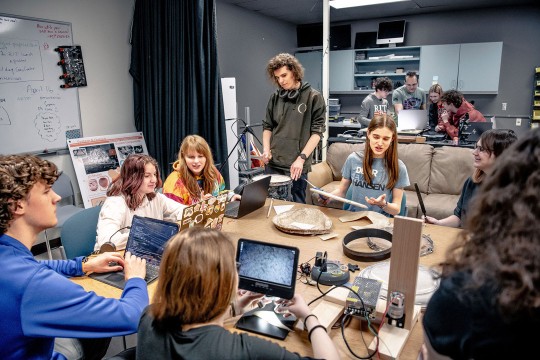
Freshman Imaging Project fuels a passion for innovation in RIT’s first-year students
Hands-on educational experience is key to future innovation, and students in RIT’s Freshman Imaging Project receive it as soon as they step foot on campus.
-
September 15, 2026

NASA awards RIT $2.2 million to extend Landsat satellite program collaboration
RIT’s decades-long partnership with the federal Landsat program will continue with a $2.2 million grant from NASA.
-
September 8, 2026

Black holes’ jet cycles illuminate fusion’s magnetic puzzle
Energy Innovation Review highlights research by Manuela Campanelli, Distinguished Professor of Astrophysics, using advanced simulations to show how magnetic fields and gas surrounding binary supermassive black holes can help astronomers identify these systems through electromagnetic and gravitational-wave observations.
-
September 3, 2026

NASA’s Roman Space Telescope could find alien Earths—but not like you think
Scientific American interviewed Meridith Joyce, assistant professor of physics, about NASA's Nancy Grace Roman Space Telescope and its role in dating stars in the Milky Way galaxy.
-
August 31, 2026
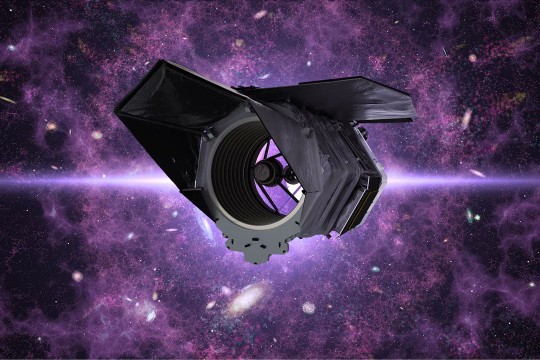
NASA is preparing to launch the Nancy Grace Roman Space Telescope. Here's what to know
PBS News published an article by RIT's Don Figer, professor in the College of Science and director of the Center for Detectors, about NASA's newly launched Nancy Grace Roman Space Telescope. Figer's column, which explains that images captured by the telescope will help researchers trace how the universe evolved over time, was originally published in The Conversation.
-
August 28, 2026
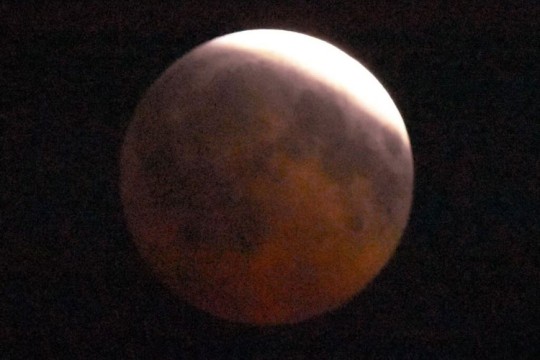
Lunar eclipse: Time-lapse of the moon, viewer photos, and reaction at RIT observatory
WHEC-TV reports that more than 100 people gathered at RIT’s observatory to watch Thursday night’s partial lunar eclipse, using the observatory’s telescope to get a closer look as Earth’s shadow gave the moon a reddish tint.
-
August 27, 2026
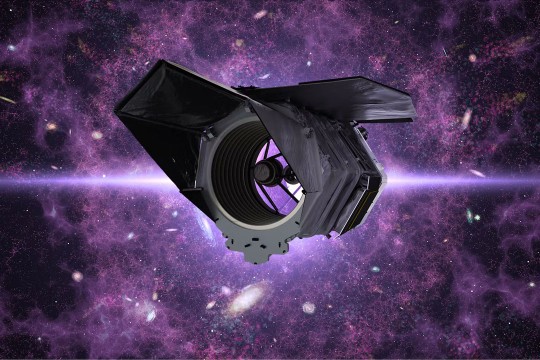
NASA is gearing up to launch its next flagship space telescope – combining spy technology with sophisticated infrared detectors
The Conversation features an essay by Don Figer, professor in the College of Science and director of RIT's Center for Detectors, explaining how NASA’s upcoming Nancy Grace Roman Space Telescope combines repurposed spy technology with sophisticated infrared detectors to study dark matter, distant galaxies, supernovas and planets.
-
August 25, 2026
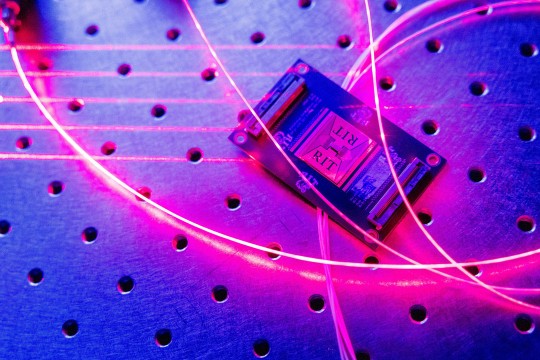
RIT part of NSF-funded Quantum Leap Challenge Institute
RIT is building its eminence in quantum research as part of a $37.5 million National Science Foundation (NSF) award for large-scale interdisciplinary research projects known as Quantum Leap Challenge Institutes.