From hot metal to global typefaces, professor has lifelong love for letters
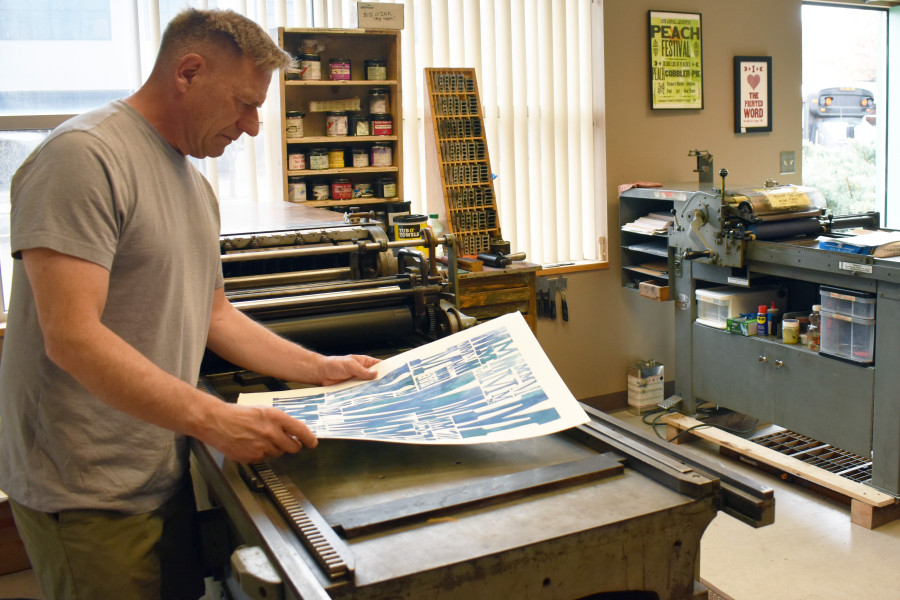
Steve Matteson runs a type foundry called Matteson Typographics in Colorado. His clients include Apple, Google, Microsoft (Xbox), Toyota, and Unilever.
Steve Matteson ’88 (printing) can trace his affinity for letterforms to his childhood, when he was naturally drawn to a piece of finely crafted calligraphy gifted to his father.
“I thought, ‘A human could actually write this way?’ It was mind-blowing,” Matteson said.
Still, it wasn’t until he stepped into a typesetting lab on the RIT campus — where he would handle hot metal and wood typefaces to later be digitized — that he realized how to apply his innate interest.
“Coming to RIT where you’re working with the latest technologies and seeing the transition of technology from photo type to digital type, that was happening while I was in school,” Matteson said. “It was an exciting time.”
Matteson went on to become one of the world’s prominent typeface designers, responsible for creating recognizable brand fonts and the graphic language for Apple, Google, Microsoft products, Toyota, Unilever, and more. His typefaces are experienced and used by countless people every day.
This academic year, Matteson began a two-year appointment as the Melbert B. Cary Professor in RIT’s School of Design. He is sharing his industry experience with students in his Typography III class while coordinating the selection and celebration of the 2026 recipients of RIT’s prestigious Frederic W. Goudy Award.
Trey Choate '26
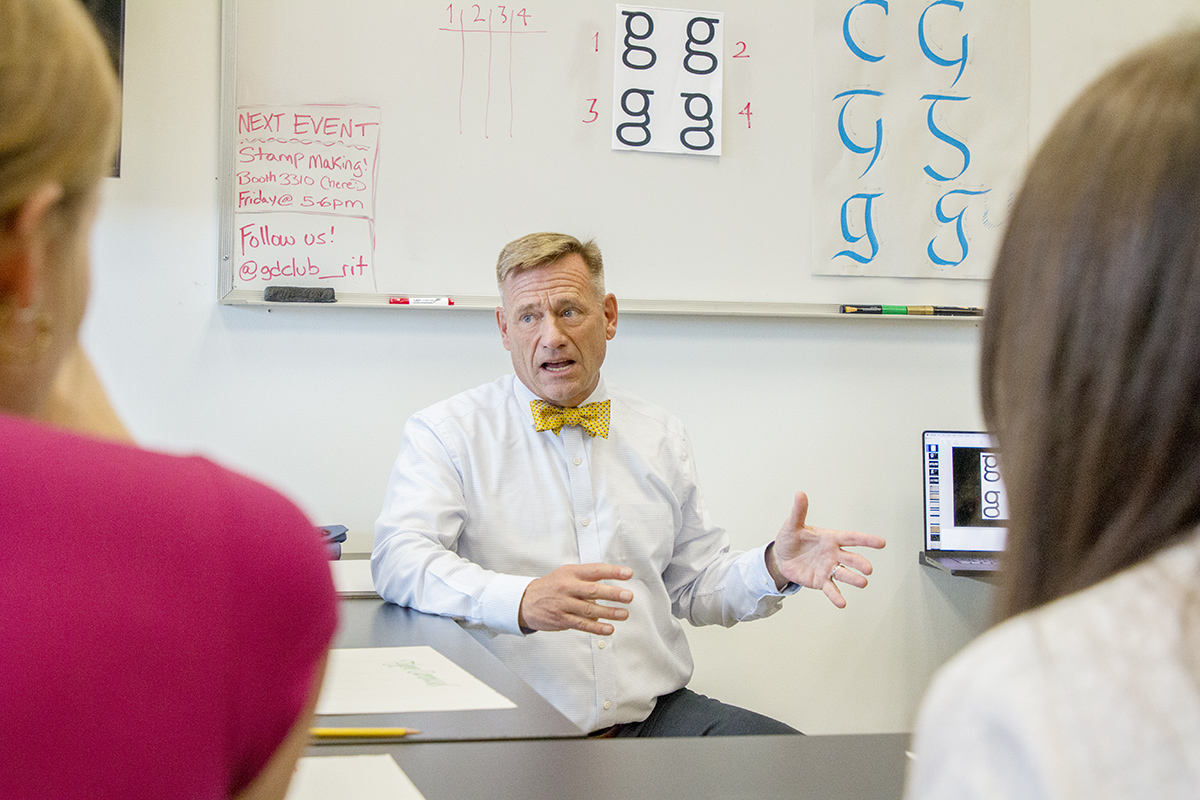
Steve Matteson leads a workshop during the 2025 Graphic Design Week, an annual, weeklong experience RIT's graphic design organizes for students.
The Goudy Award, which recognizes outstanding practitioners in type design and related fields, will be accepted on campus in April by Georg Seifert and Rainer Erich Scheichelbauer, authors of the pioneering Glyphs font editing software.
When the original Xbox console launched in 2001, with it came aggressive, angular type treatments in its user interface, befitting the gaming system’s edgy ethos. Matteson designed those Xbox typefaces and again was called on by Microsoft to develop fonts for the 2005 release of Xbox 360.
Matteson said the challenge of the original Xbox work was a need to depart from the normal Microsoft brand and present a typeface gamers found “cool.” He educated himself on the gaming community to inform his type design.
“That was my first opportunity to create a brand-new typeface that gave the expression of a brand,” Matteson said. “In the end, it was a nice marriage of letterform design and industrial design.”
More recently for Microsoft, Matteson designed the new default font of the Outlook email app, Aptos, which began replacing Calibri in 2023.
Shannon Lesch '26
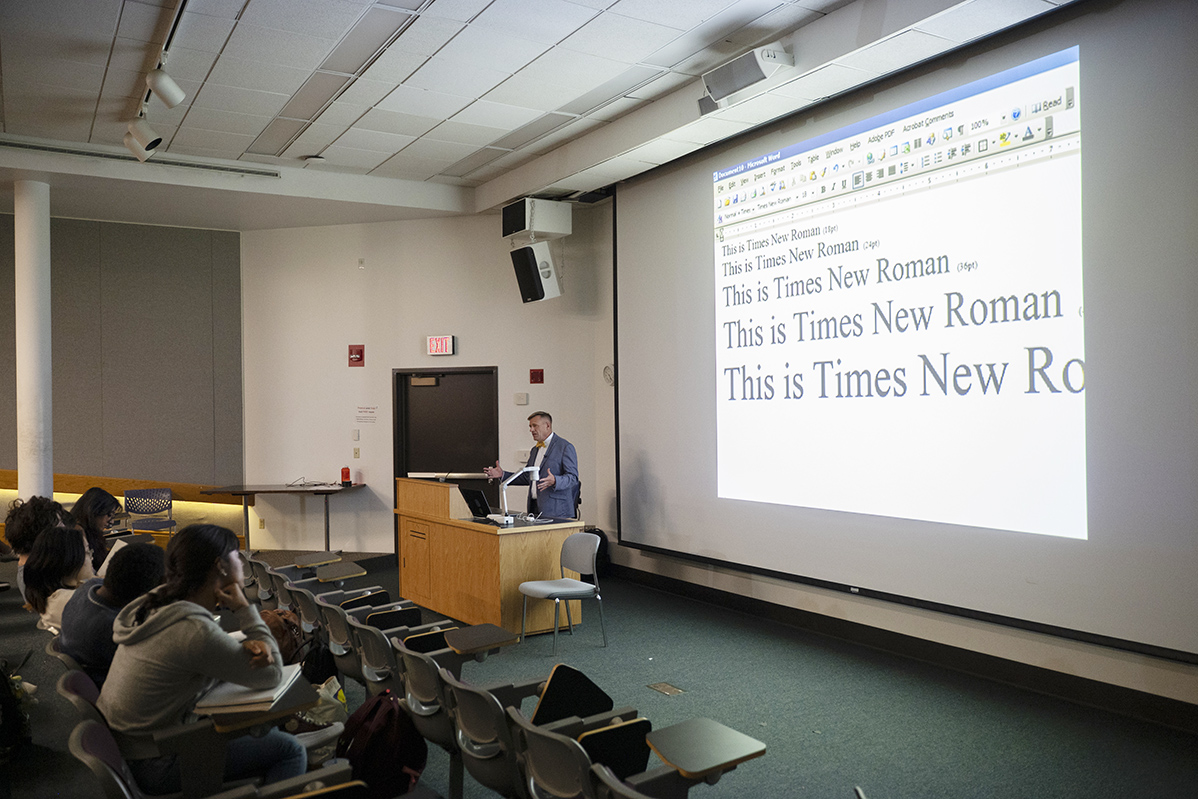
Steve Matteson leads a lecture in the fall semester of 2025.
Matteson runs his type foundry, Matteson Typographics, near Boulder, Colo.
In designing a new brand typeface for Toyota, Matteson drew inspiration from the car manufacturer’s then-tagline, “We Move People.” He took the company’s preference of clean, modern, geometric lettering and infused “diagonal nuance” to the letters, evoking motion by nudging readers’ eyes forward.
“For the Toyota designs, I wanted to import a bit of motion and humanity to them,” Matteson said. “My calligraphy background at RIT helped design letterforms that flowed much more nicely from one to the other, rather than being static letter shapes.”
Instead of completely changing the font for different models in the Toyota lineup, he assigned different weights of the same typeface to each — bold for a truck, lighter for an electric vehicle. His font is used by Toyota in all aspects of its marketing, from the cars themselves to advertisements to mailed letters to customers.
“Geometry suggests mechanical refinement, which you want in a good, quality automobile, but you also want driving to be ergonomically satisfying,” he wrote in his description of the project.
One of Matteson’s early-career roles was in font engineering — translating physical typefaces to function in a digital environment. He has been solving problems with type ever since.
“I just fell in love with it,” Matteson said. “That became a real hook for me, working to get my favorite typefaces from the hot metal typesetting lab onto my computer. And over the years, I’ve been reviving designs that never made it to digital.”