RIT student outcomes climb to new high
Data from class of 2025 reflect increases in employment rates and national average salaries
Scott Hamilton/RIT
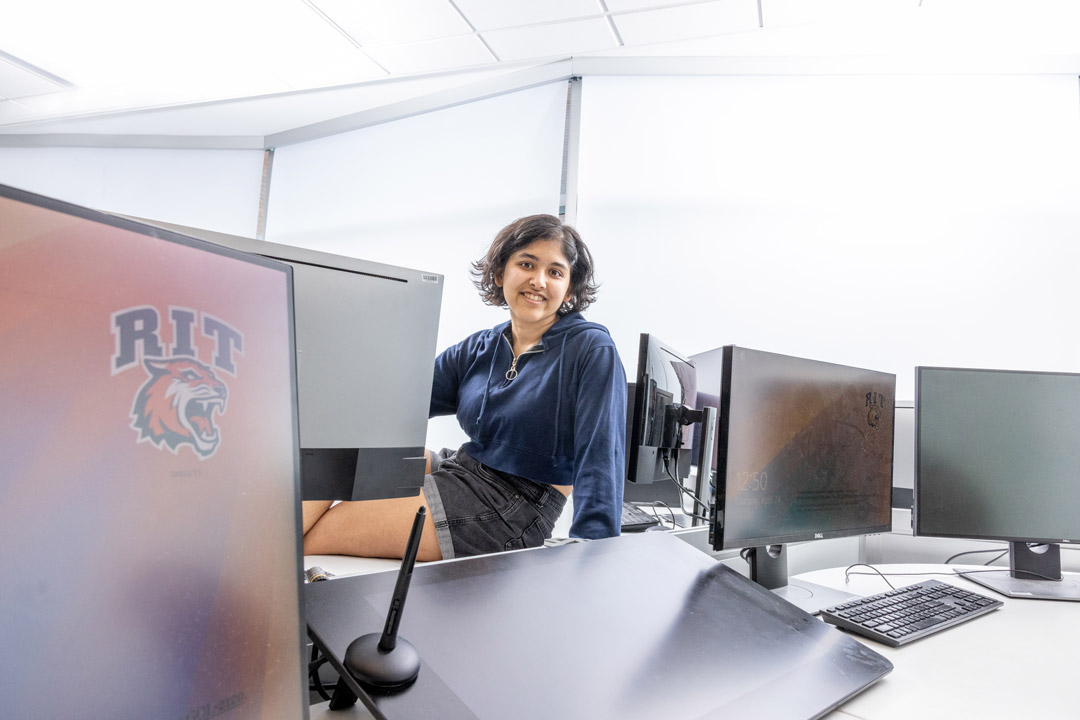
Hridiza Roy, who graduated in 2025 with a double major in individualized study and computer science, started a full-time position in February at Pixar Studios as a software engineer. “I still can’t believe that my first job out of college is my dream job,” Roy said. “It has been absolutely surreal.”
RIT students are entering the workforce with increasing success, including higher starting salaries, according to the university’s latest career outcomes data from the class of 2025.
The student outcomes rate has risen to 92.8 percent, up from 90.93 percent a year ago, reflecting growth in the number of graduates with full-time employment, pursuing advanced degrees, or volunteering or serving in the military, within six months of graduation.
To learn more
See data about growth in career outcomes for specific majors.
In addition, the average starting salaries for RIT undergraduates and graduates exceed national benchmarks. RIT undergraduates from the class of 2025 are making an average salary of $78,600, up from $76,500 from the class of 2024. The average salaries for graduate students increased to $91,900, up from $87,200. According to the U.S. Bureau of Labor Statistics, the average starting salary for the U.S. undergraduate class of 2025 is approximately $68,680, placing RIT graduates above the national average.
The data is reflective of RIT’s hallmarks, which include an emphasis on career readiness, hands-on learning, industry partnerships, and paid work experiences through its cooperative education program.
“Our students are graduating with more than just academic knowledge—they’re leaving RIT with meaningful, hands-on experience that translates directly into career opportunities,” said Maria Richart, director of RIT’s Office of Career Services and Cooperative Education. “The continued rise in outcomes and starting salaries reflects both the strength of our co-op program and the demand from employers who recognize the value of an RIT education.”
The university’s co-op program is ranked fifth in the nation by U.S. News & World Report, and Forbes named RIT a top college for launching careers.
The upward trend in outcomes and salaries also reflects broader institutional efforts to support student success, including courses designed to help students build skills and expand their networks, career fairs that bring industry partners to campus, and staff and faculty mentorship.