Home Page
We prepare the next generation of problem solvers to discover and innovate solutions for the future.
The College of Science promotes novel ways of thinking and implementation in a rapidly changing world.
We provide our scholars with hands-on experience, cross/multi-disciplinary research, and faculty and staff mentors who not only educate but inspire our scholars.

Join us for Fall 2026
There's still time to apply. For some programs, applications will be reviewed on a rolling, space-available basis.

Join Us for Accepted Student Open House
Visit campus on March 28 or April 11 to meet faculty, tour campus, and ask your questions.


Faces of RIT
-
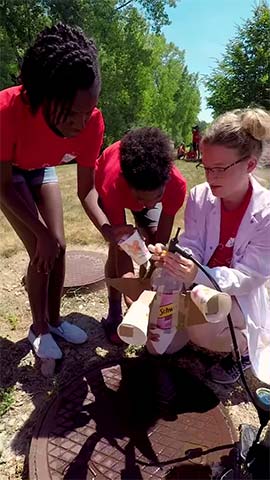
Connecting Kids to Science
Devon M ChristmanPhysicsOver the summer, Christman taught a workshop called “Experiments in Science” to a group of children from RIT’s Kids on Campus program. By helping to change their perspectives on who and what a scientist is, Christman is shaping the minds of tomorrow’s scientists.
-
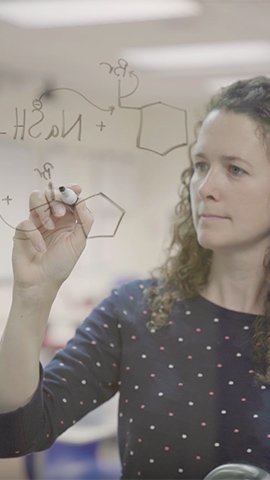
Expanding ASL
Tina Goudreau CollisonProfessor of ChemistryA complicated vocabulary and a lack of dedicated signs in American Sign Language makes Organic Chemistry a challenge for deaf and hard of hearing students. Collison worked with interpreters to develop new ASL signs, leading to profound learning improvements for her students.
-
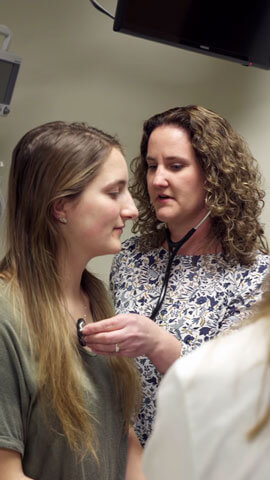
Giving Back
Jennifer Wheeler, M.D. BS ’01BiotechnologyFamily MedicineAfter 9/11, Wheeler enlisted in the US Army and served as a doctor in Afghanistan. Now, she practices family medicine and serves as a preceptor to RIT students who are embarking on their own careers in medicine.
-
Enhancing Reality
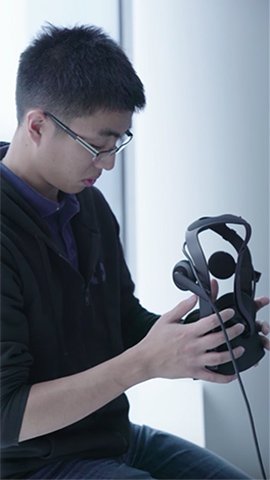
Kevin KhaImaging ScienceKha interned with Oculus testing their next generation of VR cameras, which have the potential to aid law enforcement and impact learning in schools. The internship turned into a full-time job, and Kha plans to work on enhancing the VR experience.
-
Medicine's Future
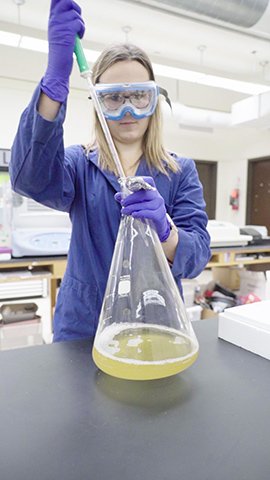
Nicole PannulloBiochemistryBy working on a faculty-guided research project, Pannullo has gained hands-on research experience to pursue a future in regenerative medicine. It’s one way Pannullo is putting experiential learning to work.
Latest News
-
February 18, 2026
Ph.D. student recognized for work in optics
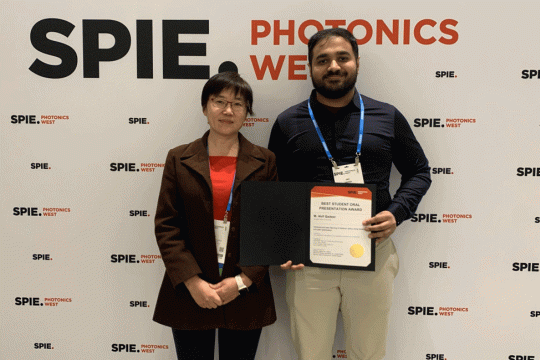
Imaging science Ph.D. student Muhammad Akif Qadeer has been awarded the 2025 Harvey M. Pollicove Memorial Scholarship from the Optica Foundation. The award is given to one student each year who shows potential in precision optics manufacturing and lens design.
-
February 11, 2026

Imaging science Ph.D. student advances photo conservation
Imaging science Ph.D. student Diane Knauf is shining new light on old images with help from a grant from the National Park Service.
-
February 10, 2026
Researchers develop new method for predicting chaos
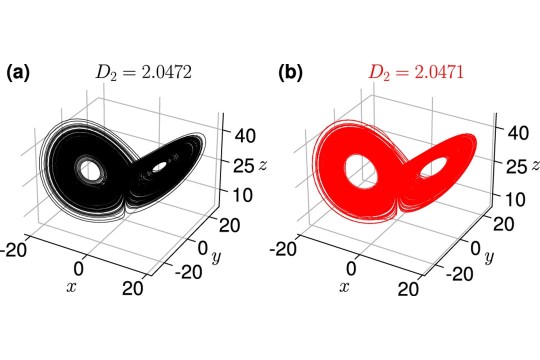
Mathematician Edward Lorenz used the butterfly effect to explain chaos theory in the 1960s. Now, decades later, a team from RIT has developed a method to predict chaos using less data, fewer parameters, and a more user-friendly format.
-
February 9, 2026
Twelve graduates honored with Distinguished Alumni Awards
Distinguished Alumni Awards are presented annually by each of RIT’s nine colleges, the Graduate School, and the School of Individualized Study to alumni who have performed at the highest levels of their profession or who have contributed to the advancement and leadership of civic, philanthropic, or service organizations.
