RIT research reveals why women stay silent in rude workplaces
Saunders College of Business professor finds incivility silences women more than men and that the fix is more than just telling women to speak up

Adobe Stock
Research from RIT’s Saunders College of Business found that incivility at work leads women to hold back their ideas more than men.
Research from a Rochester Institute for Technology professor shows that rudeness in the workplace keeps good ideas from being shared, and that women are most likely to hold back because of it.
That study, Silenced by Incivility, co-led by Kristin Bain, associate professor of management at RIT’s Saunders College of Business, found that women engaged in silence more often than men in uncivil groups. In civil groups, that disparity disappears. The findings come at a time where incivility, or negative behavior which violates social norms, in American life continues to grow.
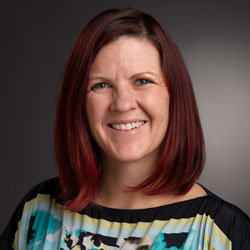
Kristin Bain
The reason, according to Bain, is backlash. Workplaces tend to reward leadership traits such as assertiveness, decisiveness, and taking charge, things society associates with male figures. When women assert themselves in a similar fashion, they can face more subtle penalties, like a reduced likelihood of being promoted.
“It’s usually in terms of finding the woman less likable,” said Bain. “This is where you get people saying that ‘she’s bossy.’ Women are trying to show that they have these masculine traits that we associate with leadership, but doing so violates how we expect women to act.”
Common solutions often ask women to just be more assertive, advice that Bain is skeptical of. Instead, she wants the focus shifted to how managers can establish and support a better culture and workplace practices.
“Advice often frames this as a woman’s problem, ‘the women are broken, it’s their fault for the situation,’” Bain said. “When in reality, we need to be aware that there are these larger structural things in place and shift the focus to how we address the culture, norms, practices, and policies that create these inequalities that we’re trying to get over.”
The first step for managers and leaders is to not accept silence for agreement. The second is addressing uncivil behavior where the group can see it. It’s often small motions: the eye roll, the interruption, the quick dismissal of a point before a sentence is finished.
Also, managers can build civility norms with their teams from the start, establishing a culture of respect that can be acceptable to different people within a group.
Coworkers also play a key role. When a colleague is labeled “bossy” for making a decisive call, Bain suggests pushing back, for example, by noting that the decision helped the team get things done.
“Knowing that someone has your back can make a really big difference,” she said.
RIT faculty and student researchers are driving world-changing research by harnessing the university’s unique strengths in technology, the arts, and design. With 14 doctoral programs, RIT researchers are focused on advancing knowledge, solving complex global challenges, and making a meaningful impact across disciplines.
Bain brings these lessons to her undergraduate and graduate classrooms at Saunders, teaching her students about backlash, managing diverse teams, and how to recognize society’s unconscious biases. In one activity she conducts with both her executive MBA and undergraduate students, she has them review candidates to hire a university president. None of the materials hint at the gender of a candidate, but Bain mentions that, inevitably, students often make the same assumptions, using he/him pronouns when talking about the candidates.
“It’s really powerful, because it helps to highlight how these unconscious biases affect us in ways that we really can’t anticipate,” she said. “There are no easy solutions, but I think there are definitely things we can do, at least in our little microcosms, to make things better.”
RIT’s Saunders College of Business prepares students to lead at the intersection of business and technology. Its nationally ranked programs allow students to gain real-world business experiences through a tradition of applied learning, cooperative education, industry partnerships, and capstone programs. Saunders College faculty publishes peer-reviewed research in areas such as cybersecurity, digital marketing, business analytics, and strategic leadership.
Bain’s study was co-written with Kathryn Coll (University of Utah), Tamar Kreps (University of Hawai’i at Manoa), and Elizabeth Tenney (University of Utah).