Success Story
Craft Cannery
From Craft to Connected: A Specialty Food Packager Expands with Smart Sensors
Project Highlights at a Glance
- Craft Cannery won $500,000 from Grow-NY to expand in 2024
- The manufacturer used a pen-and-paper system to log product temperatures and had no way to identify equipment failures outside work hours
- COE-ASM identified opportunities to use automated temperature monitoring to help ensure quality and prevent losses as the business grew, and designed a cost-effective system using IIoT hardware and software to enable quality control in real time
- Craft Cannery implemented this smart temperature monitoring system, supporting a scale-up of 500% in production, confidence in food safety, and audit-ready efficiency
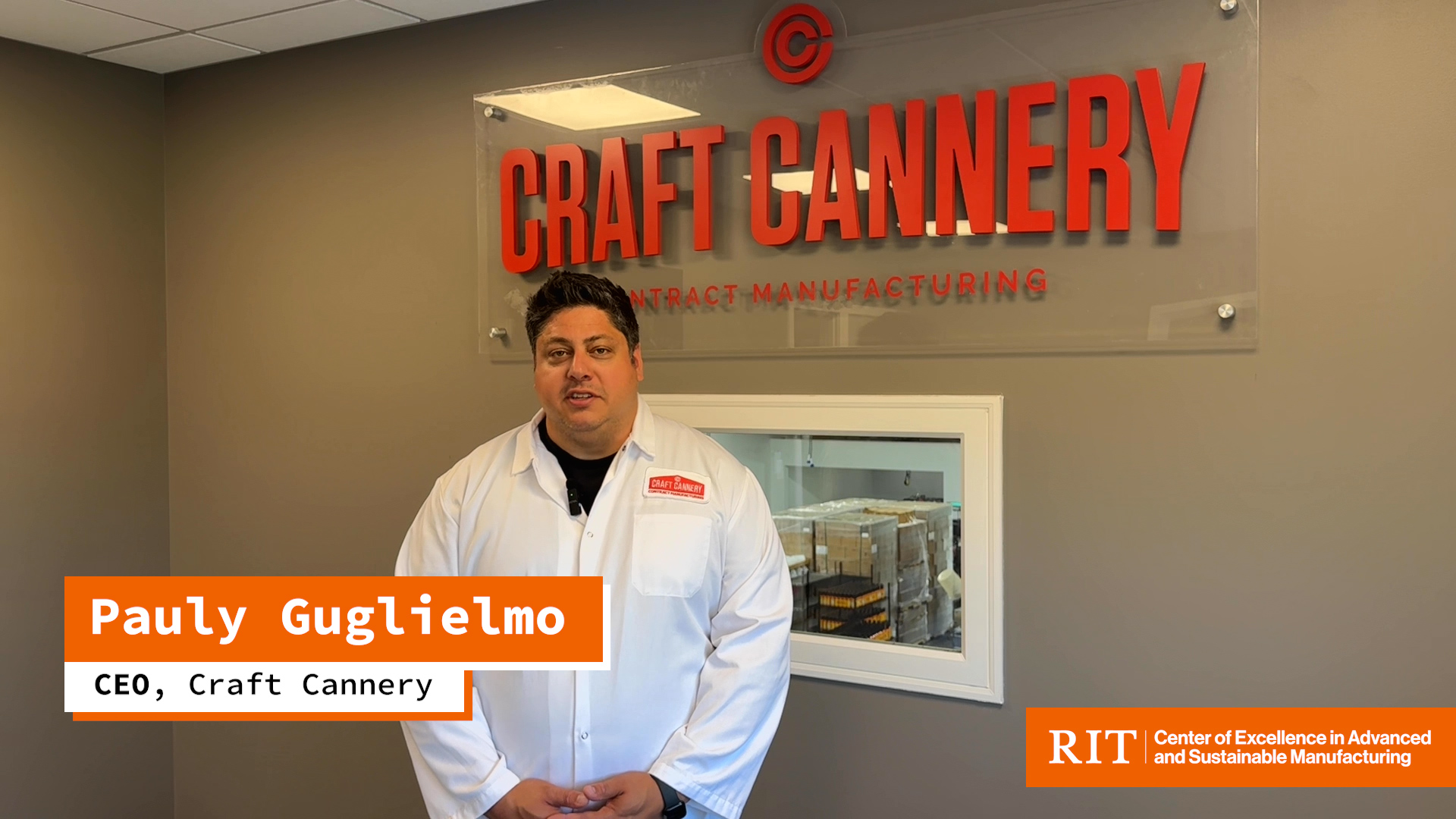
Pauly Guglielmo, CEO of Craft Cannery in Rochester, NY, explains how RIT's COE-ASM engineers deployed smart monitoring technology that prevents product loss, builds audit-ready temperature data, and helps mitigate big operational risks for small food manufacturers—positioning his business as an industry leader.
Smart Monitoring that Protects Product, Simplifies Audits, and Scales with Growth
How a fast‑growing food manufacturer partnered with RIT’s COE-ASM to turn manual temperature checks into a smart, reliable, Industry 4.0-based monitoring system.
The Challenge: “Keep it cold (and hot) without missing a beat."
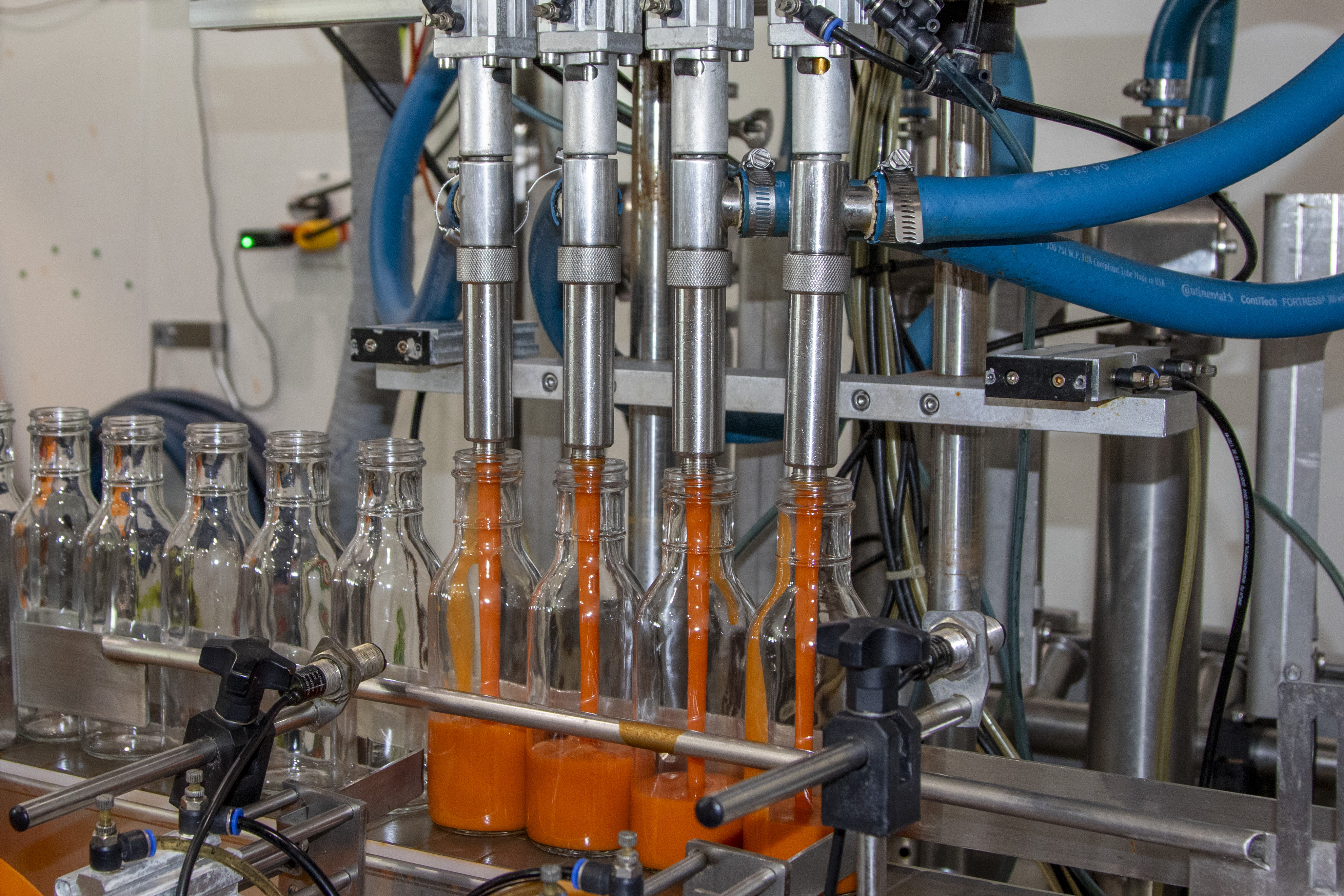
Craft Cannery’s growth has been nothing short of remarkable. Since launching in 2020, the small food processing and packaging company has quadrupled in size, won the $500,000 Grow‑NY prize (2022), and planned a major factory expansion in 2024. With that growth came a critical need: tighter, continuous control of temperature‑sensitive equipment across the plant. Refrigerators, freezers, and cook kettles are the backbone of the operation—and a failure at the wrong time could spoil thousands of dollars in product.
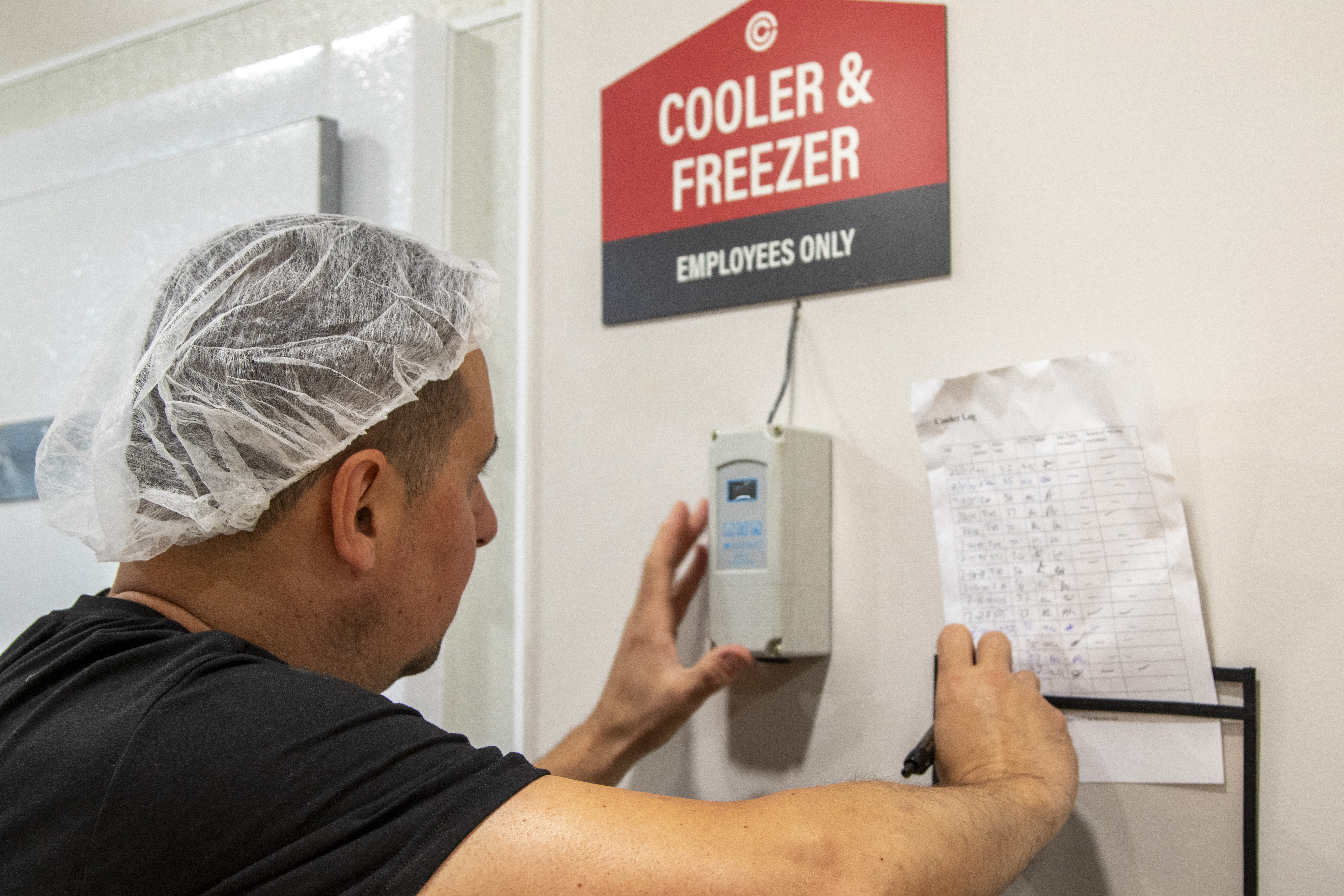
Until recently, temperature monitoring at Craft Cannery relied entirely on manual checks and paper logs. “Previously to working with RIT, all we had was a thermometer in our cooler,” explained CEO Paul “Pauly” Guglielmo. “But what if it goes down on Friday at 5:30 p.m.? You’d walk into a cooler full of spoiled items on Monday morning.” As the facility prepared to double in size, that old system became both risky and unsustainable—not only for food quality, but for the increasing demands of state and federal audits.
“RIT’s remote monitoring and alerts—that was the selling point. As soon as I heard that, I said yes, we need that.”
—Pauly Guglielmo, CEO, Craft Cannery
The company needed a modern, scalable monitoring system that could protect ingredients, support audits, and give staff peace of mind—even after work hours and on weekends.
The Solution: Affordable, Connected, and Designed for Real‑World Use
To modernize Craft Cannery’s operation, RIT’s Center of Excellence in Advanced and Sustainable Manufacturing (COE‑ASM) conducted a full assessment of every temperature‑critical point in the facility, from three existing cook kettles to the refrigerator, freezer, and automatic filler/capper. The team also mapped future needs—like new kettles and expanded cold storage that would be added during the 2025 construction.
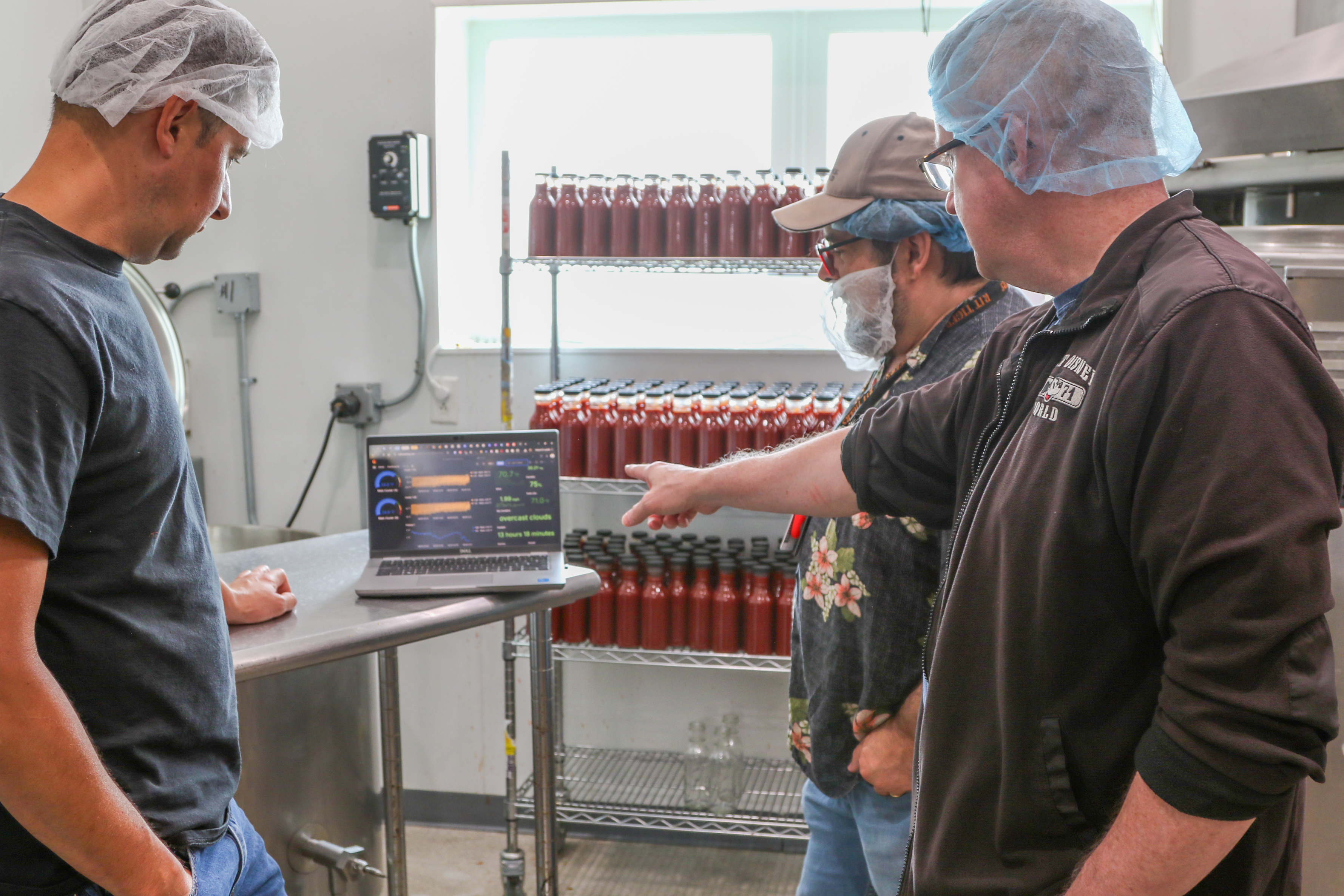
The engineering team then created a modular, cost‑conscious solution using industrial wireless temperature sensors, cloud-based data storage, and real‑time dashboards. The system automatically flags abnormal trends and sends instant mobile alerts with escalation rules so no alarm goes unnoticed.
“Chris Piggott, an engineer at RIT, tailored a set of commercially available solutions, some of which are free, into a comprehensive system that talks to the sensors, stores readings in the cloud, and alerts the Craft Cannery team when temperatures drift,” said RIT program manager Gerry Hurley. Piggott added that precise anomaly detection was essential: “Every amount of data needs to be accurate and reliably recorded.”
Read more about the smart monitoring system: Blog | Case Study
For Craft Cannery, the process was hands‑on, flexible, and accessible. “It wasn’t just, ‘here’s what you have to use.’ It was options—tiered tools, pros and cons, constant communication,” said Guglielmo. “The communication was so key.”
The Impact: Less Guesswork. Fewer Close Calls. More Confidence.
The automated monitoring system has transformed how Craft Cannery manages quality, safety, and compliance. The most immediate benefit came from real‑time alerts—something Guglielmo calls the system’s single greatest feature. “We get an alert the moment our cooler or freezer goes down,” he said. “We can fix it before we lose everything that’s in there.
Beyond peace of mind, the system also created new operational intelligence. With minute‑by‑minute temperature histories, Craft Cannery built a precise thawing schedule for frozen ingredients—three days for ground beef, one day for carrots—ensuring efficient, consistent prep for kettle runs. “I don't know if we would have ever gotten that kind of intelligence without the data this system provides,” Guglielmo noted.
Regulatory inspections have also become smoother. Instead of a single thermometer reading, auditors now see comprehensive trends that verify consistent control over time. The new system replaces guesswork with proof—exactly what inspectors want to see.
“We can now demonstrate live data, historical trends, and regular monitoring. It’s made audits so much easier.”
—Pauly Guglielmo
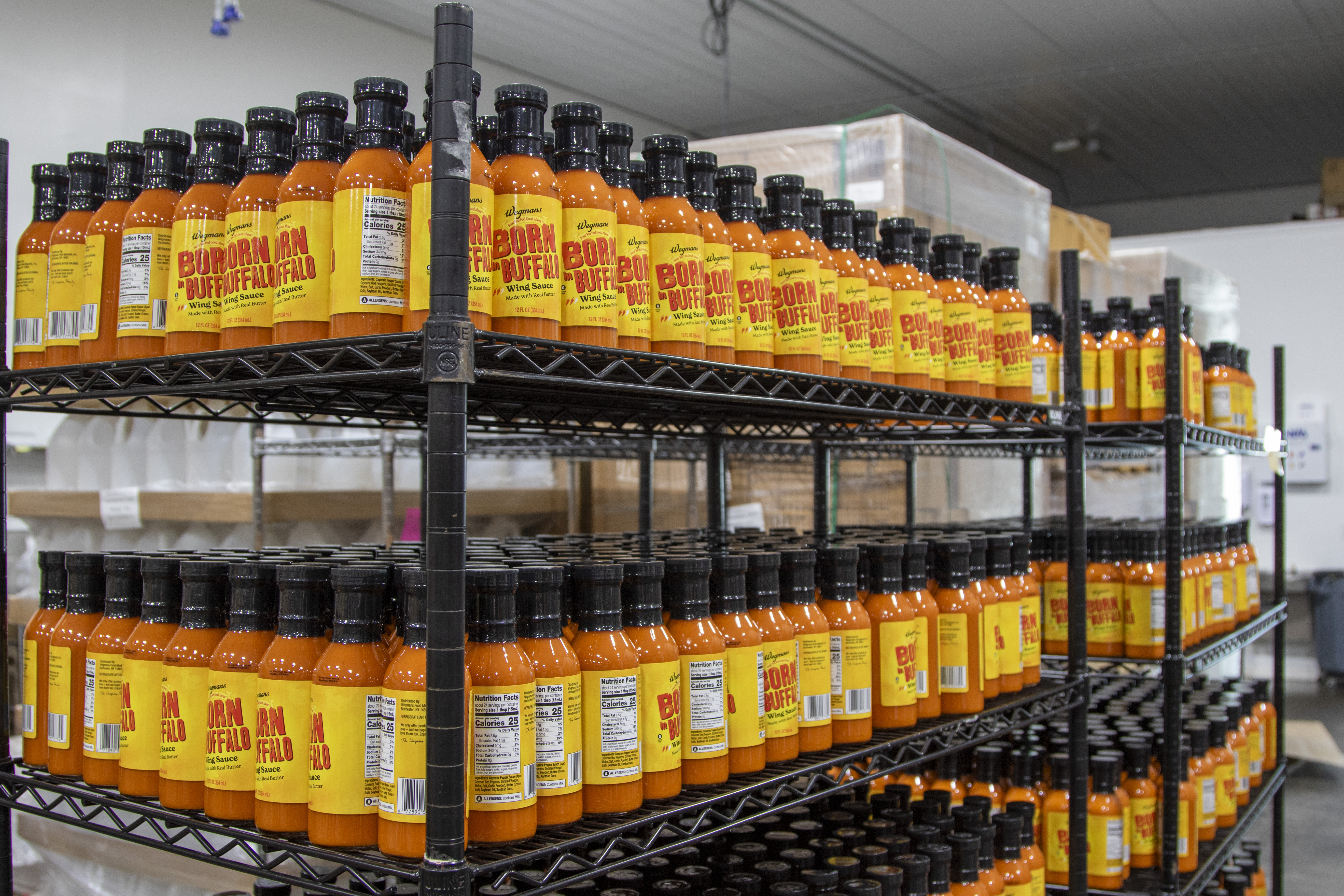
As a result, Craft Cannery has become a regional leader among small food manufacturers, leading peers in digital transformation, one sensor at a time.
Next Steps
The company plans to expand smart solutions further, including exploring smarter security technologies aligned with food‑defense requirements.
With the right ingredients—COE-ASM's deep technical expertise and practical, real‑world engineering mixed with Craft Cannery’s commitment to high-quality artisanal food production—the business is proof that adopting the best-fit Industry 4.0 solutions truly work on the shop floor.
Piggott sees the win for Craft Cannery as part of a larger opportunity for small operations in New York State: “Many small manufacturers know they need to modernize, but the path forward isn’t always clear. Our approach at COE-ASM is collaborative and hands-on — applying practical Industry 4.0 tools in ways that solve real problems. In Craft Cannery’s case, that meant using Internet of Things (IoT) monitoring to protect critical ingredients and reinforce food safety and quality control. Specifically, we created a 5-part IoT solution to install new sensors, wirelessly interface for measurement, transmit data to cloud storage, make a dashboard to pole the cloud data and display real-time graphing, and then send SMS text messages and emails to Craft Cannery.”
“That kind of focused, achievable innovation empowers companies to grow with confidence,” he concludes.
© 2026 Rochester Institute of Technology. This work conducted by Rochester Institute of Technology was funded using federal funds under award No. 01-79-15124 from the Department of Commerce Economic Development Administration and funds from the NYS Department of Economic Development. The statements, findings, and conclusions or recommendations expressed in this material are those of the author(s) and do not necessarily reflect the views of the Department of Commerce, the Economic Development Administration, or the NYS Department of Economic Development.