Office of Faculty Recruitment News
-
May 26, 2020
RIT researchers receive grant to study microplastic pollution in Lake Ontario
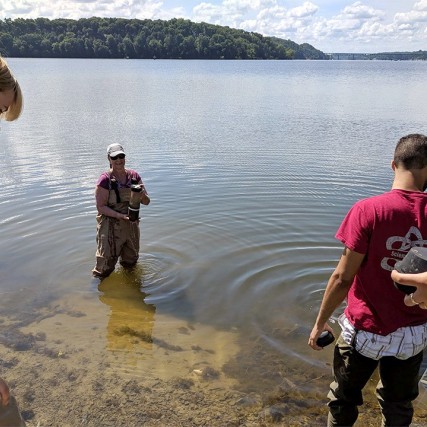
A team of RIT researchers will explore how tiny particles of plastic pollution are impacting Lake Ontario thanks to new funding from the National Oceanic and Atmospheric Administration. The multidisciplinary group will examine how microplastics are transported and transformed in the lake, where they ultimately end up and what effects they have on the ecosystem.
-
May 21, 2020
How much plastic is in the Great Lakes? Tons and tons.
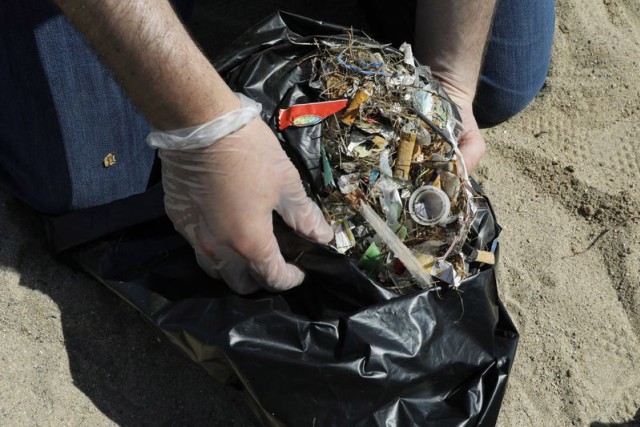
City Newspaper talks to Juliette Daily, mathematical modeling Ph.D. student, and Matthew Hoffman, assistant professor in the School of Mathematical Sciences, about their research on plastic pollution in Lake Erie.
-
May 19, 2020

RIT Professor Emeritus Roger Dube receives Fulbright Fellowship
Professor Emeritus Roger Dube was recently awarded a prestigious Fulbright fellowship for a project to increase retention of First Nations students in STEM higher education programs. The project will take place at the University of Manitoba, where he is serving as Visiting Indigenous Scholar.
-
May 15, 2020
Student to Student: Remote Sensing
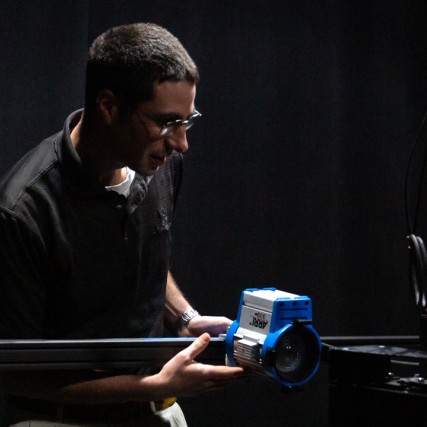
RIT student, Benjamin Roth, credits his mentors for his interest in remote sensing. His research focuses on retrieving accurate biophysical information on forest health from remote sensing platforms.
-
May 11, 2020

Graduate class prepares promotional plan for Vignelli archive
Students in the Cross Media Workflow course collaborated with the Vignelli Center for Design Studies to produce an innovative and sustainable cross-media project.
-
May 8, 2020
RIT Honors Distinguished Faculty Awardees for 2020
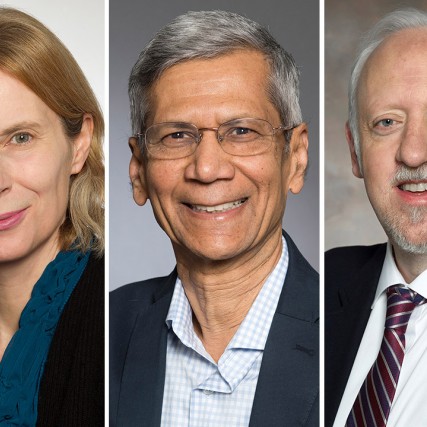
RIT honored its 2020 class of Distinguished Faculty—Manuela Campanelli, Satish Kandlikar and James Perkins. The Distinguished Professor designation is given to tenured faculty who have shown continued excellence over their careers in teaching, scholarly contributions, lasting contributions in creative and professional work and service to both the university and community.
-
May 7, 2020
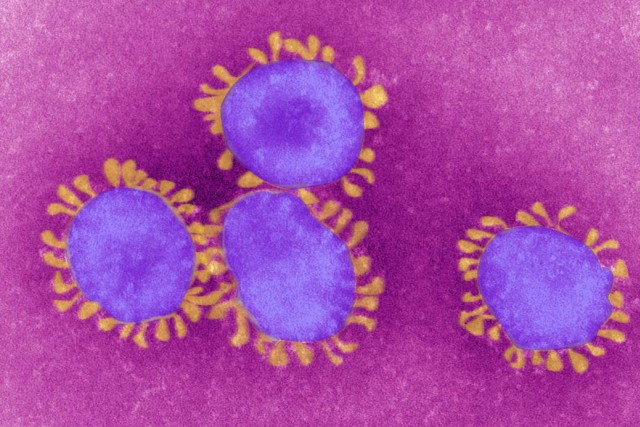
A Very Close Look At Some Of The World's Most Feared Viruses
BuzzFeed talks to Michael Peres, professor and associate chair, School of Photographic Arts and Sciences, about capturing images of microscopic viruses and bacteria.
-
May 7, 2020
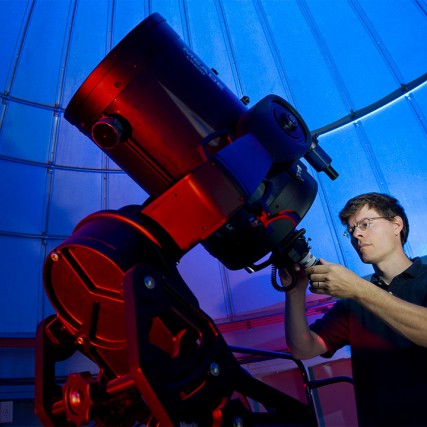
Professor Michael Richmond’s passion for teaching physics and astronomy earns him Eisenhart Award
Michael Richmond considers himself a “lucky guy.” As a professor in RIT’s School of Physics and Astronomy, he gets to spend his workdays talking about the subjects that have fascinated him since he was young. His passion for teaching physics and astronomy shines through so brightly that this year it earned him an Eisenhart Award for Outstanding Teaching,
-
May 4, 2020

RIT’s Nabil Nasr named to Board of Trustees at Ellen MacArthur Foundation
Nabil Nasr, RIT’s associate provost and founding director of the Golisano Institute for Sustainability, has been appointed a Trustee by the Ellen MacArthur Foundation, formed in 2010 to inspire a generation to rethink, redesign and build a positive future through the vision of a circular economy.
-
April 30, 2020

U.S. Environmental Protection Agency recognizes RIT for green power leadership
RIT’s utilization of nearly 71 million kilowatt-hours (kWh) of green power annually represents more than 92 percent of its total power needs, placing it No. 21 on the EPA’s Top 30 College & University List of the largest green power users among higher-education institutions in the agency’s Green Power Partnership.
-
April 28, 2020

Student to Student: Microplastic pollution in the Great Lakes
In her research, Juliette Daily uses 3D models to show where microplastic pollution is collecting in the Great Lakes. As a result of her research, she is now the first author of her first published paper.
-
April 28, 2020
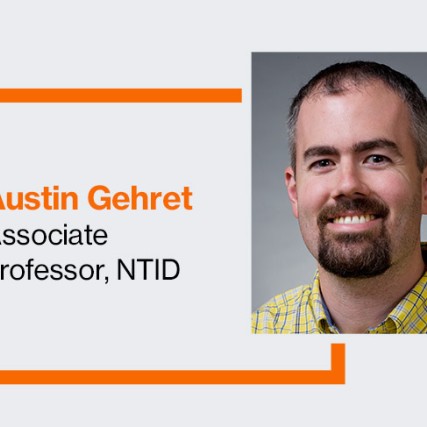
RIT/NTID associate professor awarded Ronald D. Dodge Memorial Faculty Grant
Austin Gehret, an associate professor in NTID's Department of Science and Mathematics, was honored for his research project exploring the development of an e-learning model for deaf and hard-of-hearing students. Gehret’s research is especially vital during the COVID-19 pandemic as remote learning for all students has become the “new normal.”