RIT historians elevate local LGBTQ+ history in a new exhibit
Dan Sapper
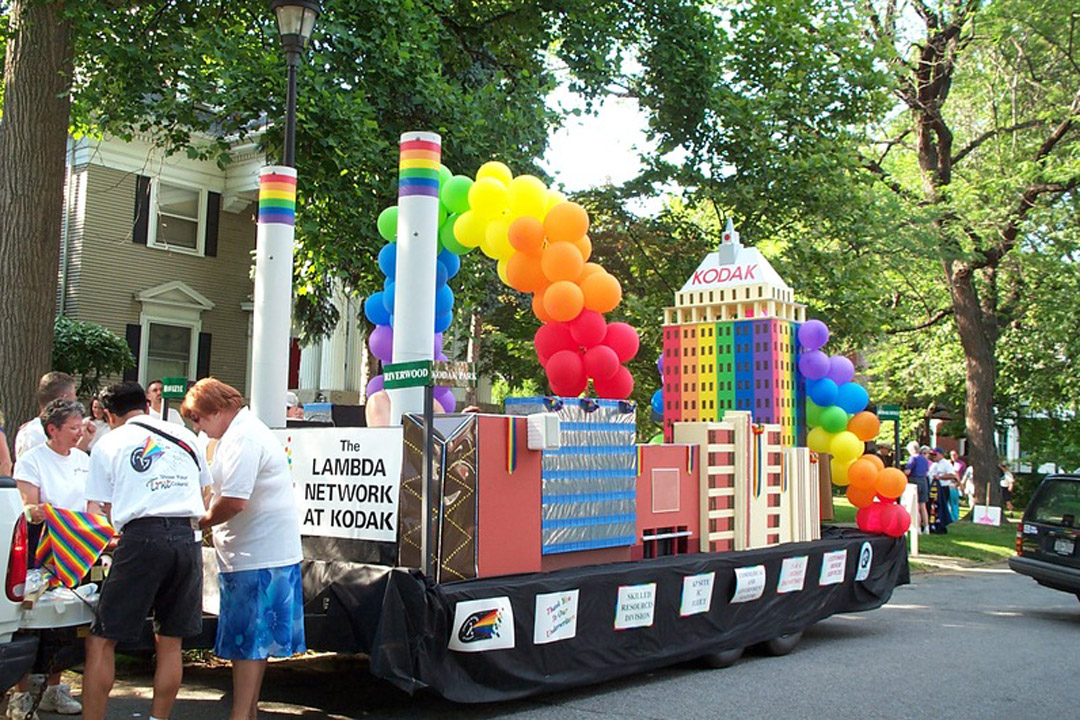
“Picturing Equality: The Lambda Network at Kodak” opened on June 27 and will be on view through Nov. 8 at the George Eastman Museum. Above is an archival photo of Lambda Network members preparing to march in a local Pride Parade.
RIT Professor of History Tamar Carroll spent the last five years researching the Lambda Network at Kodak, an LGBTQ+ employee resource group founded in the early 1990s. Lambda’s influence helped position Kodak as a national leader in workplace equality at a time when most queer workers were closeted.
“Everyone in Rochester has a theory or story about Kodak, but very few people know about the Lambda Network. I thought that it was an important story to tell,” said Carroll.
To share that story, Carroll curated a new exhibition for the George Eastman Museum, in collaboration with former Lambda members Emily Jones and Dan Sapper, and many RIT scholars and local historians. The exhibition, “Picturing Equality: The Lambda Network at Kodak,” opened on June 27 and will be on view at the museum’s Gallery Obscura through Nov. 8. An opening celebration and panel discussion will be held on Wednesday, July 8, from 6-7 p.m. in the Dryden Theatre.
Using never-before-shared archival documents, photographs, videos, and oral history interviews, the exhibition explores how Lambda members changed Kodak’s corporate culture and benefit policies to be more LGBTQ+ inclusive.
"Sharing the history of the Lambda Network at Kodak through Gallery Obscura is important to the mission of the Eastman Museum and to the diverse community it serves,” said Emma Rathe, manager of programs and exhibition production and co-director of Gallery Obscura, George Eastman Museum. “The archival documents featured in this exhibition reveal how relevant their messaging remains today."
The impact of the Lambda Network
The Lambda Network was formed by a small group of gay and lesbian employees and was officially recognized by Kodak in 1993. With strong support from senior leadership, the Network expanded its scope over time and developed a primary focus on fostering LGBTQ+ inclusion through educational initiatives.
Tamar Carroll
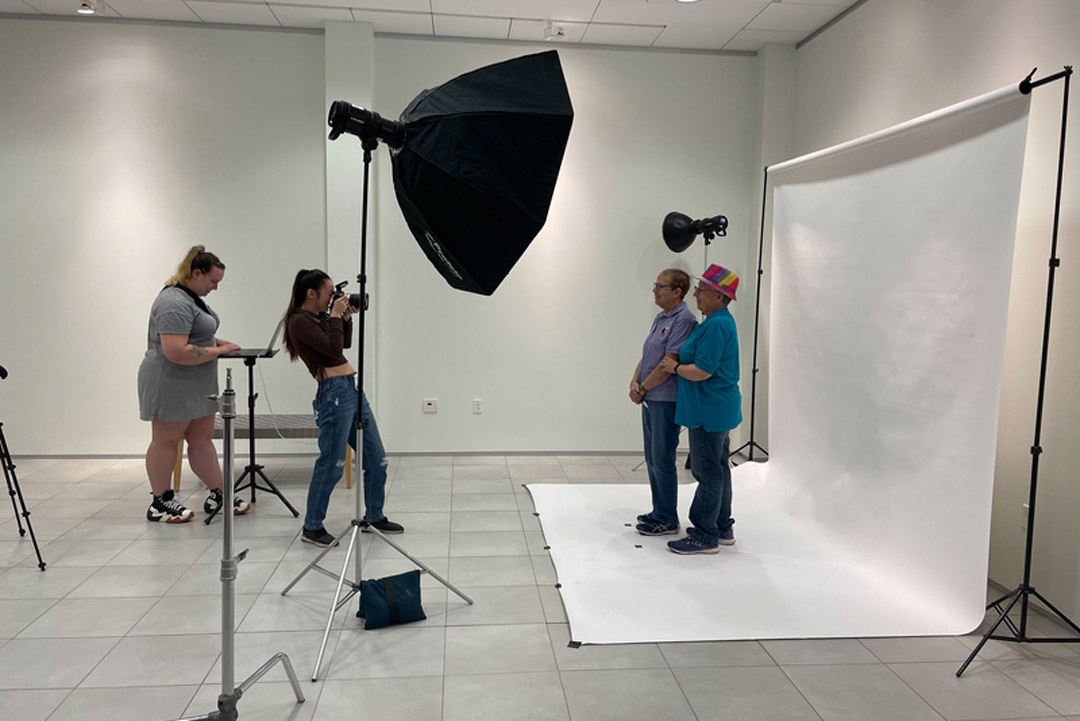
As Carroll’s research on the Lambda Network developed, she and her team were inspired to collaborate with Jones and Sapper to host the first-ever Lambda Network Reunion in 2023. During the event, students took photos and interviewed former Lambda members to support the ongoing research project.
The work of the Lambda Network helped build community, foster a more positive workplace environment, and reshape Kodak’s corporate culture in meaningful ways. Its influence inspired the company to implement domestic partner and adoption benefits and to champion the Employment Non-Discrimination Act (ENDA) before the U.S. Congress.
“I hope that the personal stories of Lambda members will resonate and inspire people to think about how they can take part in making social change,” said Carroll. “The Lambda members were ordinary workers at Kodak, but they accomplished something extraordinary. We have power and influence in our roles as workers.”
Elevating under-reported Rochester history
Carroll’s research wouldn’t have been possible without Jones and Sapper, who each had a wealth of archival material, both physical and digital, relating to the Network.
Jones, whose final role at Kodak was director of New Imaging Materials Research, co-founded the Lambda Network with David Kosel and Kathryn Rivers. Sapper, whose final role was a factory quality manager, served as president of the Network for several years.
The pair granted Carroll access to their materials so she and her students could digitize the archival documents, photos, and video. To make the digitized content accessible to the public, the team established a web exhibit, “Remembering the Lambda Network at Kodak,” which laid the groundwork for the new physical exhibition.
Jones said she was eager to work with Carroll because she didn’t want the story of Lambda to become lost history.
Provided
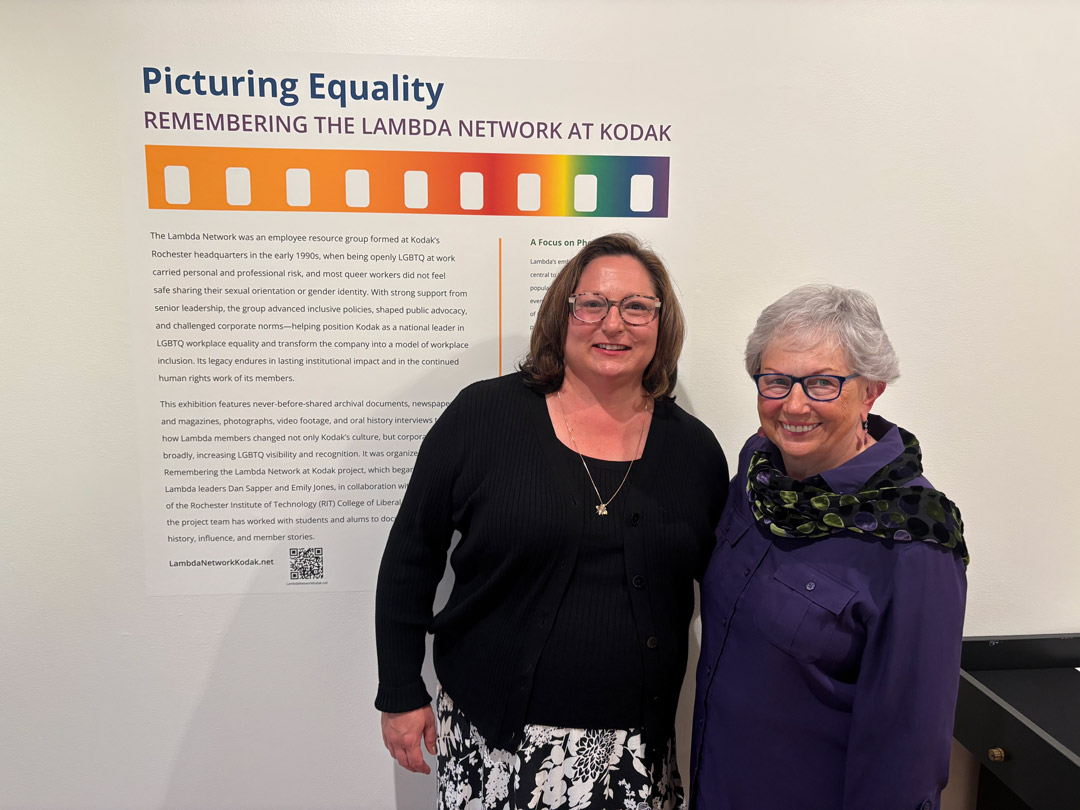
Carroll, left, and Jones, right, pose for a photo in Gallery Obscura during the installation of the new exhibition.
“The writing of this history is critical now, when we’re seeing data from the Human Rights Campaign and Gallup polls that reflect a backslide and change in feeling around gay marriage and inclusion,” said Jones. “Tamar is showcasing some very seminal work that no one thought of doing before. Being connected to her work is a source of pride for us.”
Hosting the exhibition at the George Eastman Museum has been especially meaningful for Sapper, given its connections to Kodak.
“For me, in a way, it’s a homecoming to have our stories and the history of our network, from inception through the present, being shown there,” said Sapper. “These materials were core to our experience, our friendships, and our work. It means an awful lot to reflect upon those years and—to be cliché—look at those Kodak moments and pictures.”
Student opportunities for hands-on research
Since its inception, nearly 20 students have contributed to Carroll’s Lambda Network research.
Emmarose Tabin ’24 (humanities, computing, and design) joined the team in 2023, and she continued to be involved after graduating. She said one of her motivations for staying engaged is because she is queer and believes preserving queer history is vital.
“Not that long ago, people were genuinely afraid to be out, and it was normal to be closeted. I’ve never experienced that kind of fear in my entire life, and I think it’s important to get that perspective and learn from older generations,” said Tabin.
Participating in this research also gave Tabin the opportunity to meld her interests in history and technology—which, she says, helped pave the pathway to her current full-time role as a digital engagement coordinator at the National Susan B. Anthony Museum & House.
After years of work, Tabin said it’s gratifying to see the research and archival documents displayed in a physical exhibition space.
For more information about the exhibition, go to the George Eastman Museum website. For more information about the research, go to the Remembering the Lambda Network website or contact Carroll at twcgsh@rit.edu.
This exhibition was made possible through the generosity of many individuals and organizations, including financial support from: RIT’s College of Liberal Arts; the Central New York Humanities Corridor, funded by the Mellon Foundation; the LGBT+ Giving Circle Fund; the Rochester Area Community Foundation; and Image Out.

