From nursing to clown school, student turns life experiences into award-winning films
Provided
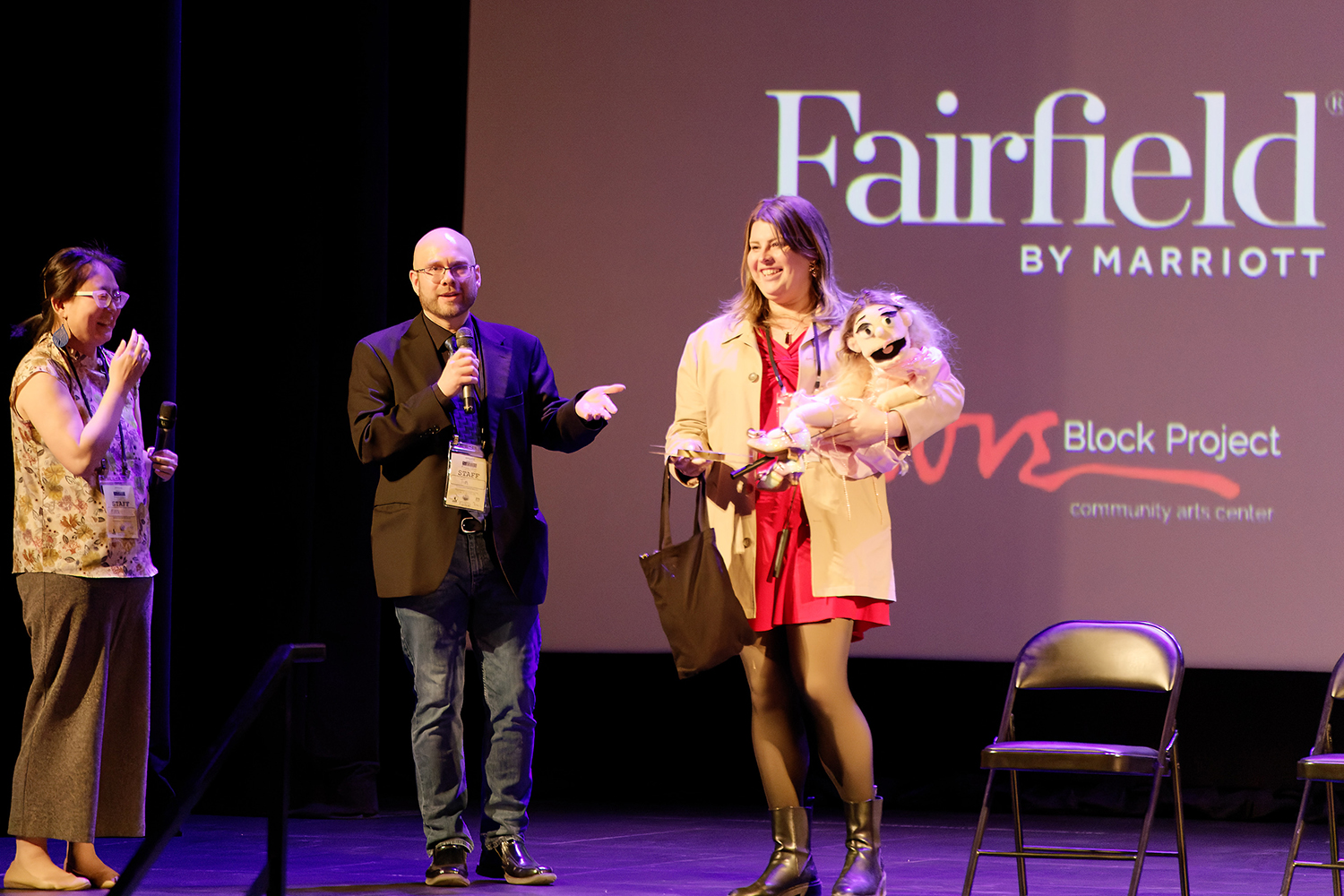
Louisa Duchin, accompanied by her puppet Tati, won the Audience Choice Award at the Finger Lakes Film Festival for "Teddy & Tater."
Louisa Duchin ‘26 MFA (film and animation) jokes her life could be measured in dog years.
She’s worked as a licensed practical nurse and in theater production management. In between, she tried her hand at being a psychic, librarian, clown, and standup comic. One jam-packed year in her shoes might seem like seven.
Of everything she’s done, nothing has compared to filmmaking. Duchin’s interest in directing and screenwriting prompted a mid-career pivot to pursue an MFA in film and animation at RIT.
Theo Lucas
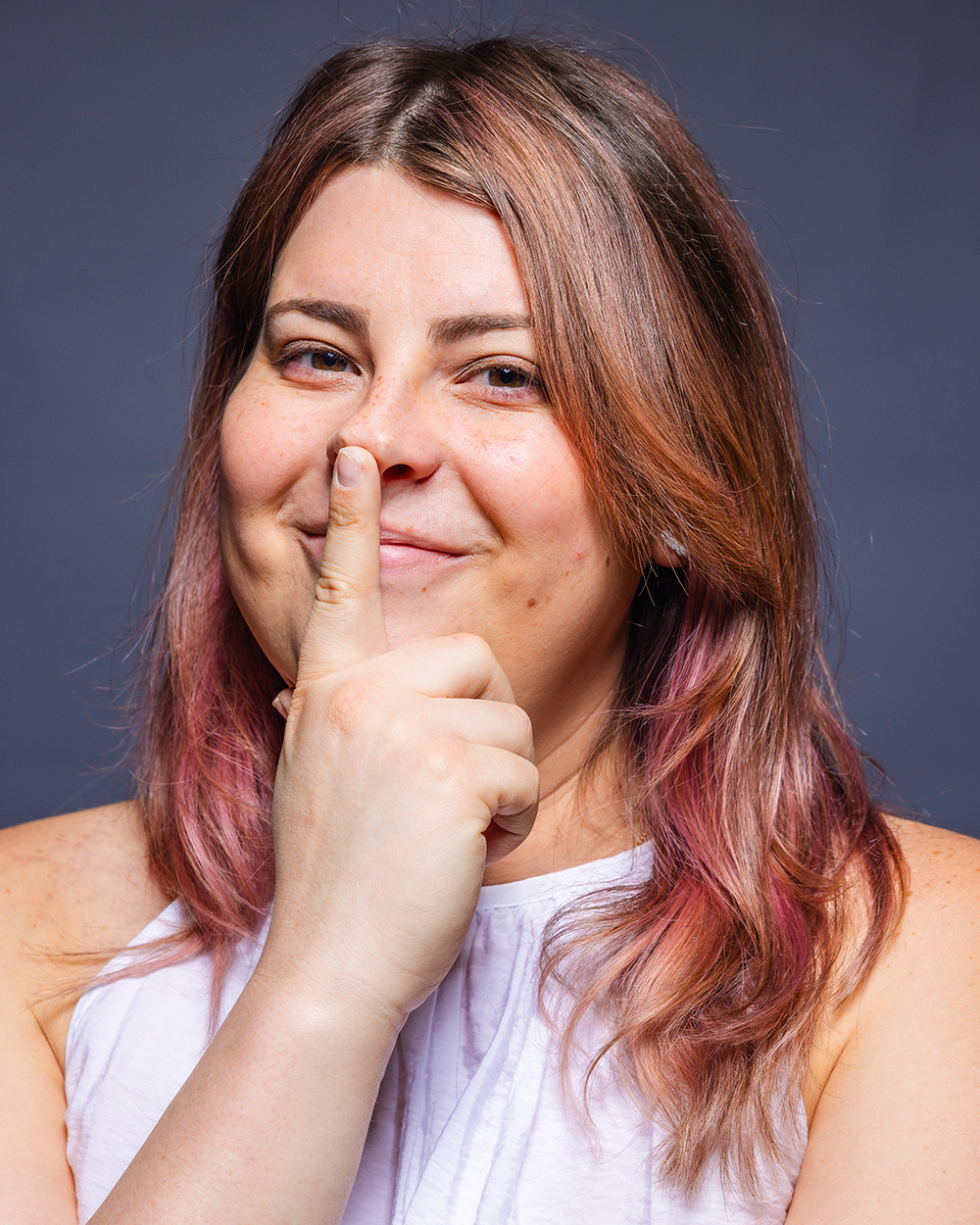
Louisa Duchin
“All these life experiences helped me become a better filmmaker as I’ve met different kinds of people,” said Duchin, who is graduating in May. “Now I’m figuring out how to mold those into stories I can make for films. It makes me open to trying a lot of things.”
At RIT, Duchin discovered a particular comfort in screenwriting.
Her first year, she partnered with classmate Maria Palmeri ’26 MFA (film and animation) to write a script — How’s the View? — that was selected to go into production and wound up as a finalist in the Coca-Cola Refreshing Films program. The live-action-animation hybrid spot entered the national spotlight and screened in theaters around the country.
Duchin followed up with a short film imbued with personal meaning and inspiration for others. Teddy & Tater features a ventriloquist and his puppet, who comes out as transgender. The ventriloquist is faced with the decision to support his puppet or not, and ends up exploring his own gender identity in the process.
It was influenced by Duchin’s own recent transition. She said Teddy & Tater even helped loved ones develop a deeper understanding of her coming-out story.
“It’s very much about the fear of coming out and how people are going to perceive you,” Duchin said of her film. “It’s also the idea of starting over, and what does the full extent of that look like? It ended up being a movie for me to process a lot of those feelings and how I was going about doing it. That’s the best thing that came out of it.”
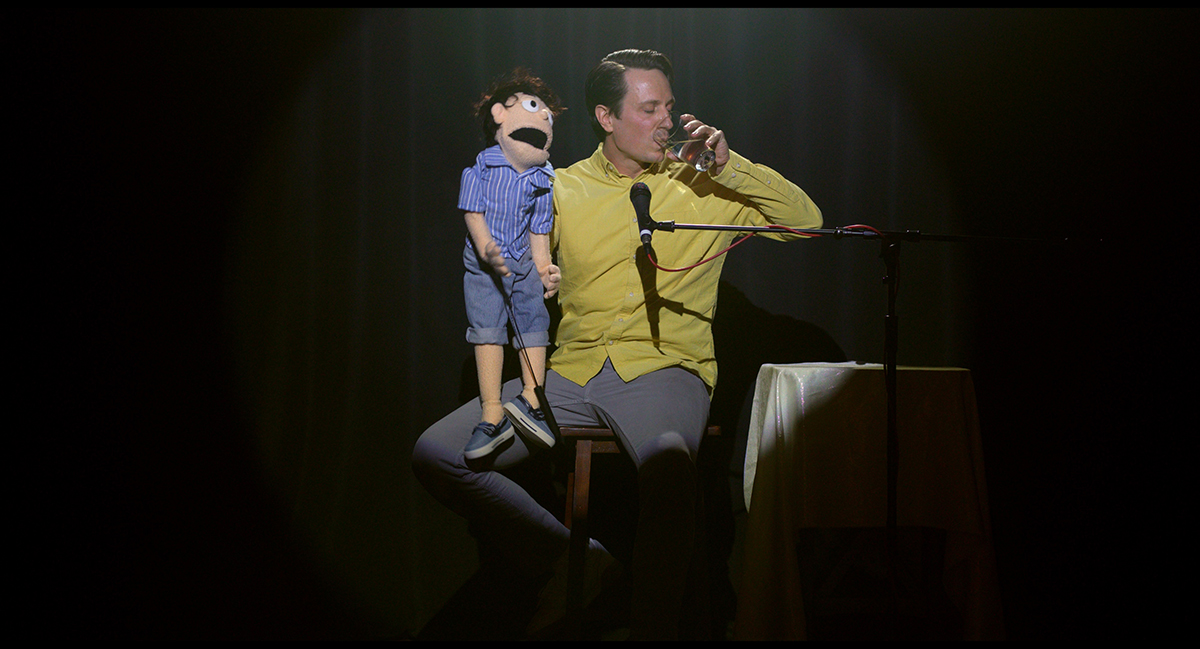
From 'Teddy & Tater'
To date, "Teddy & Tater" has been accepted into six festivals.
The courageous and relatable tale of Teddy & Tater has been accepted into six festivals to date. Regionally, it won the Audience Choice Award at the Finger Lakes Film Festival.
She also attended a screening of her film at Gasparilla International Film Festival in Tampa Bay, Fla. It marked a reflective moment for Duchin, who interned with one of the festival’s primary partners and sponsors, Film Tampa Bay, during her undergraduate studies.
Turns out, the internship was a gateway to a world of filmmaking she grew eager to engage with. While working full-time in theater and dabbling in other areas, thoughts of that festival experience took center stage as she considered the possibility of grad school.
“The thing about film that excited me is it’s all the art forms put together,” Duchin said. “It’s writing, it’s lighting, it’s art and construction and scenic design, it’s acting, it’s sound, music — everything all in one.”
A filmmaker's paradise
“It ended up being the best decision. RIT is a great film school because it has all the infrastructure you need to make the movies you want and get advice, feedback, and critique," Duchin said. "The professors are experienced and have all made admirable work. We have facilities that others don’t. We have the Cage that allows you to check out equipment and we have MAGIC Spell Studios, with Wegmans Theater, a soundstage, and a color correction suite. It’s great having that all here, in one place, so you can focus and do the work.”
In some ways, Duchin’s career path reads like a screenplay. And for her, movies have been a muse.
When studying pre-med for a year, Duchin researched humor therapy, inspired by the film Patch Adams, about a medical doctor who views humor and compassion as tenets of patient treatment.
It drove Duchin to clown school — “I have a license to clown so the party police can’t get me,” she quips. Soon enough, she volunteered in hospitals and nursing homes, spreading joy and laughter to patients.
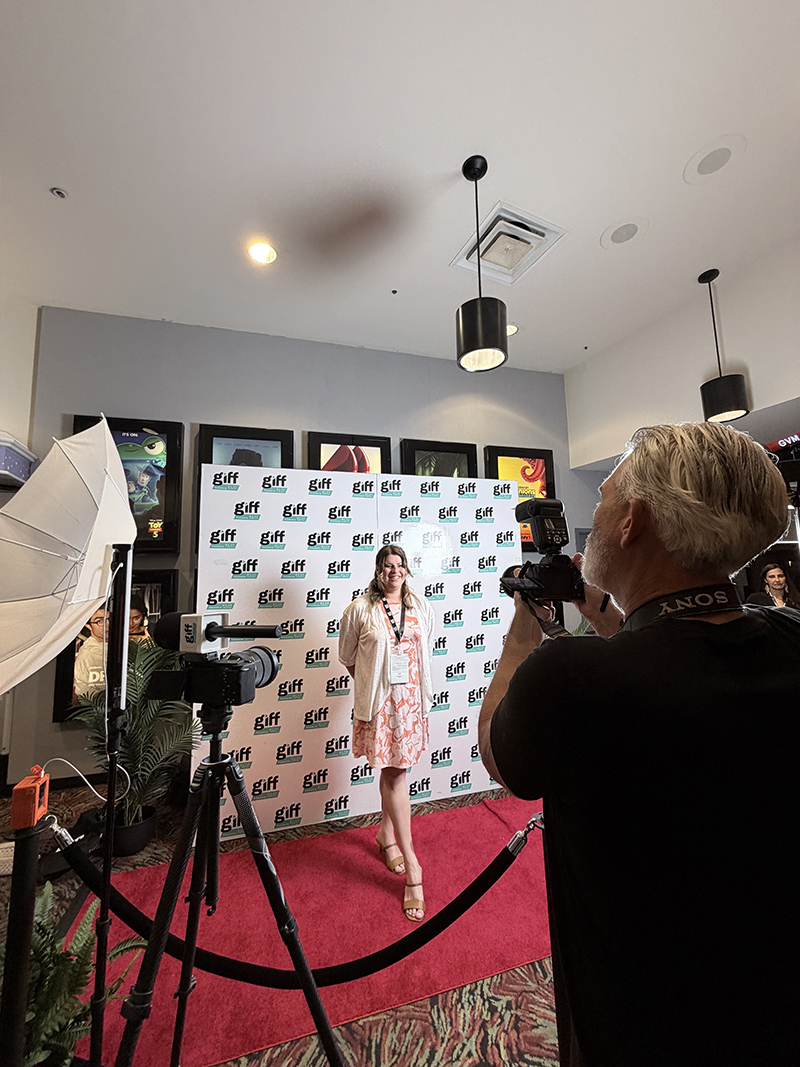
Duchin received red-carpet treatment at Tampa Bay's Gasparilla International Film Festival.
“It changed my manner in how I would take care and work with people,” Duchin said. “I think it shaped me as a person. It helped me open up more and embrace when things are really silly, to lean into it.”
Today, she continues her good-natured approach. That license to clown also certified her to “make people feel better and laugh” through filmmaking.
“It reminded me that things don’t need to be so serious all the time,” she said. “We only have one life, so we should try and be the most essential version of ourselves. Then by association, everything falls into place.”