The Influence of Canopy Structure and Foliar Chemistry on Remote Sensing Observations: Radiative Transfer Modeling to Understand Interactions of Light Within the Canopy and Inform Innovative Uses of Remote Sensing Data
Principal Investigator(s)
Research Team Members
Kedar Patki
Rob Wible (alumnus)
Grady Saunders
Keith Krause (Battelle)
Scott Ollinger (University of New Hampshire; UNH)
Andrew Ouimette (UNH)
Jack Hastings (UNH)
Sponsor: NASA (Remote Sensing Theory)
Project Description
The objectives of this project are to i) better understand the correlations between spectral reflectance and structural metrics and structure-trait cause-and-effect relationships; ii) propose a data fusion approach (LiDAR + hyperspectral) to trait prediction; and iii) apply the fusion approach to mitigate scaling issues (leaf-level, stand-level, forest-level). We are currently focusing our efforts towards understanding impact on spectral and structural metrics due to variation in leaf angle distributions (LAD). Leaf angle is a key factor in determining arrangement of leaves, and directly impacts forest structural metrics, such as leaf area index (LAI), which in turn is an important variable for a variety of ecological processes, such as photosynthesis and carbon cycling.
In previous research, we showed a quantitative comparison for several well-known vegetation indices (NDVI, PRI, OSAVI, and TCARI/OSAVI) over changes in underlying leaf angle distributions using the Kolmogorov-Smirnov test. Further, we derived ground truth LAI using a voxel-based approach, where we divided the DIRSIG Harvard Forest 3D map and summed the leaf areas under each voxel column to arrive at the LAI.
While the voxelizer approach to LAI field measurement is geometrically correct, this method significantly overestimated the LAI. Also, given that real-world in situ measurements are made by optical instruments such as LICOR LAI-2000 and Accupar LP-80, it is logical to model such an instrument in our simulation environment to obtain realistic ground truth LAI values. We are currently working on such virtual field sampling using the DIRSIG LAI collectors plugin, which is modeled after the Accupar LP-80 sensor. The Accupar is an optical instrument that measures LAI by an indirect method; it first measures the fractional photosynthetically active radiation (PAR) above and below the target canopy and then uses these fluxes to arrive at the gap fraction, and subsequently the LAI. The instrument setup has two components: a hand-held device, as shown in fig 1, that consists of a linear array of sensors placed along an attached probe stick and an external sensor for above canopy PAR measurement. In the field, the hand-held instrument is typically held by a user at 1 m above the ground, while the external sensor is placed on top an observation tower. The DIRSIG LAI Collectors plugin simulates this protocol and produces virtual measurements, which we can use for our statistical modeling tasks.
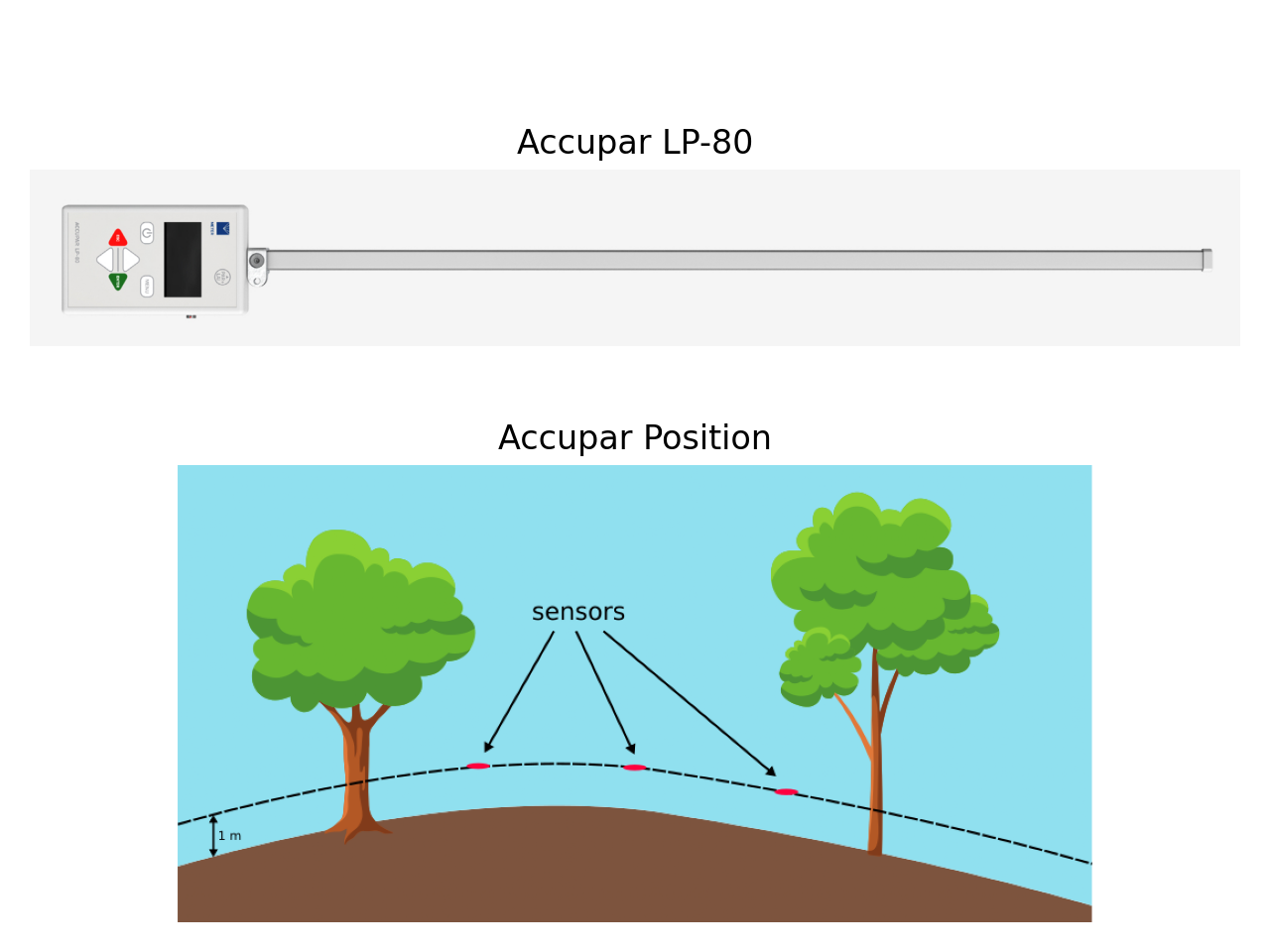
Figure 1: Accupar instrument and positioning
Next steps include statistical modeling using classical ML methods known to work well for LAI and canopy chlorophyll estimation - SVR, PLS, and RF regression. We aim to show how the predictions from these models can also be impacted by changes in leaf angle distributions. Further, our goal is to incorporate structural information with DIRSIG LiDAR simulations for more robust LAI and chlorophyll predictions.
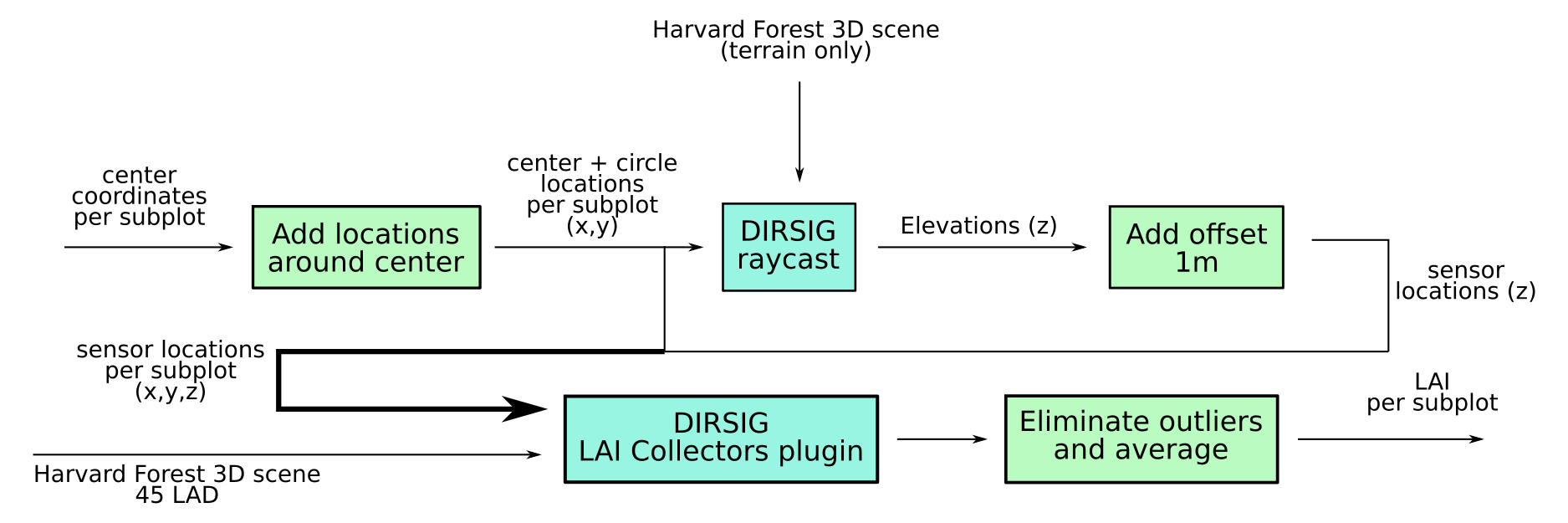
Figure 2: Workflow for LAI measurement using virtual accupar
References
[1] Krause, K., van Aardt, J. A., Ollinger, S. V., Patki, K., Ouimette, A., and Hastings, J. Estimation of canopy geometric parameters from full-waveform lidar data for leaf-to-ecosystem spectral scaling. In AGU Fall Meeting Abstracts (2022), vol. 2022, pp. B45B–03.
[2] Patki, K., Wible, R., Krause, K., and van Aardt, J. Assessing the impact of leaf angle distributions on narrowband vegetation indices and lidar derived lai measurements. In AGU Fall Meeting Abstracts (2021), vol. 2021, pp. B25I–1584.
[3] Wible, R., Patki, K., Krause, K., and van Aardt, J. Toward a definitive assessment of the impact of leaf angle distributions on lidar structural metrics. In Proceedings of the SilviLaser Conference 2021 (2021), pp. 307– 309