
Bachelor of Science in Mechanical Engineering
Mechanical Engineering
Bachelor of Science Degree
- RIT/
- RIT Dubai/
- Academics and Learning/
- Undergraduate Degrees/
- Bachelor of Science in Mechanical Engineering
Accredited by the UAE Ministry of Education
Mechanical engineers put energy and machines to work–from rockets, robots, and airplanes to automobiles, satellites, and renewable energy systems. In RIT's mechanical engineering BS degree you'll study math, science, physics, engineering science, and engineering systems.
Overview
An Engineering degree from RIT Dubai opens up a world of exciting career opportunities and Mechanical Engineering in particular, is involved with a range of cutting-edge design across automotive and aerospace systems, bioengineering devices, and energy-related technologies.
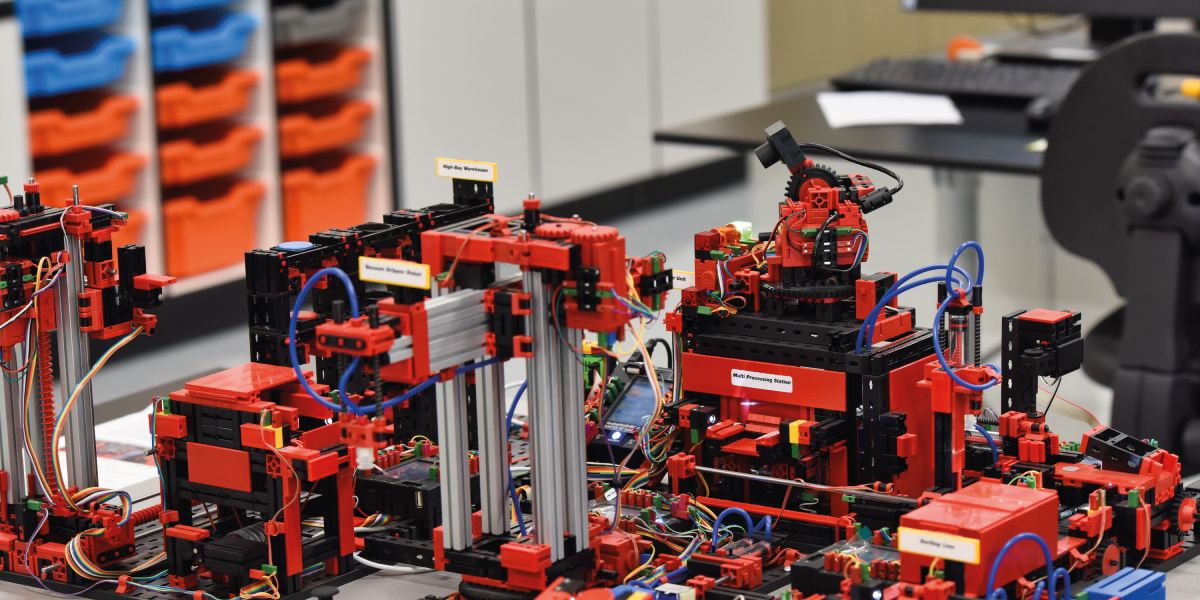
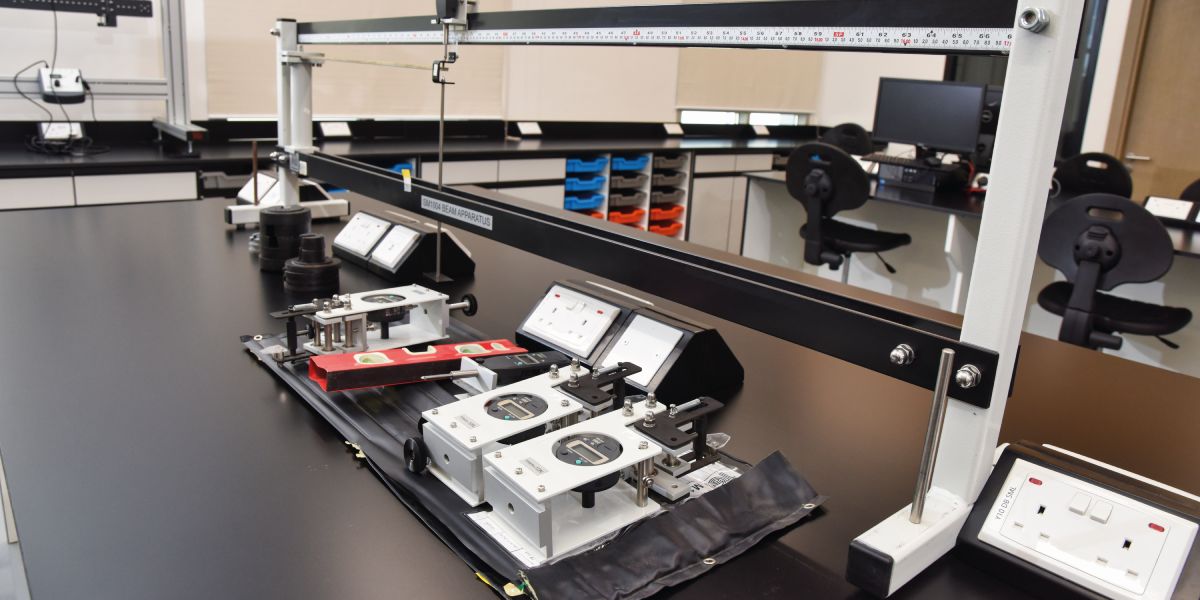
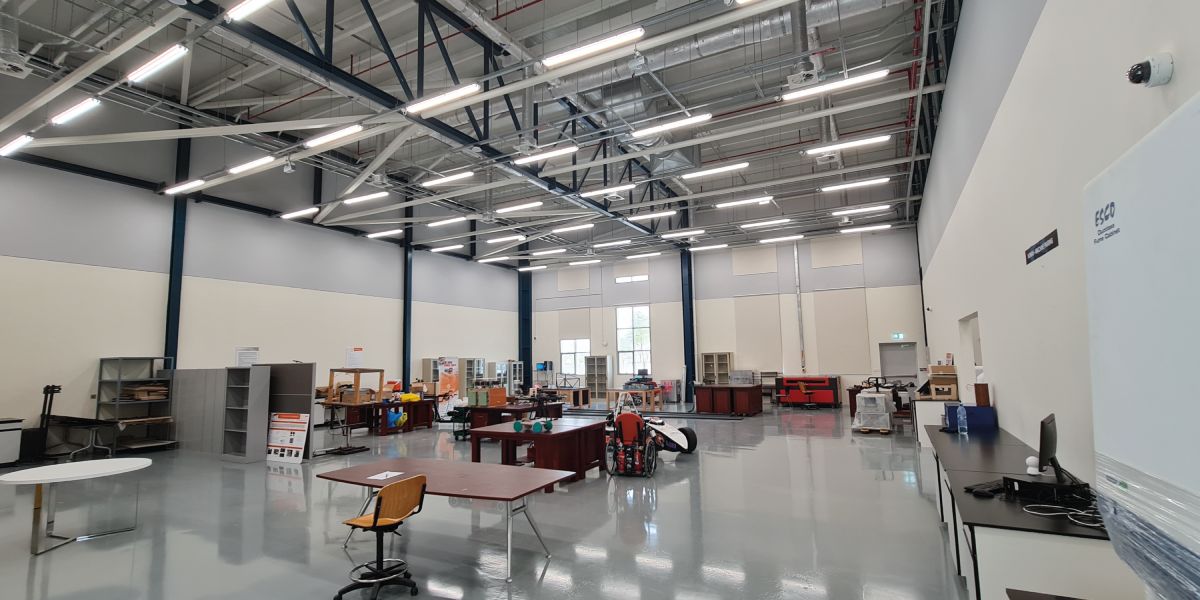
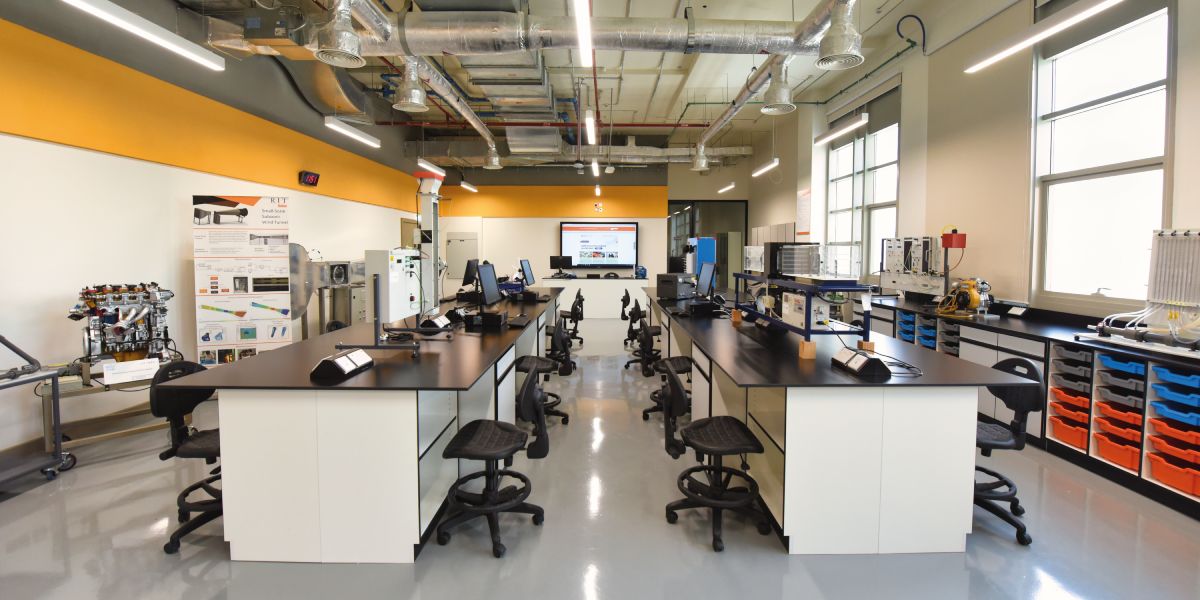
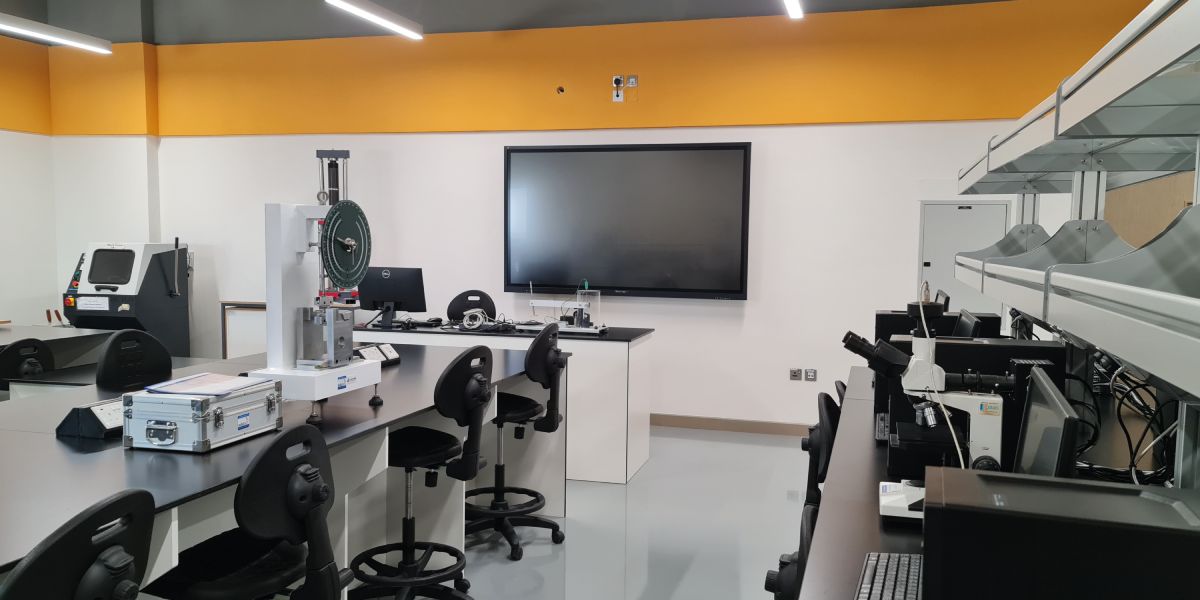
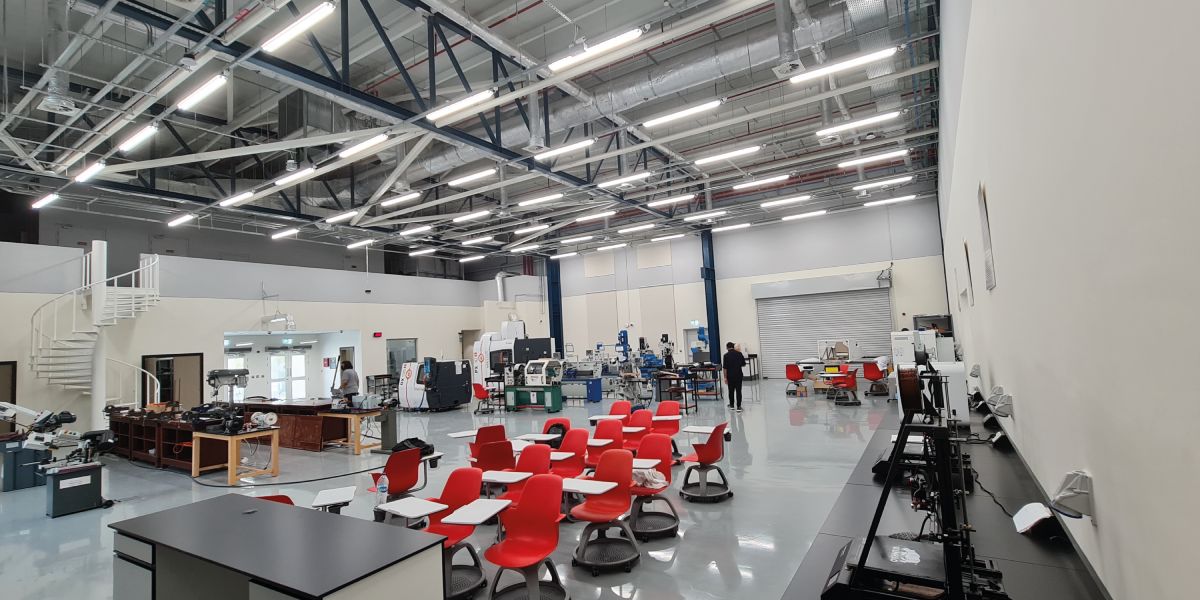
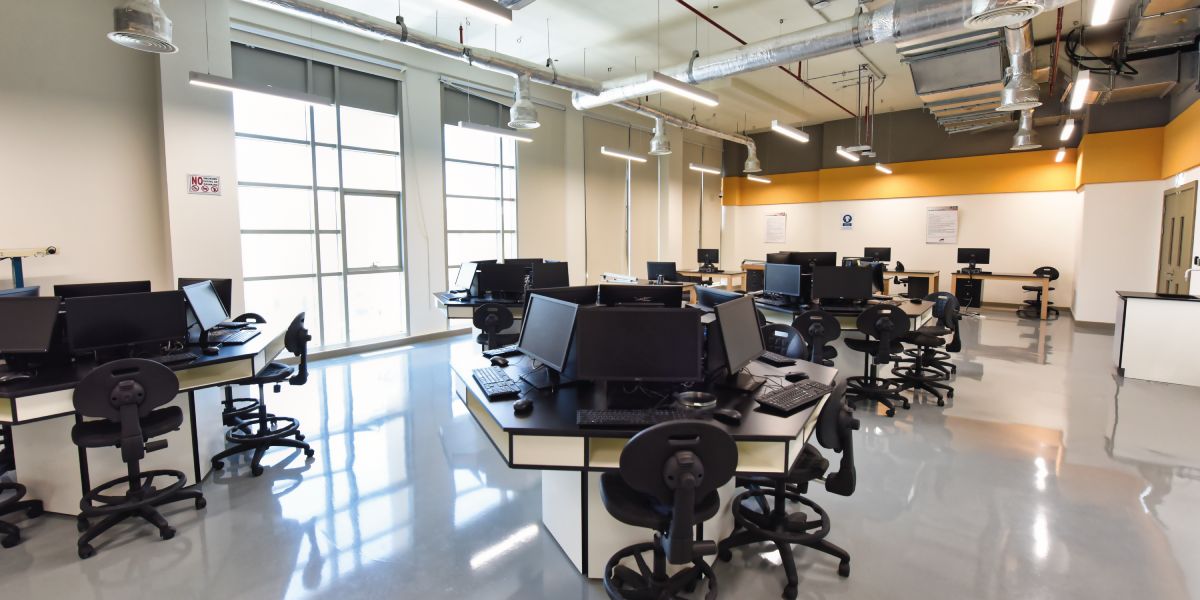
Our labs are equipped to provide you with extensive experimentation and feature everything from 3D printers to Universal Testing Machines, to a comprehensive machine shop to ensure you have access to state-of-the-art facilities to help you in your development as an engineer.
Enrollment data for the Bachelor of Science in Mechanical Engineering Program
Typical Job Titles
| Mechanical Engineer | Product Development Engineer |
| Automotive Engineer | Controls Engineer |
| Applications Engineer | Design Engineer |
| Manufacturing Engineer | Project Manager |
| Systems Engineer |
Industries
Aerospace
Automotive
Defense
Manufacturing
Oil and Gas
Research
Transportation and Logistics
Utilities and Renewable Energy
Mission Statement
The Mechanical Engineering Program aims at providing experiential-based undergraduate education that enables graduates to contribute immediately to the industry, services and government organizations and can succeed in pursuing graduate school. The graduates shall be able to accept the professional and ethical responsibilities to function as Mechanical engineers in a globally connected society, and have the means to refine and augment their skills to meet the current and future demands of an ever-changing world.
Program Educational Objectives
The Mechanical Engineering Program Educational Objectives (PEO) are broad statements that describe what graduates are expected to attain within a few years of graduation. Program educational objectives are based on the needs of the program’s constituencies.
The Mechanical Engineering faculty, in conjunction with its constituents, have established the following program educational objectives:
- PEO 1: “Systems-Based Solutions” Produce graduates who will draw upon the fundamental knowledge, skills, and tools of Mechanical engineering to develop scale-appropriate system-based engineering solutions that satisfy constraints imposed by a global society.
- PEO 2: “Life-Long Learners” Produce graduates that will enhance their skills through formal education and training, independent inquiry, and professional development.
- PEO 3: “Professional Responsibility” Produce graduates who will work independently as well as collaboratively with others, and demonstrate leadership, accountability, initiative, and ethical and social responsibility.
- PEO 4: “Graduate Education” Produce graduates who will successfully pursue graduate degrees at the Master’s and/or PhD level
Program Learning Outcomes
- “Engineering Foundations and “Problem Solving” - An ability to identify, formulate, and solve complex engineering problems by applying principles of engineering, science, and mathematics.
- “Engineering Design”- An ability to apply engineering design to produce solutions that meet specified needs with consideration of public health, safety, and welfare, as well as global, cultural, social, environmental, and economic factors.
- “Communication Skills” - An ability to communicate effectively with a range of audiences.
- “Professional Awareness and Responsibility” - an ability to recognize ethical and professional responsibilities in engineering situations and make informed judgments, which must consider the impact of engineering solutions in global, economic, environmental, and societal contexts.
- “Teamwork and Leadership” - an ability to function effectively on a team whose members together provide leadership, create a collaborative and inclusive environment, establish goals, plan tasks, and meet objectives.
- “Experimentation” - an ability to develop and conduct appropriate experimentation, analyze and interpret data, and use engineering judgment to draw conclusions.
- “Life-Long Learning” - an ability to acquire and apply new knowledge as needed, using appropriate learning strategies.
Curriculum
The major provides students with a broad academic base complemented by hands-on laboratory activities and professional cooperative education experience. You will devote the first two years to the study of mathematics, physics, chemistry, liberal arts, and engineering sciences, while the third and fourth years emphasize engineering science, design, and systems.
You can then choose to specialize in Energy and Environment, by choosing the appropriate technical electives courses, or complete the program without an option and take a range of technical electives. In the fifth year, you are required to complete the capstone design courses, Senior Design I and II (MECE-497, 498).
You will complete liberal arts general education courses in the social sciences and the humanities to round out your education.
Typical Course Sequence
Total Credit Hours - 129
| Course | Sem. Cr. Hrs. | |
|---|---|---|
| First Year | ||
| UWRT-150 |
FYW: Writing Seminar
Writing Seminar is a three-credit course limited to 19 students per section. The course is designed to develop first-year students’ proficiency in analytical and rhetorical reading and writing, and critical thinking. Students will read, understand, and interpret a variety of non-fiction texts representing different cultural perspectives and/or academic disciplines. These texts are designed to challenge students intellectually and to stimulate their writing for a variety of contexts and purposes. Through inquiry-based assignment sequences, students will develop academic research and literacy practices that will be further strengthened throughout their academic careers. Particular attention will be given to the writing process, including an emphasis on teacher-student conferencing, critical self-assessment, class discussion, peer review, formal and informal writing, research, and revision. Small class size promotes frequent student-instructor and student-student interaction. The course also emphasizes the principles of intellectual property and academic integrity for both current academic and future professional writing.
|
3 |
| MATH-181 |
Calculus I
This is the first in a two-course sequence intended for students majoring in mathematics, science, or engineering. It emphasizes the understanding of concepts, and using them to solve physical problems. The course covers functions, limits, continuity, the derivative, rules of differentiation, applications of the derivative, Riemann sums, definite integrals, and indefinite integrals.
|
4 |
| MATH-182 |
Calculus II
This is the second in a two-course sequence. It emphasizes the understanding of concepts, and using them to solve physical problems. The course covers techniques of integration including integration by parts, partial fractions, improper integrals, applications of integration, representing functions by infinite series, convergence and divergence of series, parametric curves, and polar coordinates.
|
4 |
| MECE-102 |
Engineering Mechanics Laboratory
This course examines classical Newtonian mechanics from a calculus-based fundamental perspective with close coupling to integrated laboratory experiences. Topics include kinematics; Newton's laws of motion; work-energy theorem, and power; systems of particles and linear momentum; circular motion and rotation; mechanical waves, and oscillations and gravitation within the context of mechanical engineering, using mechanical engineering conventions and nomenclature. Each topic is reviewed in lecture, and then thoroughly studied in an accompanying laboratory session. Students conduct experiments using modern data acquisition technology; and analyze, interpret, and present the results using modern computer software.
|
3 |
| MECE-104 |
Engineering Design Tools
This course combines the elements of Design process, Computer Aided Design (CAD), and Machine Shop Fabrication in the context of a design/build/test project. You will learn how to work in a team and use a formalized design process to justify and support design choices, how to use a CAD package to create three-dimensional models and assemblies, and how to safely fabricate metal parts using vertical mills and lathes.
|
3 |
| MECE-117 |
Introduction to Programming for Engineers
This course provides the student with an overview of the use of computer programming for solving problems encountered in engineering. Students will learn how to develop an algorithm for solving a problem and to translate that algorithm into computer code using fundamental structured programming techniques. The programming language(s) employed are selected to support computational problem-solving in higher-level mechanical engineering courses.
|
3 |
| YOPS-010 |
RIT 365: RIT Connections
RIT 365 students participate in experiential learning opportunities designed to launch them into their career at RIT, support them in making multiple and varied connections across the university, and immerse them in processes of competency development. Students will plan for and reflect on their first-year experiences, receive feedback, and develop a personal plan for future action in order to develop foundational self-awareness and recognize broad-based professional competencies.
|
0 |
| General Education - Artistic Perspective | 3 | |
| General Education - Ethical Perspective | 3 | |
| General Education - Global Perspective | 3 | |
| Islamic Culture Course | 3 | |
| Second Year | ||
| MECE-103 |
Statics
This basic course treats the equilibrium of particles and rigid bodies under the action of forces. It integrates the mathematical subjects of calculus, vector algebra and simultaneous algebraic equations with the physical concepts of equilibrium in two and three dimensions. Topics include concepts of force and moment, friction, centroids and moments of inertia, and equilibrium of trusses, frames and machines.
|
3 |
| MATH-221 |
Multivariable and Vector Calculus
This course is principally a study of the calculus of functions of two or more variables, but also includes a study of vectors, vector-valued functions and their derivatives. The course covers limits, partial derivatives, multiple integrals, Stokes' Theorem, Green's Theorem, the Divergence Theorem, and applications in physics.
|
4 |
| MECE-205 |
Dynamics
A basic course in the kinematics and kinetics of particles and rigid bodies. Newton's Laws and the theorems of work-energy and impulse momentum are applied to a variety of particle problems. Systems of particles are employed to transition to the analysis of rigid body problems. Absolute and relative motion are used to investigate the kinematics and kinetics of systems of rigid bodies. Newton's Laws are applied to a variety of two-dimensional rigid body problems.
|
3 |
| MECE-110 |
Thermodynamics I
A basic course introducing the classical theory of thermodynamics. Applications of the first law of thermodynamics are used to introduce the student to thermodynamic processes for closed and open systems. The Clausius and Kelvin-Planck statements of the second law are then correlated with the concept of entropy and enthalpy to investigate both real and reversible processes and the thermodynamic properties of pure substances. These techniques are then used to evaluate thermodynamic cycles for a variety of applications in power generation and refrigeration. Students are then introduced to techniques to improve thermal efficiency of these cycles such as reheat, regeneration, and co-generation.
|
3 |
| MECE-210 |
Fluid Mechanics I
This course investigates the physical characteristics of a fluid: density, stress, pressure, viscosity, temperature, vapor pressure, compressibility. Descriptions of flows include Lagrangian and Eulerian; stream-lines, path-lines and streak-lines. Classification of flows include fluid statics, hydrostatic pressure at a point, pressure field in a static fluid, manometry, forces on submerged surfaces, buoyancy, standard and adiabatic atmospheres. Flow fields and fundamental laws are investigated including systems and control volumes, Reynolds Transport theorem, integral control volume analysis of basic equations for stationary and moving control volumes. Inviscid Bernoulli and the Engineering Bernoulli equation are utilized when analyzing fluid systems. Other concepts studied include incompressible flow in pipes; laminar and turbulent flows, separation phenomenon, dimensional analysis.
|
3 |
| MATH-231 |
Differential Equations
This course is an introduction to the study of ordinary differential equations and their applications. Topics include solutions to first order equations and linear second order equations, method of undetermined coefficients, variation of parameters, linear independence and the Wronskian, vibrating systems, and Laplace transforms.
|
3 |
| MECE-203 |
Strength of Materials I
A basic course in the fundamental principles of the mechanics of deformable media, including stress, strain, deflections and the relationships among them. The basic loadings of tension, compression, shear, torsion and bending are also included.
|
3 |
| MECE-204 |
Strength of Materials I Laboratory
A required laboratory course taken concurrently with MECE-203. Students investigate a metallic material’s response to axial, torsional, and bending loads. Students are introduced to reduction and analysis of data, basic experimental techniques, and effective report writing.
|
1 |
| MECE-305 |
Materials Science with Applications
This course provides the student with an overview of structure, properties, and processing of metals, polymers, and ceramics. Relevant basic manufacturing processes and materials selection is also discussed. There is a particular emphasis on steels, but significant attention is given to non-ferrous metals, ceramics, and polymers
|
3 |
| MECE-306 |
Materials Science and Applications Laboratory
A required laboratory course taken concurrently with MECE-304 Fundamentals of Materials Science or MECE-305 Materials Science with Applications. Students investigate the effects of the structure, alloying, and processing of materials on their mechanical properties. Students are also introduced to standardized testing methods and effective, professional, report writing.
|
1 |
| EGEN-099 |
Engineering Co-op Preparation
This course will prepare students, who are entering their second year of study, for both the job search and employment in the field of engineering. Students will learn strategies for conducting a successful job search, including the preparation of resumes and cover letters; behavioral interviewing techniques and effective use of social media in the application process. Professional and ethical responsibilities during the job search and for co-op and subsequent professional experiences will be discussed.
|
0 |
| MECE-211 |
Engineering Measurements Lab
This course is focused on developing skills and knowledge in the areas of instrumentation, computer data acquisition (DAQ), measurement theory, uncertainty analysis, data analysis, and technical report writing. Specific topics that are covered include:
• Physical dimension variability assessment
• Centrifugal pump performance evaluation
• Temperature, pressure, and flow instrumentation and measurements
• LabVIEW programming and DAQ hardware application
• Transient measurements including computer data acquisition
• Digital signal input and output
Each topic includes background theoretical content with some individual exercises and then a team-based lab with accompanying lab report. Reports are submitted first in draft form and are reviewed by peers in class before preparing them for final draft submission
|
2 |
| Physical Science Elective I | 3 | |
| General Education - Social Perspective | 3 | |
| Third Year | ||
| MECE-348 |
Contemporary Issues
This course introduces students to contemporary technologies in a specific field of mechanical engineering. In the process of exploring these technologies, the course teaches and applies skills related to communication, economic analysis, ethical analysis, and explores the positive and negative effects of technologies on our society and environment. Specific attention is focused on current events both domestically and internationally.
|
3 |
| MATH-326 |
Boundary Value Problems
This course provides an introduction to boundary value problems. Topics include Fourier series, separation of variables, Laplace's equation, the heat equation, and the wave equation in Cartesian and polar coordinate systems.
|
3 |
| EEEE-281 |
Circuits I
Covers basics of DC circuit analysis starting with the definition of voltage, current, resistance, power and energy. Linearity and superposition, together with Kirchhoff's laws, are applied to analysis of circuits having series, parallel and other combinations of circuit elements. Thevenin, Norton and maximum power transfer theorems are proved and applied. Circuits with ideal op-amps are introduced. Inductance and capacitance are introduced and the transient response of RL, RC and RLC circuits to step inputs is established. Practical aspects of the properties of passive devices and batteries are discussed, as are the characteristics of battery-powered circuitry. The laboratory component incorporates use of both computer and manually controlled instrumentation including power supplies, signal generators and oscilloscopes to reinforce concepts discussed in class as well as circuit design and simulation software.
|
3 |
| PHYS-212 |
University Physics II
This course is a continuation of PHYS-211, University Physics I. Topics include electrostatics, Gauss' law, electric field and potential, capacitance, resistance, DC circuits, magnetic field, Ampere's law, inductance, and geometrical and physical optics. The course is taught in a lecture/workshop format that integrates the material traditionally found in separate lecture and laboratory courses.
|
4 |
| MECE-499 |
Cooperative Education
Nominally three months of full-time, paid employment in the mechanical engineering field.
|
0 |
| Physical Science Elective II | 3 | |
| General Education - Immersion I | 3 | |
| Fourth Year | ||
| MECE-320 |
System Dynamics
This required course introduces the student to lumped parameter system modeling, analysis and design. The determination and solution of differential equations that model system behavior is a vital aspect of the course. System response phenomena are characterized in both time and frequency domains and evaluated based on performance criteria. Laboratory exercises enhance student proficiency with model simulation, basic instrumentation, data acquisition, data analysis, and model validation.
|
3 |
| MATH-241 |
Linear Algebra
This course is an introduction to the basic concepts of linear algebra, and techniques of matrix manipulation. Topics include linear transformations, Gaussian elimination, matrix arithmetic, determinants, vector spaces, linear independence, basis, null space, row space, and column space of a matrix, eigenvalues, eigenvectors, change of basis, similarity and diagonalization. Various applications are studied throughout the course.
|
3 |
| MECE-310 |
Heat Transfer I
A first course in the fundamentals of heat transfer by conduction, convection and radiation, together with applications to typical engineering systems. Topics include one- and two-dimensional steady state and transient heat conduction, radiation exchange between black and gray surfaces, correlation equations for laminar/turbulent internal and external convection, and an introduction to heat exchangers analysis and design by LMTD and NTU methods.
|
3 |
| MECE-301 |
Engineering Applications Laboratory
As a modification of the more “traditional” lab approach, students work in teams to complete an open-ended project involving theoretical and empirical analyses of an assigned system, applying engineering concepts and skills learned throughout prior courses. After successfully completing this course, students will have achieved a higher level of understanding of, and proficiency in, the tasks of qualitative treatment of real systems, development and implementation of analytical models, design and implementation of experimental investigations, and validation of results.
|
2 |
| MECE-499 |
Cooperative Education
Nominally three months of full-time, paid employment in the mechanical engineering field.
|
0 |
| Open Elective | 3 | |
| Fifth Year | ||
| MECE-497 |
Multidisciplinary Sr. Design I
This is the first in a two-course sequence oriented to the solution of real-world engineering design problems. This is a capstone learning experience that integrates engineering theory, principles, and processes within a collaborative environment. Multidisciplinary student teams follow a systems engineering design process, which includes assessing customer needs, developing engineering specifications, generating and evaluating concepts, choosing an approach, developing the details of the design, and implementing the design to the extent feasible, for example by building and testing a prototype or implementing a chosen set of improvements to a process. This first course focuses primarily on defining the problem and developing the design, but may include elements of build/ implementation. The second course may include elements of design, but focuses on build/implementation and communicating information about the final design.
|
3 |
| MECE-498 |
Multidisciplinary Sr. Design II
This is the second in a two-course sequence oriented to the solution of real-world engineering design problems. This is a capstone learning experience that integrates engineering theory, principles, and processes within a collaborative environment. Multidisciplinary student teams follow a systems engineering design process, which includes assessing customer needs, developing engineering specifications, generating and evaluating concepts, choosing an approach, developing the details of the design, and implementing the design to the extent feasible, for example by building and testing a prototype or implementing a chosen set of improvements to a process. The first course focuses primarily on defining the problem and developing the design, but may include elements of build/ implementation. This second course may include elements of design, but focuses on build/implementation and communicating information about the final design.
|
3 |
| STAT-205 |
Applied Statistics
This course covers basic statistical concepts and techniques including descriptive statistics, probability, inference, and quality control. The statistical package Minitab will be used to reinforce these techniques. The focus of this course is on statistical applications and quality improvement in engineering. This course is intended for engineering programs and has a calculus prerequisite. Note: This course may not be taken for credit if credit is to be earned in STAT-145 or STAT-155 or MATH 252..
|
3 |
| ME Applied Electives | 3 | |
| ME Extended Core Elective | 3 | |
| General Education - Immersion II, III | 6 | |
| ME Applied or Extended Core Elective | 3 | |
| Open Elective | 6 | |
Please see New General Education Curriculum–Liberal Arts and Sciences (LAS) for more information. (WI) Refers to a writing intensive course within the major.
A sample of Mechanical Engineering Electives (indicative only):
● MECE 350 Strength of Materials II
● MECE 352 Thermodynamics II
● MECE 489 Special Topics: Refrigeration & Air Conditioning for Hot and Humid Climates
● MECE 529 Renewable Energy Systems
● MECE 544 Introduction to Composite Materials
Options
Students at RIT Dubai can opt to select one of three options: i) the Energy and Environment option, ii) the Aerospace Engineering option, or iii) the Automotive Engineering option. You can elect to complete the major without an option and instead customize your academic study in support of your career plans. The mechanical engineering major is relatively flexible and allows students to pursue options and minors.
Energy and Environment
This option consists of electives that provide students with exposure to a wide range of opportunities and careers associated with energy-intensive systems and how they relate to the environment. This option increases the number of opportunities students have for careers in the fields of building energy systems, alternative and renewable energy, and direct energy conversion. Students choosing this option are expected to work on an energy systems design project in senior design and to pursue co-op employment in a related field.
Aerospace Engineering Option
The Aerospace engineering option allows for specialized study in all engineering aspects of air- and space-borne vehicles. Aerospace engineering focuses on developing aircraft, spacecraft, and the mechanical systems that make both possible. Also referred to as aeronautical engineering, aerospace engineering deals with designing, building, and testing airborne and space vehicles, from airplanes and helicopters to rockets, missiles, satellites, and spacecraft.
Automative Engineering Option
The Automotive engineering option begins with a course sequence that starts in the third year of your mechanical engineering program. This ensures that you have developed the foundational mechanical engineering skills needed for specialization in more advanced course work that focuses on the principles and dynamics of automotive engineering. Automotive engineering courses include an introductory course (Contemporary Issues in Automotive Engineering) followed by courses in areas such as strength of materials, thermodynamics, internal combustion engines, powertrain systems and design, vehicle dynamics, manufacturing processes, and sustainable energy for transportation.
Resources
For information about the RIT New York, Mechanical Engineering program and options click here
Click here to view/download the flowchart of the BS Mechanical Engineering program (2025- )
Click here to view/download the flowchart of the BS Mechanical Engineering program (2020-2025)
Click here to view/download the flowchart of the BS Mechanical Engineering program (2018-2020 )
Click here to view/download the program-specific handbook
Click here for Major Electives and Option Requirements
To graduate, students need to complete all the requirements as listed in the curriculum graduation policy
Advisory Board
|
Mr. Faisal Al Kamali |
Mr. Mohamed Ibrahim |
|
Mr. Musa Faisal |
Mr. Sarfraz Dairkee |
|
Mr. Bassel Anbari |
Ms. Katralnada BinGhatti |
|
Mr. Main Canaan |
Mr. Omar Ghazal |
|
Mr. Mohamad Abou Laban |
Dr. Ahmed Alaa Eldin |
Program Laboratories
Point of contact
Point of contact
Point of contact
Point of contact
Point of contact
Point of contact
Engineering Mechanics & Instrumentation Lab
Point of contact
Featured Work
-
Variable Pitch Control In VAWT
Multidisciplinary Senior Design Project Dynamic variable pitch control boosts vertical axis turbine performance and efficiency
Read More about Variable Pitch Control In VAWT -
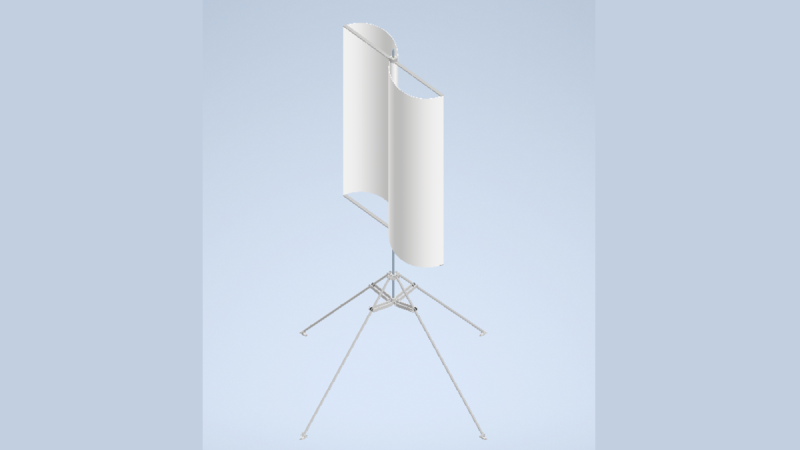
Design and Fabrication of a Savonius Wind Turbine for a Design Wind Speed
Multidisciplinary Senior Design Project ’25 Designing and testing a Savonius vertical axis turbine for efficient energy generation
Read More about Design and Fabrication of a Savonius Wind Turbine for a Design Wind Speed -
Automated Systems for Composting Paper Towels
Multidisciplinary Senior Design Project ’25 Smart composting meets sustainability
Read More about Automated Systems for Composting Paper Towels -
Sustainable Filament Production
Multidisciplinary Senior Design Project ’25 Turning plastic waste into purpose: RIT Dubai students recycle PET bottles into 3D printing filament.
Read More about Sustainable Filament Production -
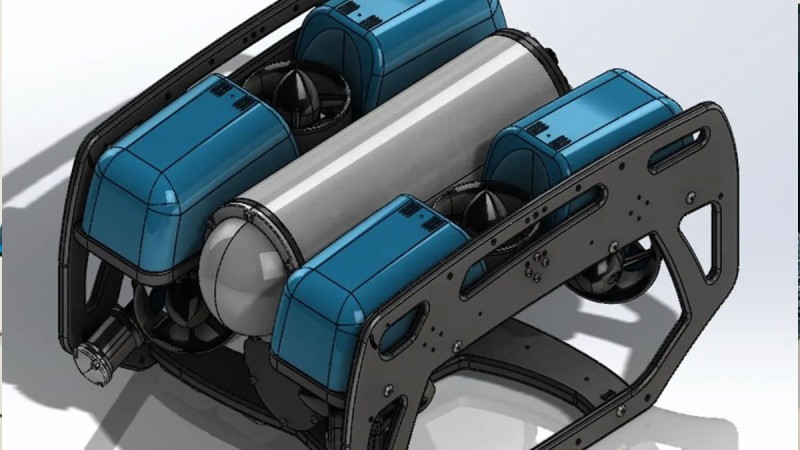
Novel BlueROV2
Multidisciplinary Senior Design Project ’25 An enhanced autonomous underwater drone offers a cost-effective and sustainable solution for monitoring and conserving coral reefs
Read More about Novel BlueROV2 -
Eco Friendly Trash Collector
Multidisciplinary Senior Design Project ’24 Combining advanced sensors and AI to protect aquatic ecosystems and revolutionize waterway cleanup
Read More about Eco Friendly Trash Collector
Program Related News
-
November 5, 2025
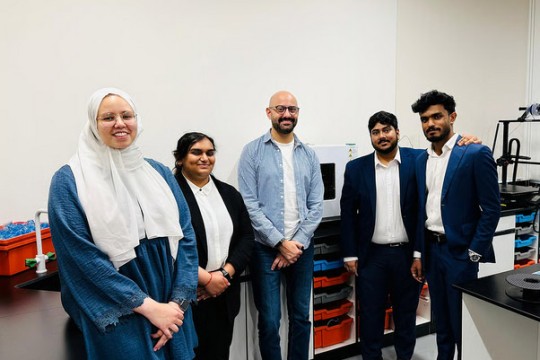
RIT Dubai project reinvents campus plastic waste to produce 3D printing materials
Gulf News speaks to Wael A. Samad, chair of the mechanical and industrial engineering department at RIT Dubai, about the potential application of sustainable filament beyond the academic realm.
-
January 26, 2024
Racing Tigers compete on world stage
Members of RIT Dubai’s Racing Tigers take a life-long passion in sailing, pair it with academic knowledge, and then compete on the world stage, all while working to create a sustainable future with clean-energy technologies.


