
Tony Wong
Associate Professor, Applied Mathematics
My courses are online/asynchronous this semester, so office hours are a hybrid: Monday 11-11:50am (in-person and Zoom); Wednesday 10:30-11:30am (Zoom)
Tony Wong
Associate Professor, Applied Mathematics
Education
BS, Ohio Wesleyan University; Ph.D. University of Colorado, Boulder
Bio
My research develops mathematical, statistical, and computational methods for understanding complex dynamical systems under uncertainty. I work at the intersection of applied mathematics, stochastic modeling, uncertainty quantification, scientific computing, and decision analysis. Climate science provides a mathematically rich setting in which to develop, analyze, and apply these methods. I am also interested in extending these ideas to questions surrounding computational reasoning, artificial intelligence, and STEM education.
Uncertainty Quantification/Characterization and Climate Modeling
My primary research focuses on the mathematical and statistical foundations of probabilistic climate modeling. I develop and analyze mathematical approaches for reduced-complexity Earth system modeling, methods for model-data fusion to calibrate those models, and approaches for propagating and characterizing uncertainty in long-term climate projections.
A central application is sea-level rise and coastal hazards, where uncertainties in future climate forcing, model structure, observations, and physical processes all influence projections and the decisions based upon them. My research examines Bayesian calibration, sensitivity analysis, uncertainty quantification, and probabilistic projection methods, with the goal of producing transparent and reproducible models that support climate-risk assessment and adaptation planning. A critical line underpinning these projects is to develop open-source scientific tools to facilitate reproducible climate modeling and quantitative analysis.
Computational Literacy and STEM Education
A second area of my research examines how students and scientists develop and use computational ways of thinking. I am interested in how programming, data science, artificial intelligence, and quantitative modeling influence scientific reasoning, and how these tools can be incorporated into undergraduate STEM education.
My education research combines educational data science with quantitative and qualitative methods to investigate student learning, persistence, computational literacy, and the development of professional practices in mathematics, statistics, and computational science. An emerging direction of this work examines how artificial intelligence is changing computational research and what this means for preparing future scientists and quantitative professionals.
Learning Assistant Program
Given my interest in student learning, retention, and persistence, naturally, I got involved in the Learning Assistant Program at RIT. I currently serve as the program director, and I am always happy to chat with students and faculty alike about the many benefits of integrating LAs and active learning in STEM classes.
Select Scholarship
Currently Teaching
In the News
-
March 12, 2025

Trump’s Cuts Threaten Key NSF Undergrad Research Program
Inside Higher Ed speaks to Tony Wong, assistant professor in the School of Mathematics and Statistics, about the effects of cuts to research budgets on student researchers.
-
September 1, 2022
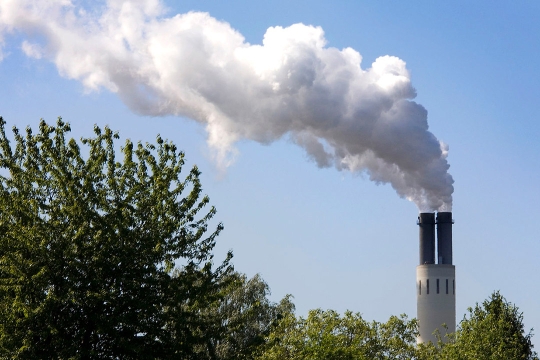
Scientists find the social cost of carbon is more than triple the current federal estimate
After years of robust modeling and analysis, a multi-institutional team including researchers from RIT has released an updated social cost of carbon estimate that reflects new methodologies and key scientific advancements.
-
August 10, 2021
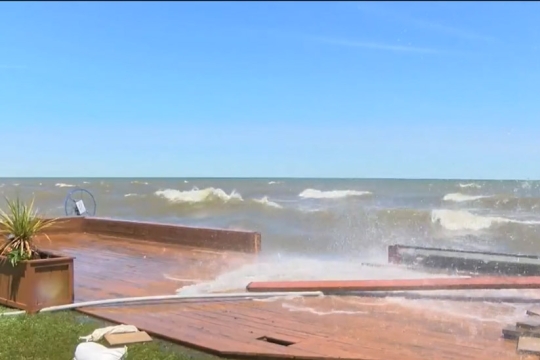
How global climate change is impacting Rochester
WROC-TV talks to Tony Wong, assistant professor of mathematical sciences, about climate change.
-
August 27, 2026
Estevez and Wong publish in PLOS Climate
-
August 25, 2026
Wong and Wright awarded NSF grant for STEM education program
-
April 25, 2025
Wong and students lead study
-
April 21, 2025
Wong and Childs improve COVID-19 model