Department of Electrical and Microelectronic Engineering

Overview
The department of Electrical and Microelectronic Engineering (EME) offers bachelor’s, master’s and doctoral degrees that combine the rigor of theory with the flexibility of engineering practice. From technology development to technology application, the innovations of electrical and microelectronic engineers are shaping our future.
The department’s mission is to establish its electrical and microelectronic engineering programs among the top programs in the world by providing high quality, inclusive education that cultivates intellectual curiosity. Our curricula apply mathematical and scientific foundations to the varied electrical and microelectronic disciplines in order to train high quality, independent thinking engineers and researchers that make measurable impacts on the world.
Electrical Engineering
Electrical engineering is a discipline concerned with the study, design, and application of equipment, devices, and systems that use electricity, magnetism, and electromagnetism. The discipline is divided into multiple focus areas, including: Analog and Mixed-Signal Electronics, Electronic Devices and Components, Digital and Computer Systems, Electromagnetics and Waves, Mechatronics, Electrical Power Systems, Telecommunications, Signal Processing, Machine Learning, Artificial Intelligence, Robotics. As a result, electrical engineers work in a wide variety of industries and are required to possess skills such as device modeling, circuit design, system architecture, algorithm development, and project management. Electrical engineers intensively use computer assisted design tools and methods, and test equipment.
Microelectronic Engineering
Microelectronic engineering focuses on the study, design, and fabrication of very small electronic devices and components (micrometer scale or below). These are semiconductor and photonic devices that impact virtually every aspect of human life, from communication, entertainment, and transportation, to health, solid-state lighting, and solar cells. There is an ever-increasing need for talented engineers that not only understand the design of these devices but can direct and optimize their fabrication. Integrated nanoelectronic and microelectronic circuits and sensors drive our global economy, increase our productivity, and help improve our quality of life.
Learn more about semiconductor chips at RIT
Accreditation
The BS degree in electrical or microelectronic engineering is accredited by the Engineering Accreditation Commission of ABET. For enrollment and graduation data, program educational objectives, and student outcomes, please visit the college’s accreditation page.
12
Undergraduate and graduate degree options
30
Faculty Members
12
Faculty Research Areas
Research
The faculty and students in the department of electrical and microelectronic engineering conduct research in a wide range of interdisciplinary fields. Research is externally supported by an array of federal, state, and industry sponsors, such as the National Science Foundation, the US Air Force, and the US Navy. Faculty offer research mentorship to BS, MS, and Ph.D. students.
Research Areas


Latest News
-
October 7, 2026

Back to the Future: Is Light-Speed Analog Computing on the Horizon?
Tech Briefs highlights RIT researchers Mohammad-Ali Miri, associate professor of electrical and microelectronic engineering, and Kevin Zelaya Mendoza, post doctoral fellow, and their work on a programmable microwave-integrated circuit that uses analog computing to perform complex calculations at high speeds with potential applications in communications, radar, sensing, and space technologies.
-
September 30, 2026
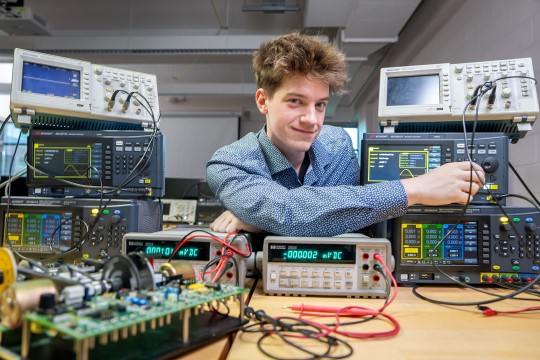
RIT student’s co-op, coursework lead to prestigious scholarship
RIT undergraduate electrical engineering student Aiden Morris has received a prestigious SMART Scholarship which he hopes will position him for a civilian career with the U.S. military.
-
September 30, 2026

New Visions Engineering Students Get Hands-On at RIT
A day of problem-solving, machining, and microelectronics gave future engineers a look at university-level research.
Featured Work and Profiles
-

Engineering Alumnus Influences National Semiconductor Research Initiatives
Scott Bukofsky '92 brings extensive experience to the U.S. Department of Commerce’s National Semiconductor Technology Center.
Read More about Engineering Alumnus Influences National Semiconductor Research Initiatives -

Alumna Harshala Patil leads semiconductor development at Samsung
Alumna Harshala Patil ’15 (electrical and microelectronic engineering) is leading semiconductor development and manufacturing initiatives at Samsung Austin, one of the top three global computer chip...
Read More about Alumna Harshala Patil leads semiconductor development at Samsung -

Amazon Exec Empowers Next-Gen Cybersecurity Talent
Amazon executive and RIT alum Arthur Deane ’08 (electrical engineering) is helping cybersecurity students unlock opportunities in the rapidly growing tech sector.
Read More about Amazon Exec Empowers Next-Gen Cybersecurity Talent -

NSF Honors Bing Yan for Breakthrough Smart Grid Work
RIT’s Bing Yan has been awarded a 2024 NSF CAREER Award for her research aimed at improving smart grid management through better integration of renewable energy resources and enhanced storage capacity...
Read More about NSF Honors Bing Yan for Breakthrough Smart Grid Work -
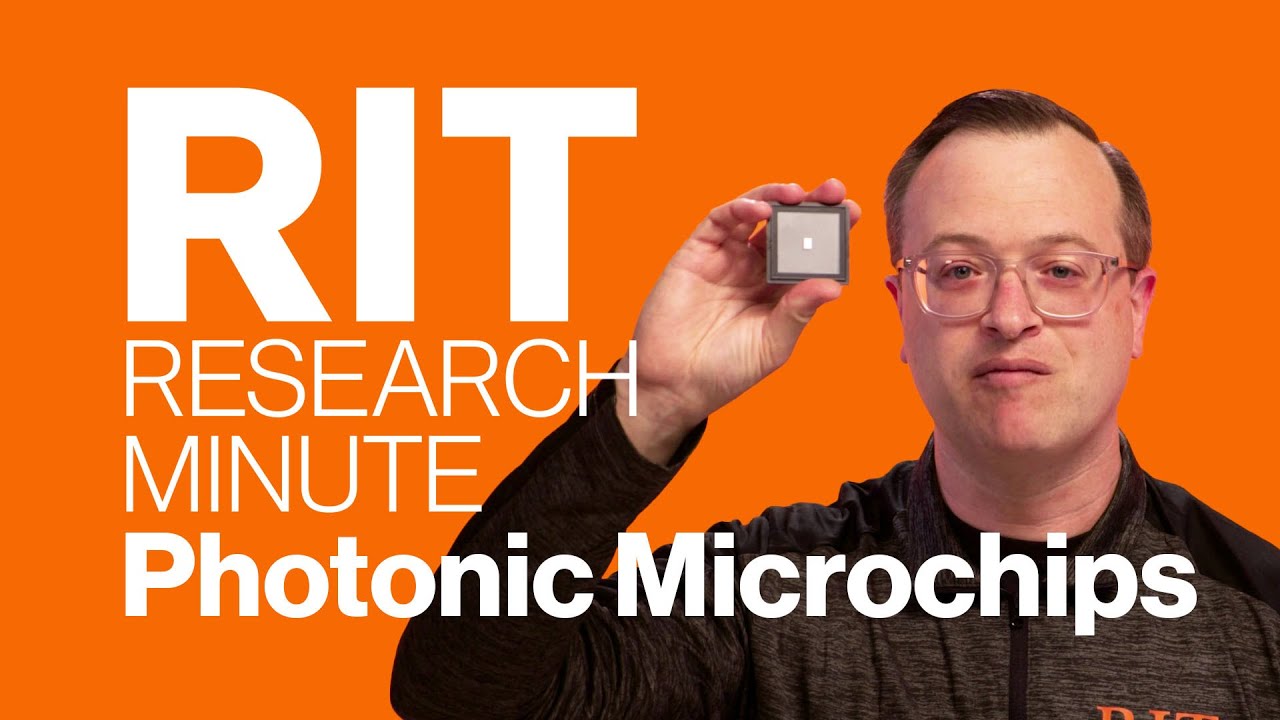
RIT Research Minute: Photonic Microchips
Stefan Preble Professor Stefan Preble and his research team are developing the next generation of photonic chips to improve fields like quantum computing and health care.
Read More about RIT Research Minute: Photonic Microchips -

From Classroom to Career: Elissa Sainthil's Transformative Co-op Experience at Advanced Energy
Elissa Sainthil gained valuable experience during her co-op at Advanced Energy where she worked on UltraVolt products.
Read More about From Classroom to Career: Elissa Sainthil's Transformative Co-op Experience at Advanced Energy







Conferences and Short Courses
Annual Microelectronic Engineering Conference at RIT
The Annual Microelectronic Engineering Conference (AMEC) at RIT started in 1983 as a means of bringing together students, faculty, alumni, and industry interested in microelectronic engineering.
Learn More
Short Courses
Short courses are comprehensive, hands-on, educational experiences intended for individuals seeking a better understanding of the overall theory and practice of microelectronic engineering.
Learn More
Student Resources
The Electrical and Microelectronic Engineering Department offers a variety of resources for our students that vary from academic support to handbooks and more. Visit our Student Resources page for more information.