Chips at RIT

Semiconductor chips are essential to almost all modern technologies. RIT prepares the next generation of microelectronic engineers through specialized programs at the bachelor’s, master’s, and doctoral levels. Hands-on labs, a robust cooperative education program, and cutting-edge research equip RIT graduates with real world experience to transform the world.
Academics
RIT’s degrees in microelectronics and microsystems engineering are specifically designed for students interested in working in the semiconductor industry.
- Microsystems Engineering Ph.D.
- Microelectronic Engineering MS
- Microelectronic Engineering BS
- Microelectronic Engineering Minor
The semiconductor and microelectronics industry also hires graduates from a variety of science, engineering, and technology and technology management areas offered by RIT.
News
-
September 30, 2026

New Visions Engineering Students Get Hands-On at RIT
A day of problem-solving, machining, and microelectronics gave future engineers a look at university-level research.
-
December 19, 2025

University launches multidisciplinary training program to strengthen the U.S. semiconductor workforce
RIT has launched CMOS+X, a National Science Foundation Research Traineeship program that prepares future STEM leaders with professional skills training, including interdisciplinary collaboration, scientific writing, strategic communication, and project management skills.
-
December 1, 2025

Study details how analog computing solves signal processing challenges faster
Researchers at RIT have improved the electronics used in communication and radar systems to better process signals using electromagnetic radio waves. This breakthrough could advance computing processes for technologies that need to handle signals quickly and efficiently.
-
November 24, 2025
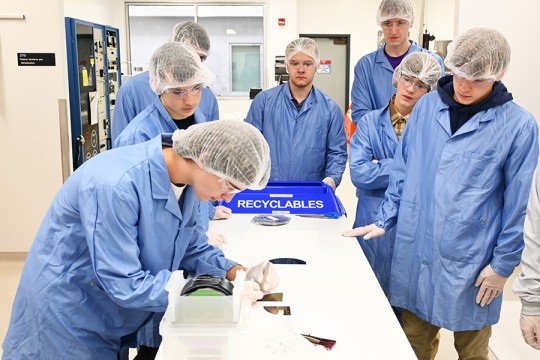
BOCES students get hands-on experience at RIT labs
High school students from the New Visions Engineering program at Greater Southern Tier BOCES visited RIT for an immersive, hands-on experience in cutting-edge engineering labs.
Faculty Research


Facilities
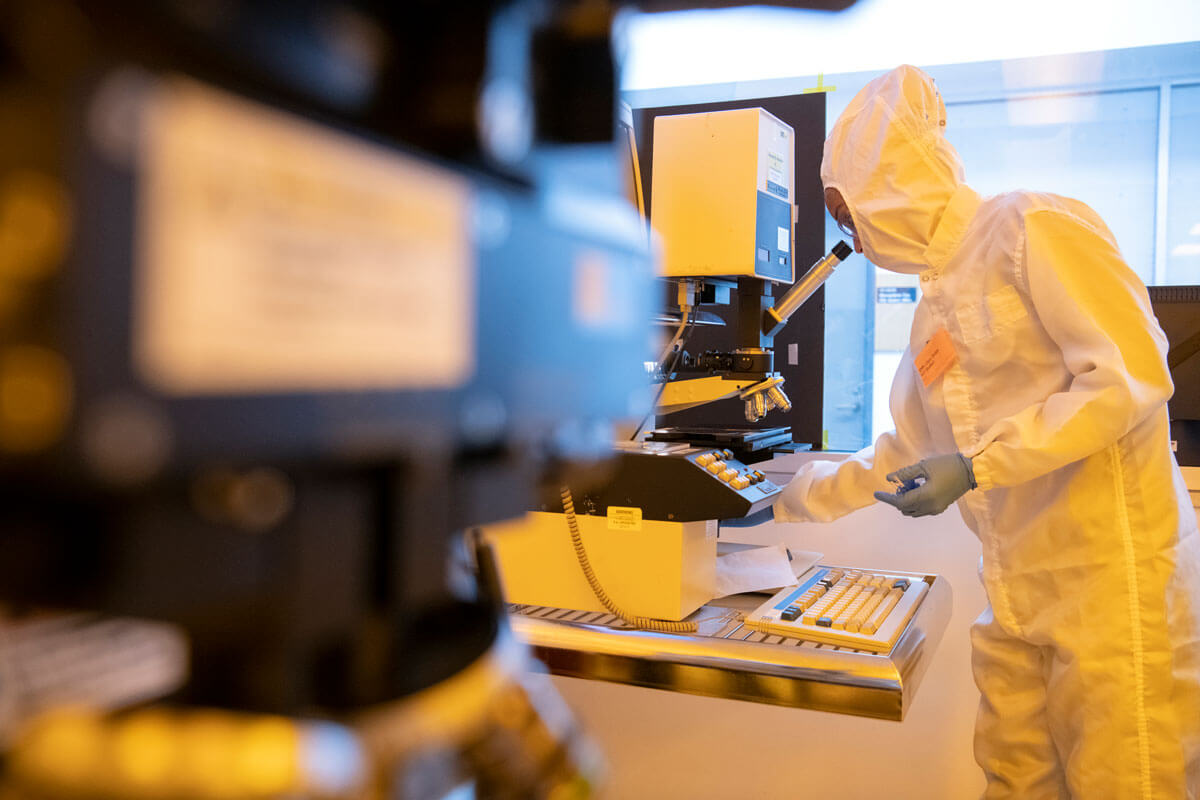
Semiconductor Nanofabrication Lab
The Semiconductor Nanofabrication Lab provides state-of-the-art facilities and support for undergraduate and graduate programs in microelectronic engineering, microsystems, and related disciplines. The facility also provides industrial affiliates in the semiconductor and microsystems industries with applied solutions in microdevice design, process development, microsystem integration, and prototype fabrication.
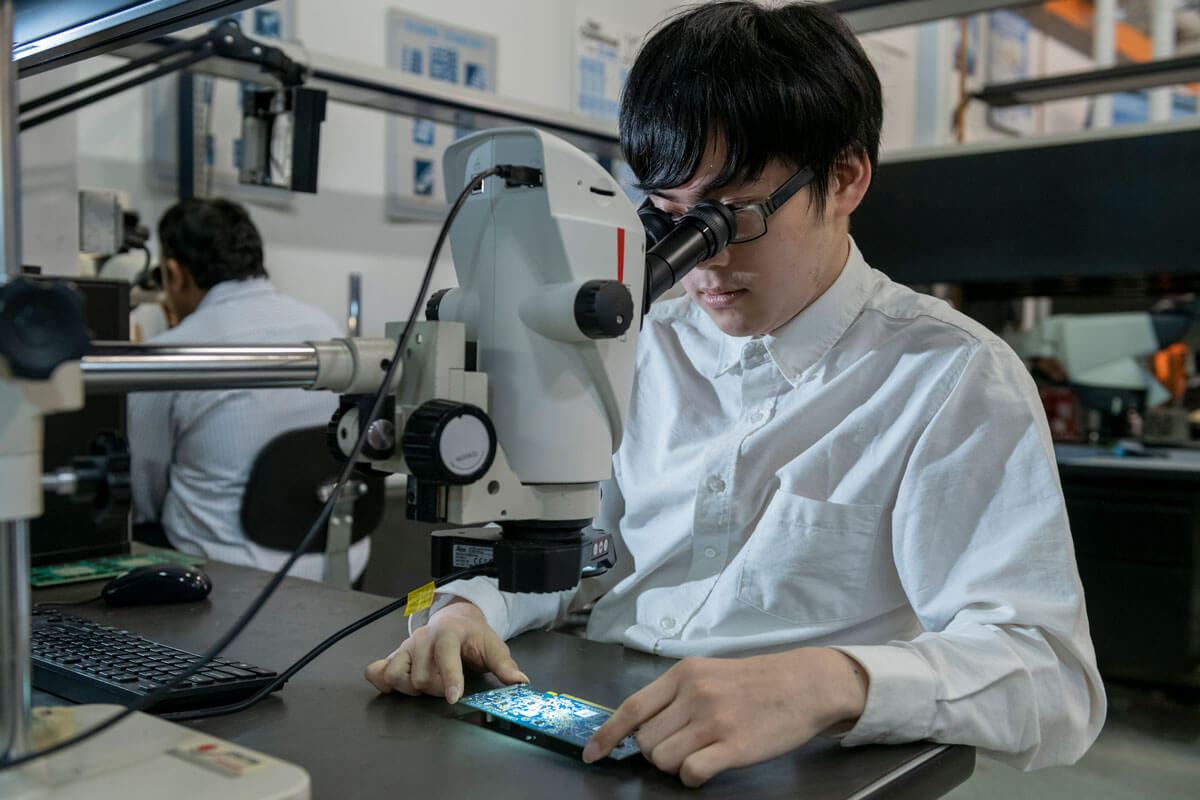
Center for Electronics Manufacturing and Assembly
The Center for Electronics Manufacturing and Assembly (CEMA) is a state-of-the-art facility equipped with electronics assembly machinery capable of producing prototype assemblies and providing reliability testing, manufacturing, inspection and rework services. CEMA provides hands-on training in through hole and surface mount electronics assembly, soldering, and acceptability criteria of electronic assemblies.
Learn more about the Center for Electronics Manufacturing and Assembly
Workforce Development
CMOS+X Traineeship for Graduate Students
The CMOS+X National Science Foundation Research Traineeship at RIT aims to develop an innovative convergent graduate research training model for next-generation complementary metal-oxide-semiconductor (CMOS) + X (X = AI, biomedical, chemical, optoelectronic, photonic, nanoelectronic, quantum, and packaging) talents, in order to address the domestic semiconductor talent shortage which is an urgent national priority.
EMERGE-MICRO: Empowering Minds through Experiential Learning, Research, and Career Growth Opportunities in Emerging Microelectronics
The EMERGE-MICRO will prepare community college students to advance new materials, lead cleanroom operations, and coordinate simulation and testing processes, all essential to building computer chips for today’s electronic devices, systems, and industries.
For more information, please contact Parsian Katal Mohseni.
Broadening Research and Inter-Disciplinary Graduate Education (BRIDGE) for Microelectronics
The BRIDGE for Microelectronics program emphasizes education, industry collaboration, and student support to address workforce shortages in the microelectronics sector and will train >500 students at the bachelor and master’s level.
Coop and Career Services
Undergraduate and graduate students, as well as alumni, are supported throughout their career development and job search for securing on-campus, co-op, internship, and full-time jobs. Career Services also provides support to RIT’s employer partners for their recruitment needs through career fairs, information sessions, and more.
Leading Employers:
- ASML
- Apple
- Global Foundries
- Intel
- MIT Lincoln Laboratory
- Micron Technology, Inc.
- Northrop Grumman
- onsemi
- Qorvo
- Texas Instruments
RIT Certified
RIT Certified offers courses that disrupt educational pathways to ensure all students have access to training that promotes economic empowerment. RIT Certified currently offers a course in Semiconductor Device Manufacturing.
K-12 Outreach
The opportunity for K-12 students to explore the making of microchips is a one-of-a-kind experience at RIT. While many traditional electrical and computer engineering programs offer courses in electronic design, there are few that have the required microfabrication lab facilities, and even fewer that provide these resources for undergraduate and community education. The Semiconductor Nanofabrication Lab experience at RIT involves the fabrication and testing of chips.
Alumni Profiles
-

Alumna Harshala Patil leads semiconductor development at Samsung
Alumna Harshala Patil ’15 (electrical and microelectronic engineering) is leading semiconductor development and manufacturing initiatives at Samsung Austin, one of the top three global computer chip...
Read More about Alumna Harshala Patil leads semiconductor development at Samsung -
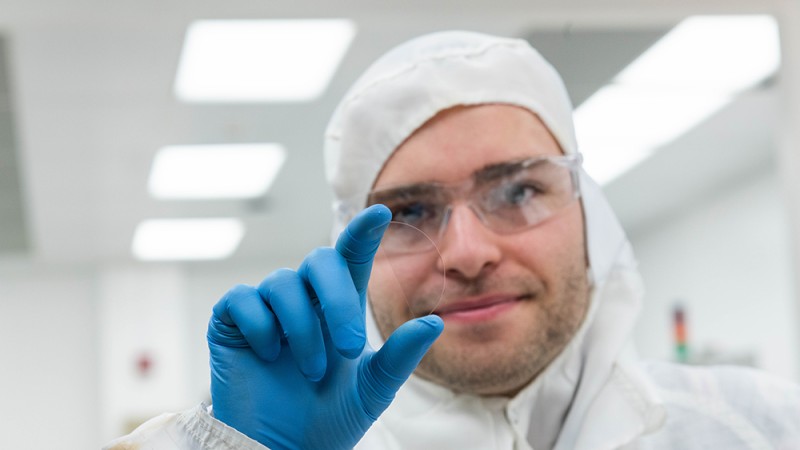
RIT Alumnus Drives Innovation with Breakthrough Micro-LED Display Startup
Matthew Hartensveld, RIT alumnus and co-founder of Innovation Semiconductor, is pushing the boundaries of display technology with his pioneering work on micro-LED platforms.
Read More about RIT Alumnus Drives Innovation with Breakthrough Micro-LED Display Startup
Partnership - UPWARDS for the Future Network
RIT is one of eleven universities named as part of the U.S.-Japan University Partnership for Workforce Advancement and Research and Development in Semiconductors for the Future (UPWARDS), an international partnership to improve competitiveness in computer chip design, development, and manufacturing.
Funded by Micron, Tokyo Electron and the National Science Foundation, this partnership was launched in 2023 by Micron Technology, Inc.
Micron Corp. and the National Science Foundation announced the partnership and signed a Memorandum of Understanding (MOU) at the 2023 G7 Summit in Japan.

