The 2026 Future Faculty Career Exploration Program Gets Underway This Month |
Office of Faculty Recruitment Brings Scholars to Campus
A group of outstanding scholars from across the country will be on campus beginning September 30th. They applied for and have been accepted into this year’s Future Faculty Career Exploration Program, hosted by RIT and the Division of Access, Engagement, and Success Office of Faculty Recruitment.
They’re coming from places like the University of Southern California, Kennesaw State University, Indiana University and Duke. Their interests and research range from accounting and marketing to civil engineering and glioblastoma, the most aggressive form of brain cancer.
The program gives PhD candidates, recent graduates and postdoctoral fellows a “behind the scenes glimpse” of what it is like to serve as a faculty member and much more. Over four days, they will network with RIT leadership, faculty and staff , present their research and receive valuable advice on career development. In turn, RIT will meet some exceptional scholars and researchers who could possibly help enhance the learning experience for students.
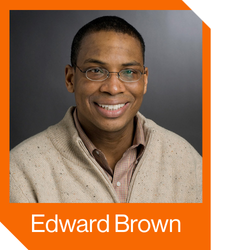 The Future Faculty Career Exploration Program is recognized nationally and is now in its 23rd year. Some participants have been offered positions at RIT, including Edward Brown. He has been here for more than two decades. The associate professor in the Department of Biomedical Engineering was part of the very first cohort back in 2003. We chatted with Brown about his experience and asked if he has any advice for this newest cohort.
Question: Is there a specific memory or personal experience that stands out for you?
I remember the novelty of the program. There were academic career programs focused on increasing diversity in graduate school, but I had never heard of any programs aimed at the professoriate level. So, when I received an email invitation to participate in this inaugural event from a woman named Renee Baker, I was curious to learn more. During my visit, all of the RIT faculty hosts I met were kind and generous. Some of them are now my friends and colleagues. But what really impressed me was the banquet at President Al Simone’s home. It was like a “Who’s Who” of Black and Brown Rochester! At my table sat Bill Johnson, former mayor of Rochester. I was so impressed and very much relieved with the conversation I had with him about Rochester. I knew, afterwards, that if the opportunity arose for me to come to RIT, I would have community, and that was a difference maker for me.
Please share some of your professional journey following your participation in the program.
After participating in the Future Faculty Career Exploration Program, I was offered a position in the department of electrical engineering within the Kate Gleason College of Engineering. After accepting the offer, I became the first African American tenure-track professor in the College of Engineering…And I’ve experienced all of the highs and lows that come with being a “first.” But what has always gotten me through was the support from my students, particularly the African, Latin, Asian, and Native American students (ALANA). They motivate me as much as they say I motivate them! I have always tried to be the professor that I needed when I was in their shoes, whether that’s in the classroom or in the research laboratory. I learned early in my career to remember that I don’t teach engineering, I teach students, and this approach towards my scholarship has served me well as an academic.
When did you begin working at RIT and in what role?
I began working at RIT in August 2004 as an assistant professor in the department of electrical engineering. I am currently an associate professor in the department of biomedical engineering. I teach the signals, systems, and robotics courses for the BME department. Outside of RIT, I currently serve as the North American chair of the IEEE Technical Committee for Rehabilitation and Assistive Robotics. In this leadership role, I am responsible for driving the conversation and shaping the direction of research in rehabilitation and assistive robotics, globally. I work with the other continental chairs to provide resources, sponsorships, and endorsements for scholars to pursue activities in this research area all around the world. I also co-host and organize the Global Perspectives on Medicine, Rehabilitation and Robotics Webinar Series. In this series, rehabilitation robotics researchers who bring their research out of the lab and into the field are spotlighted and showcased. These webinars are viewed globally by members of the rehabilitation community.
Why are programs like this important?
Programs like this are essential in this current political and economic climate. It’s not just about supporting affirmative actions, it is about ensuring affirmative outcomes, specifically for scholars who have been historically underrepresented and marginalized in the academy. It celebrates and reinforces our communal commitment and loyalty to humanity on college campuses. A chorus of voices is required to educate and train RIT students in the 21st century, and the Future Faculty Career Exploration Program has always provided rich talent to sing in that choir. The administration must make sure that this talent is not just re-presented, but empowered, protected, supported, valued, properly and equitably compensated, and ultimately promoted for the scholarly and cultural impact they bring to the university.
Any advice for this new cohort?
1. Follow the Love. That is, whoever is valuing your strengths, gifts, talents, and contributions, that’s who you want to work with. Surround yourself with these people.
2. Do the things that inspire you and make your heart sing. This is the path to fulfilling your Purpose.
3. Pursue Excellence in everything you do. There’s a social aesthetic to this pursuit that inspires others. You’re not being excellent because you want to prove something to someone, or you want to say, “Hey, look at me!” You’re pursuing excellence because someone is depending on you to do your job…And do it well so they can (in the end) do theirs.
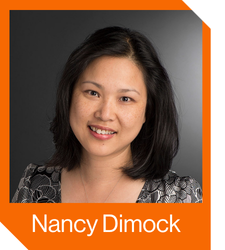 Nancy Dimock, assistant director Office of Faculty Recruitment adds, “The success of alumni like Dr. Brown reminds us that the Future Faculty Career Exploration Program is not simply a four-day program; it is the beginning of a lifelong professional community. More than two decades after participating in the inaugural cohort, Dr. Brown's influence can be seen in the students he mentors, the research he advances, and the leadership he provides. Inspired by stories like his, we launched the RIT Future Faculty Career Exploration Program Alumni Network, a private group in LinkedIn, to foster lasting connections among participants across generations. Through mentorship, collaboration, resource sharing, and ongoing engagement, the network will help ensure that the impact of our Future Faculty Career Exploration Program continues to grow long after participants leave campus.”
You can learn more about the new 2026 cohort coming to campus this month here.