Gowanus Canal Conservancy
Brooklyn Nonprofit Empowers Teens to Restore Gowanus Canal’s Ecosystem
- Awardee: Gowanus Canal Conservancy
- Outcome: The project engaged Brooklyn Collaborative Studies high school students in constructing ribbed mussel habitats on steel bulkheads to support mussel growth and improve water quality in the Gowanus Canal. The project also included community science field trips for students in grades 5 – 12 to observe the habitats and conduct water quality testing.
- Why: To educate students about waterway health, pollution prevention, and large-scale habitat restoration of Atlantic ribbed mussels in the Gowanus Canal.
- Where: Brooklyn, New York
- Award Amount: $20,000
Project Highlights at a Glance
89
students designed, installed, and observed the new mussel habitats
30
new habitat modules were installed on canal bulkheads
5,443
Atlantic ribbed mussels were counted in a post-installation survey
12
field trips were conducted, each lasting 90-minutes
400+
students participated in the hands-on field trips
40
hours of curriculum covered environmental impact and ecosystem benefit topics
In 2024, the Gowanus Canal Conservancy (GCC) received a $20,000 grant from the NYSP2I Community Grants Program to support the continuation of the Mussel Habitat Project—an environmental education and restoration initiative benefitting the Gowanus Canal in Brooklyn, New York.
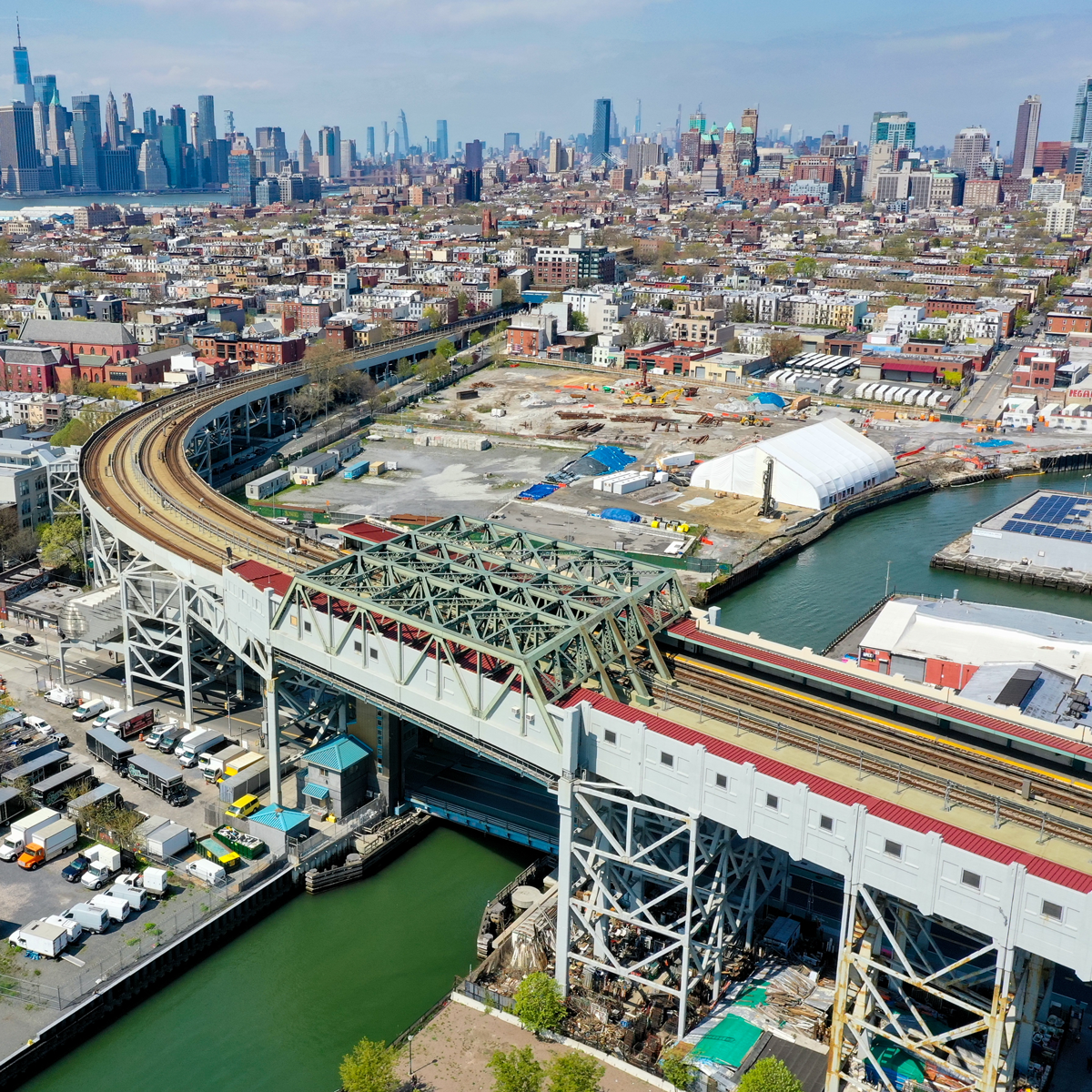
The project builds on a longstanding partnership with Brooklyn Collaborative Studies (BCS), a local public high school, and the Gowanus Dredgers Canoe Club, to engage students in the design, construction, and testing of constructed habitats for Atlantic ribbed mussels (Geukensia demissa) along the industrial shoreline of the Gowanus Canal.
The Mussel Habitat Project aimed to deepen organizational knowledge of effective mussel habitat design and monitoring techniques, laying the groundwork for long-term restoration strategies. The project also prioritized strengthening relationships with local stakeholders—including educators, community leaders, scientists, and environmental advocates—to build capacity for future ecological interventions in the Gowanus Canal. By integrating research, education, and community engagement, the Mussel Habitat Project supported a broader vision of restoring ecological function and resilience in one of New York City's most polluted waterways.
Photo: Gowanus Canal, Brooklyn, NY

Addressing historic pollution at the Gowanus Canal Superfund site
In 2010, the Gowanus Canal in Brooklyn, NY, was designated a Superfund site by the U.S. Environmental Protection Agency (EPA). This federal designation is reserved for the most contaminated sites in the country—areas where hazardous substances pose significant risks to human health and the environment. The canal, a historically industrial waterway, has been burdened for over a century by pollution stemming from manufacturing waste and untreated sewage discharges through the city's combined sewer overflow (CSO) system.
Decades of industrial activity and inadequate wastewater management have left a toxic legacy in the canal. Sediment at the bottom of the Gowanus Canal contains dangerously high concentrations of contaminants, including polycyclic aromatic hydrocarbons (PAHs), polychlorinated biphenyls (PCBs), and heavy metals such as mercury, lead, and copper, which are toxic to aquatic life and can disrupt ecosystems and public health. (Source: EPA.gov)
To address these threats, the EPA developed a multi-phase remediation strategy for the Gowanus Canal Superfund site. The core of the plan involves dredging the canal bed to remove layers of highly contaminated "black mayonnaise"—a sludge-like sediment filled with toxic substances, capping the dredged areas with clean material to prevent recontamination, and upgrading CSO infrastructure to reduce future pollution inputs and support long-term recovery. (Source: EPA.gov)
That’s where the mussels come in. While mechanical cleanup is essential, ecological restoration plays a critical role in revitalizing the canal’s health. Reintroducing Atlantic ribbed mussels—native filter-feeders known for their ability to improve water quality—is a promising approach. These mussels provide vital ecosystem services, including natural filtration that helps to remove excess nutrients, organic matter, and suspended solids, habitat and food web support, and resilience and restoration by contributing to shoreline stabilization and ecological resilience in urban waterways. By combining engineered cleanup with ecological restoration, the long-term vision for the Gowanus Canal includes not only removing historic pollution but also restoring a more balanced and biodiverse urban estuary.
Photo: Gowanus Canal, an EPA Superfund site
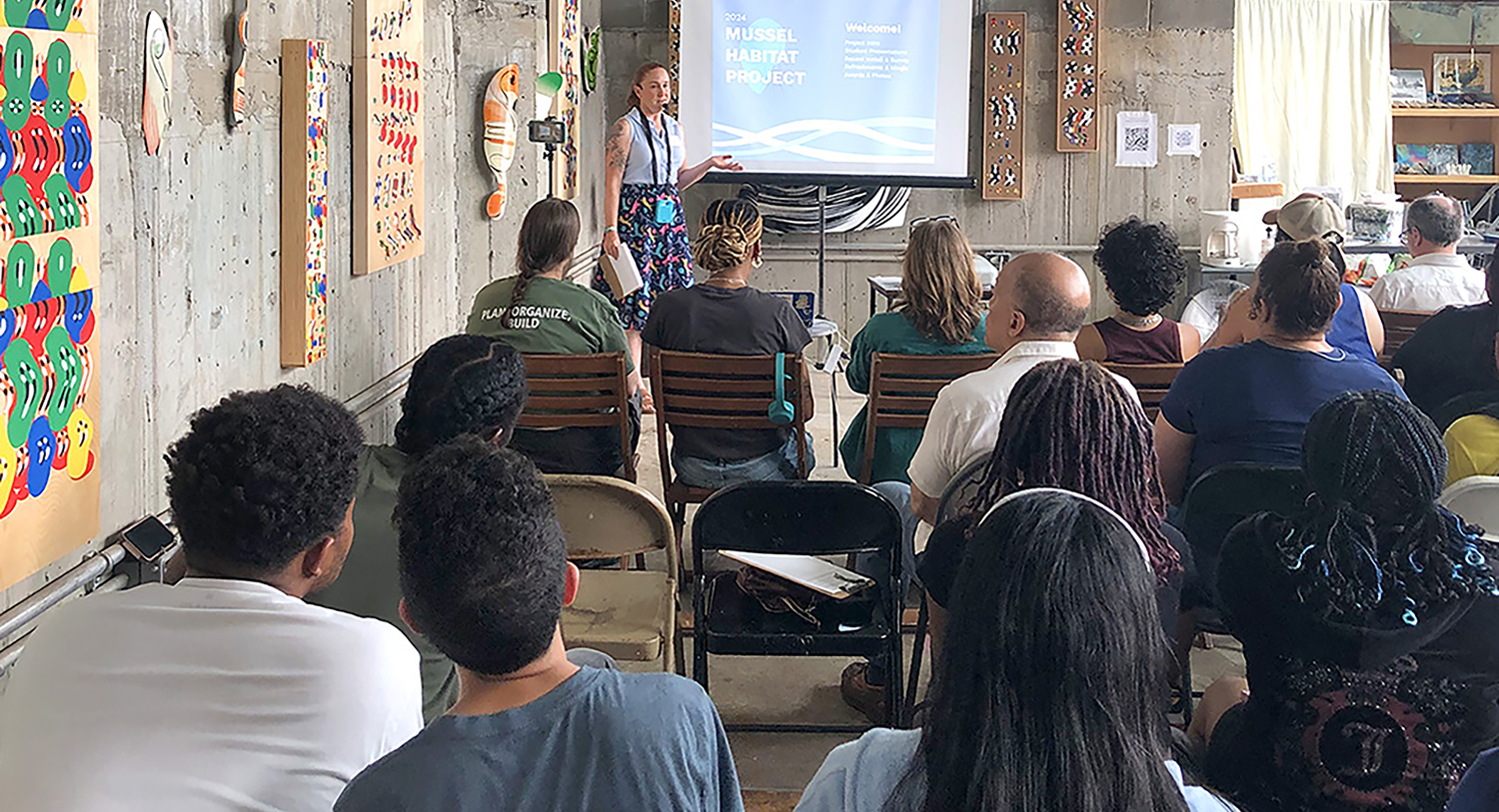
Photo: Jennifer Kepler, education program senior manager at GCC, and BCS high school students at the year-end Student Project Exhibition
Gowanus Canal Conservancy (GCC)
Since 2006, GCC—a Brooklyn-based nonprofit organization—has served as a dedicated environmental steward for the Gowanus neighborhood. Through grassroots volunteer programs, student education, and collaborative advocacy with government agencies, elected officials, and residents, GCC has worked to advance sustainable practices and green infrastructure throughout the Gowanus Canal watershed.
“If we have a healthy waterway, we have a healthy community. Having mussels to ensure the health of the waterway that we’re living next to is important when it comes to climate resilience and ensuring the health of our communities,” said Jennifer Kepler, education program senior manager at GCC.
As part of its ongoing mission to promote environmental education and ecosystem restoration, GCC’s Mussel Habitat Project entailed hosting a series of 90-minute community science field trips for over 400 students in grades 5 – 12 from BCS and other Brooklyn-area schools. Conducted at Lowlands Nursery along the Gowanus Canal, the hands-on learning sessions highlighted the critical role that filter-feeding mussels play in improving water quality and supporting biodiversity. Students conducted water quality testing, observed the constructed mussel habitats, and gained valuable insight into urban ecology, environmental science, and the impact of community-led restoration efforts.
After participating in the field trips, BCS students completed 40 hours of in-class learning about the historical ecology of Manhattan, the environmental history and current conditions of the Gowanus Canal, and the broader impacts of human activity on urban ecosystems. The curriculum culminated in a focus on the ecological value of Atlantic ribbed mussels—their habitat requirements, filtration capabilities, and potential role in improving water quality.

Following the instructional introduction, students collaborated with Gowanus Dredgers, a local volunteer organization dedicated to reviving the Gowanus Canal through recreation, education and advocacy. Together with Gowanus Dredgers, a total of 89 students participated in designing, constructing, installing, and monitoring 30 ribbed mussel habitat modules affixed to the steel bulkheads of the Canal—an innovative effort aimed at supporting local biodiversity and contributing to long-term restoration goals. Students explored modular designs through ideation processes involving sketches, at-scale orthographic drawings, physical models using recycled materials and modeling clay, and digital 3D modeling. The students also learned about the preferred design characteristics for mussels to attach to bulkheads, such as cracks and crevices that offer protection, that the students incorporated into their designs.
At the end of the school year, participating BCS students presented summaries of their research and displayed their habitat designs to local community stakeholders at a Student Project Exhibition Event. A post-installation survey revealed that 5,443 Atlantic ribbed mussels had settled on the new habitats created through these efforts.
Photo: Models of Atlantic ribbed mussels

Taking environmental stewardship further
An unexpected but deeply rewarding outcome of the Mussel Habitat Project, Kepler noted, was the lasting impact it had on student participants. Many students who engaged in the project developed a deeper interest in environmental stewardship—going on to join GCC’s Green Team, apply for youth internships, and volunteer their own time to support local environmental efforts. “We’re really glad to see that sort of interest blossom in our students.”
"The work that the Gowanus Canal Conservancy does teaches valuable, long-lasting pollution prevention lessons to young students," observed Ambika Walker, who leads NYSP2I’s community grants program. "They learn to become environmental stewards, and to learn first-hand how healthy ecosystems create healthy communities.”
Photo: Gowanus Canal Conservancy
The opinions, results, findings and/or interpretations of data contained herein this Gowanus Canal Conservancy success story are the responsibility of the author(s) and do not necessarily represent the opinions, interpretations or policy of Rochester Institute of Technology and its NYS Pollution Prevention Institute or New York State.
For more information about the Gowanus Canal Conservancy, visit gowanuscanalconservancy.org