The Tool Library
Buffalo Nonprofit Champions the Circular Economy One Repair at a Time
- Awardee: The Tool Library, Inc.
- Outcome: The project entailed hosting 24 Dare to Repair Café events providing community participants with hands-on opportunities to learn basic repair skills, reduce waste, and divert repairable items from the landfill. Educational materials about the benefits of circular economy principles such as repair, reuse, and preventing waste were also developed and disseminated to event participants.
- Why: To normalize repair and reuse within the community as a means for extending the life of products and minimizing negative impacts on the environment.
- Where: Buffalo, New York
- Award Amount: $20,000
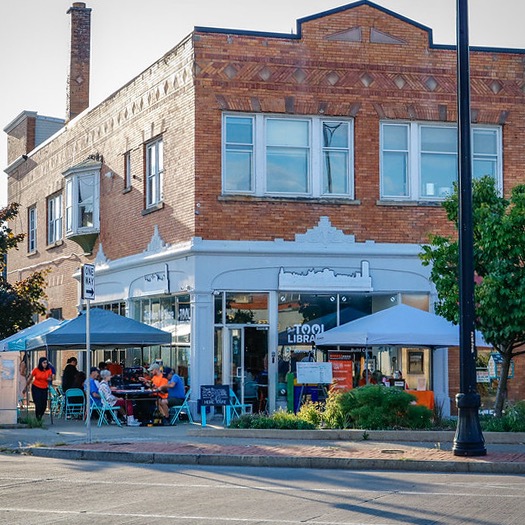
In 2024, The Tool Library, Inc., a Buffalo-based nonprofit, received a $20,000 grant from the NYSP2I Community Grants Program to expand its Dare to Repair initiative—an innovative community project that promotes hands-on repair of broken household goods.
The expanded project aimed to:
- Increase the accessibility of repair and reuse within the community
- Foster collaboration between skilled volunteer “fixers” and participants
- Provide educational outreach on circular economy principles
- Divert usable items from the waste stream
This work builds on long-standing partnerships with the City of Buffalo Recycling Department, Buffalo and Erie County Public Libraries, and a dedicated team of volunteers.
All photos: The Tool Library, Buffalo, NY
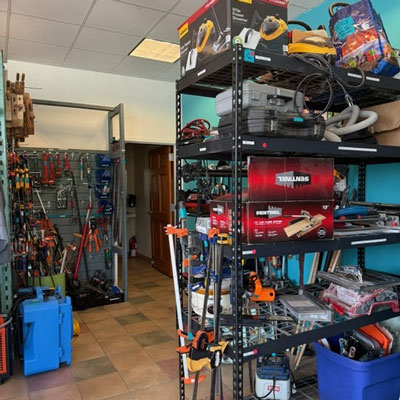
A community hub for tools, skills, and sustainability.
Since its founding in 2011, The Tool Library has been a driving force for sustainability and community resilience in Buffalo. As a membership-based nonprofit, it allows residents to borrow from a collection of more than 5,000 donated tools—from basic hand tools to power saws and sanders—enabling them to tackle home improvement and garden projects affordably. But The Tool Library offers more than just tools—it also provides free workshops and fosters a culture of sharing and cooperation.
“Community repair events like Dare to Repair are part of a broader economic transition away from a system that really hasn’t been serving most people, locally or around the world. We’re shifting toward models that are more sustainable, more regenerative and that rely more on people helping one another, and sharing with one another,” said Darren Cotton, Executive Director at The Tool Library.
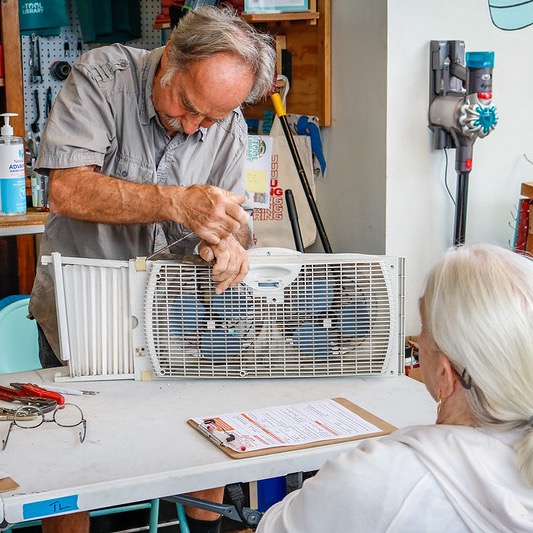
Dare to Repair in action.
Over the past year, The Tool Library organized 17 Dare to Repair Café events across Buffalo and its suburbs (as of Sept. 2025), with 7 additional events planned by year’s end. Hosted at community centers and libraries, these events operated in 3-hour blocks and welcomed walk-in participants.
Community members brought in broken items—lamps, vacuums, small electronics, toys, and more—to be assessed and fixed by volunteer “fixers.” Participants were encouraged to engage in the repair process, gaining valuable hands-on experience. They also received take-home educational materials on repair, reuse, and other circular economy strategies.
To date, 725 individuals have participated in the events. 431 items have been successfully repaired— diverting 4,351 pounds of waste from the landfill and saving $51,625 in replacement costs.
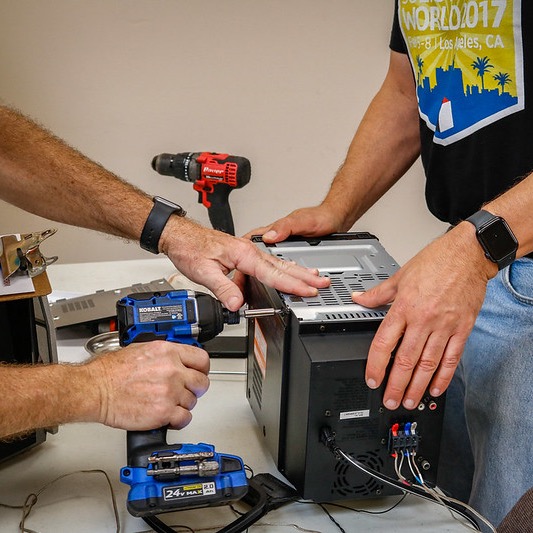
Building a circular economy from the ground up.
The Dare to Repair Expansion Project is a strong example of how grassroots organizations can advance circular economy principles in everyday settings—by keeping products in use and empowering people with practical skills.
"The work that The Tool Library does brings valuable, long-lasting skills and thinking to communities in Western New York," said Ambika Walker, who leads NYSP2I’s community grants program. "They’re putting circular economy principles directly into action at the local level.”
“Learning to fix things ourselves, and the friendships we build while doing it, can help us fight against rising prices and the feeling of being alone that many people experience today. Adding weeknight events to our schedule has allowed us to invite even more community members to experience the joy that comes with fixing the things we own,” said Lissa Rhodes, Dare to Repair Coordinator for The Tool Library.
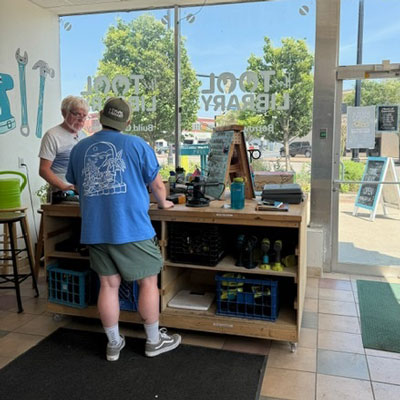
Why it matters.
Repair, reuse, and resource-sharing are essential strategies for reducing waste, conserving materials, and minimizing harmful environmental impacts. By hosting interactive repair events, The Tool Library is normalizing these practices and making them accessible to all. Their model strengthens local communities, supports environmental sustainability, and serves as a replicable blueprint for other cities.
The opinions, results, findings and/or interpretations of data contained herein this Tool Library success story are the responsibility of the author(s) and do not necessarily represent the opinions, interpretations or policy of Rochester Institute of Technology and its NYS Pollution Prevention Institute or New York State.
For more information about The Tool Library, visit thetoollibrary.org