News
-
August 16, 2021
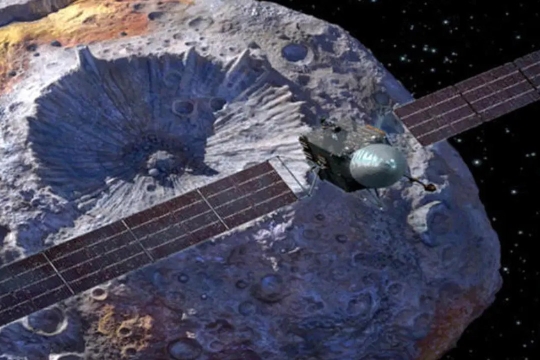
RIT professor compares ‘quadrillion dollar asteroid’ to mining ocean for gold
WROC-TV talks to Michael Richmond, professor in the School of Physics and Astronomy and director of the RIT Observatory, about the asteroid Psyche.
-
August 16, 2021
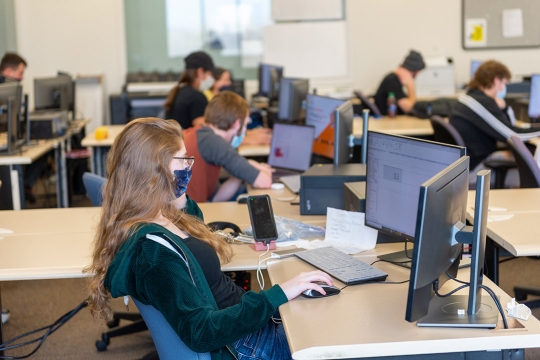
Classroom experience expected to incorporate more traditional learning this fall
When classes begin Aug. 23, university administrators expect students will enjoy a more traditional fall semester, albeit one with masking requirements. Most classes will be held in person and related academic activities will resume.
-
August 12, 2021

Make No Misteak: Our Food Choices Are Not Ours Alone
Essay by Amit Batabyal, the Arthur J. Gosnell Professor of Economics, published by The Globe Post.
-
August 12, 2021
Move-in, orientation await thousands of RIT students
Thousands of students are expected back on campus next week, as a record number of freshmen move in, begin orientation, and attend New Student Convocation. Roughly 3,260 first-year students are expected – about 1,000 a day will move in starting Sunday through Tuesday. That’s up more than 250 students from last year, which also saw a record number of freshmen.
-
August 12, 2021

RIT sustainability professor will lead NSF grant studying data privacy on home devices
The three-year study, led by Eric Williams, a professor in the Golisano Institute for Sustainability, will look at how the COVID-19 pandemic has accelerated the transition toward increased telework and mobile working and resulting implications on data security and e-waste.
-
August 12, 2021
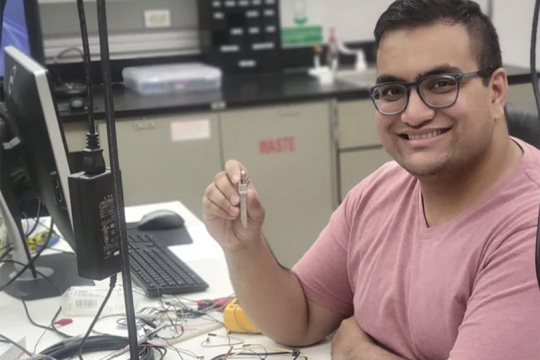
Industry-Academia Partnerships Exceed the Sum of Their Parts
Photonics Media features Don Figer, director of the Center for Detectors, computer engineering BS/MS student Irfan Punekar, and Stefan Preble, professor in the Department of Electrical and Microelectronic Engineering.
-
August 11, 2021

Two RIT professors named 2021 KEEN Engineering Unleashed Fellows
Sarah Brownell, senior lecturer in RIT’s Kate Gleason College of Engineering, and Clark Hochgraf, associate professor in RIT’s College of Engineering Technology, have been named 2021 KEEN Engineering Unleashed Fellows by the Kern Entrepreneurial Engineering Network (KEEN).
-
August 11, 2021
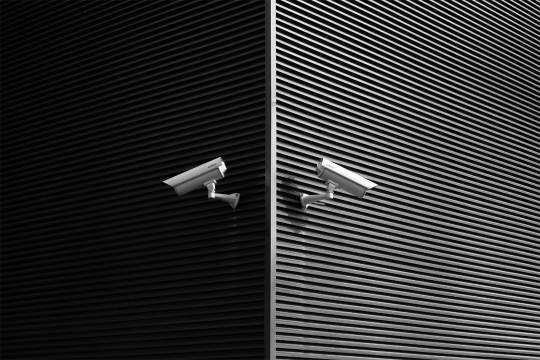
Apple's Privacy Mythology Doesn't Match Reality
Essay written by Evan Selinger, professor of philosophy, published by Wired.
-
August 10, 2021

RIT HHMI Inclusive Excellence program offers students an early chance to delve into research
Ten College of Science students received funding to work with faculty mentors on summer-long research projects as part of the HHMI Inclusive Excellence Summer Research Experience. The program is for students who just completed their first year at RIT and helps broaden RIT’s research groups to include a greater diversity of culture.
-
August 10, 2021
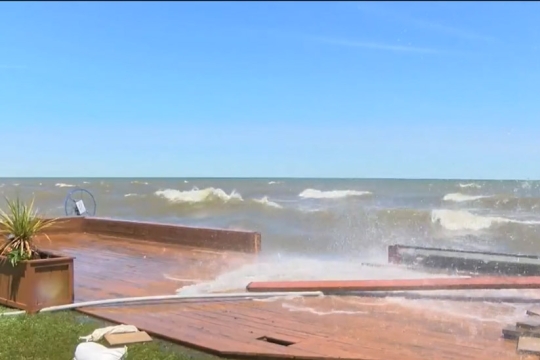
How global climate change is impacting Rochester
WROC-TV talks to Tony Wong, assistant professor of mathematical sciences, about climate change.
-
August 6, 2021
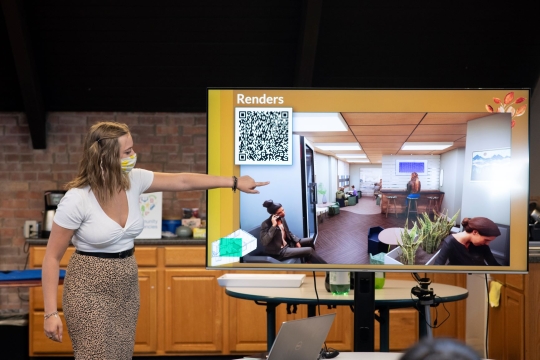
RIT students take on accessibility and medical care challenges by design
College of Art and Design participated in this summer's Studio930 design consultancy, an interdisciplinary studio that focuses on the development of assistive healthcare solutions by leveraging the use of technology, art, and design.
-
August 5, 2021
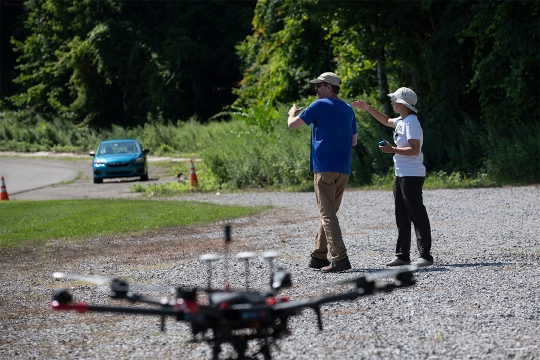
RIT scientists conduct coordinated remote sensing experiments with drones, planes, and satellites
Rochester Institute of Technology scientists and a team of international collaborators recently completed an intricate set of experiments that will help improve remote sensing technology used by drones, airplanes, and satellites.