Office of Faculty Recruitment News
-
July 12, 2019
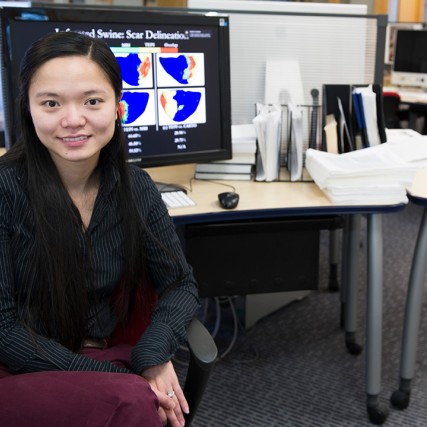
Professor honored with Presidential Early Career Award for Scientists and Engineers
RIT computing professor Linwei Wang, whose research is advancing non-invasive personalized healthcare for heart diseases, is receiving the Presidential Early Career Award for Scientists and Engineers, the highest honor bestowed by the U.S. government on outstanding scientists and engineers who are beginning their independent research careers and show exceptional promise for leadership in science and technology.
-
July 10, 2019
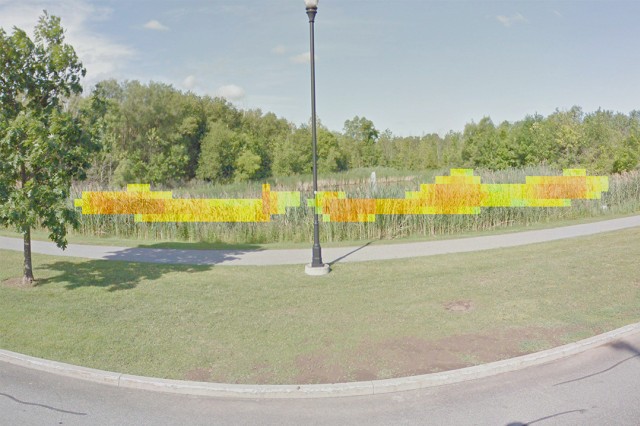
RIT scientists using technology to fight invasive plants
City Newspaper reports on work by Assistant Professor Christopher Kanan and Associate Professor Christy Tyler, both in the College of Science.
-
July 9, 2019
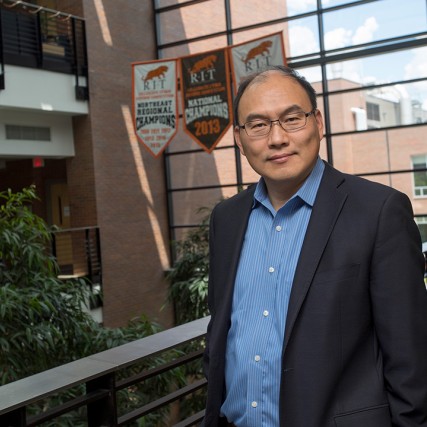
RIT’s CyberCorps cybersecurity scholarship program renewed by NSF grant
RIT will use a $5.5 million federal grant to grow a program that trains the next generation of cybersecurity professionals who will help secure the nation. The National Science Foundation awarded RIT the five-year grant that will renew funding for the CyberCorps: Scholars for Service program.
-
June 24, 2019

Ph.D. student receives prestigious Microsoft Research grant for diversity in computing
Larwan Berke, a computing and information sciences Ph.D. student at RIT, was one of only 11 outstanding doctoral students selected to receive the 2019 Microsoft Research Dissertation Grant.
-
June 24, 2019
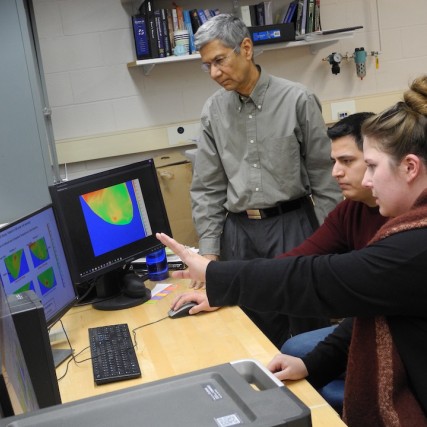
Infrared imaging technology being developed to better detect breast cancer
Faculty and student researchers at RIT, and physicians from the Rochester Regional Health System (RRHS), developed a non-invasive process using infrared imaging to better detect cancerous tumors.
-
June 21, 2019
RIT researchers among finalists for National Science Foundation Big Ideas Competition
A team RIT computing professors are finalists in the National Science Foundation 2026 Idea Machine competition for their proposal on Integrated Human-Machine Intelligence, beating out more than 800 other ideas.
-
June 19, 2019
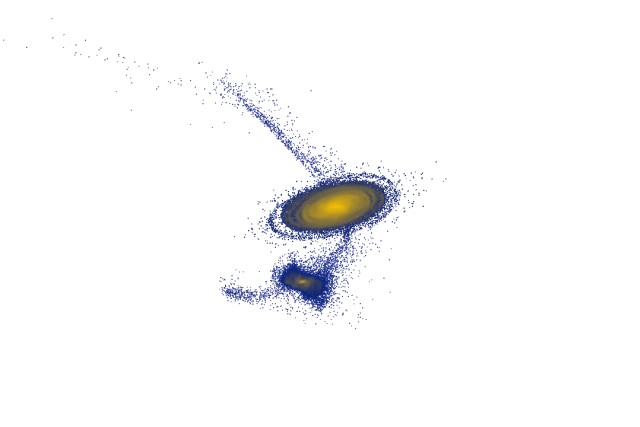
Did a Dwarf Galaxy Crash into the Milky Way?
Sky & Telescope reports that a recent study by RIT suggests the dwarf galaxy Antlia 2 had a long-ago run-in with our galaxy, rippling and warping its disk. But not everyone agrees with that scenario.
-
June 18, 2019
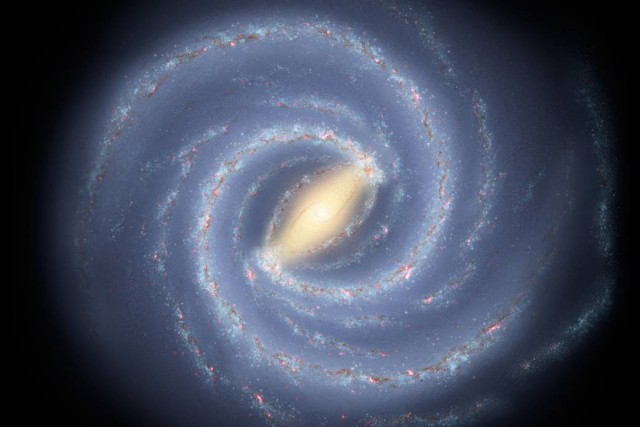
A 'Ghost Galaxy' May Have Given the Milky Way Its Signature Swirl
Though direct observational evidence of Antlia 2 was not obtained until last year, one scientist has had a decade-long hunch that it was there. Sukanya Chakrabarti, an astrophysicist at RIT predicted in 2009 that an object packed with dark matter was causing tidal effects at the edge of the Milky Way.
-
June 18, 2019
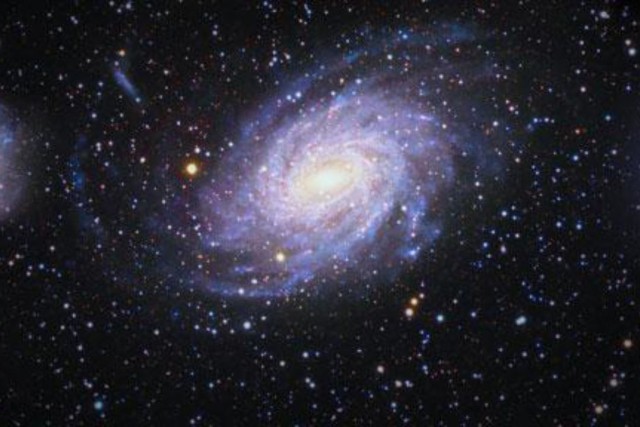
Milky Way Collided with Dark-Matter Dominated Galaxy Less Than Billion Years Ago
Sci-News features new research, led by RIT, that shows the collision of the recently-discovered dwarf galaxy Antlia 2 with the Milky Way Galaxy hundreds of millions of years ago is responsible for ripples in the Milky Way’s outer gas disk.
-
June 14, 2019
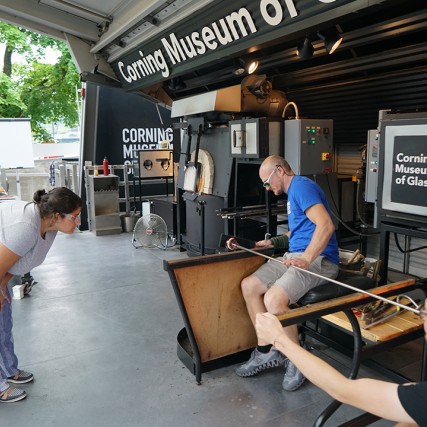
Fellowship winner gets full Corning Museum of Glass experience
Andrea Gonzalez Esteche '19 (industrial design MFA), a Fulbright scholar, worked alongside Corning Museum of Glass artists as the 2019 GlassLab Design Fellowship winner.
-
June 14, 2019
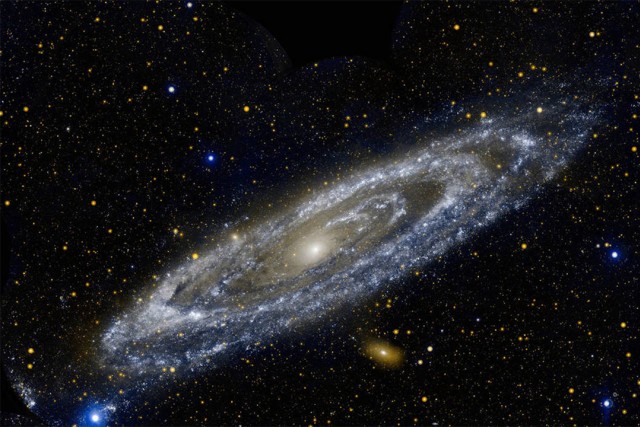
Scientists detected signs of our Milky Way colliding with another 'ghost' galaxy
Antlia 2, the "ghost of a galaxy" orbiting the Milky Way, is a dark horse in more ways than one. Not only is it so faint it was only just discovered last year, it may now be responsible for curious ripples in the hydrogen gas that makes up the Milky Way's outer disc.
-
June 12, 2019
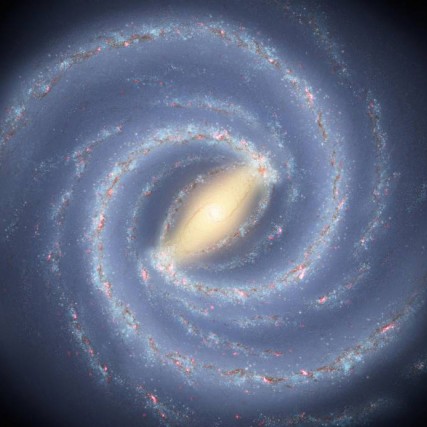
New evidence shows crash with Antlia 2 gave the Milky Way the ripples in its outer disc
The newly-discovered dark dwarf galaxy Antlia 2’s collision with the Milky Way may be responsible for our galaxy’s characteristic ripples in its outer disc, according to a study led by Assistant Professor Sukanya Chakrabarti. The Antlia 2 dwarf galaxy was discovered from the second data release of the European Space Agency’s Gaia mission, which aims to chart a three-dimensional map of our galaxy.