Office of Faculty Recruitment News
-
April 15, 2019

Researchers Develop New Form of Laser for Sound
R&D Magazine talks to Mishkat Bhattacharya, associate professor of physics, about his research to create a laser for sound.
-
April 12, 2019
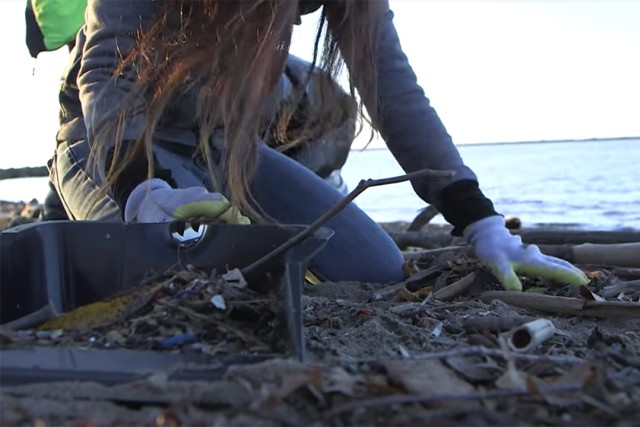
It’s beach clean-up season! When and where to help Lake Erie
Cleveland.com cites research by Matthew Hoffman, associate professor of applied and computational mathematics, and Eric Hittinger, associate professor of public policy.
-
April 12, 2019

RIT honors researchers
RIT honored researchers who served as principal investigators on active awards in fiscal year 2018 at an April 11 reception. Also recognized were the 20 recipients of Seed Funding Awards and 12 new inductees in RIT’s PI Millionaires.
-
April 12, 2019

RIT researcher collaborates with UR to develop new form of laser for sound
The optical laser has grown to a $10 billion global technology market since it was invented in 1960, and has led to Nobel prizes for Art Ashkin for developing optical tweezing and Gerard Mourou and Donna Strickland for work with pulsed lasers. Now an RIT researcher has teamed up with experts at the University of Rochester to create a different kind of laser – a laser for sound, using the optical tweezer technique invented by Ashkin.
-
April 11, 2019
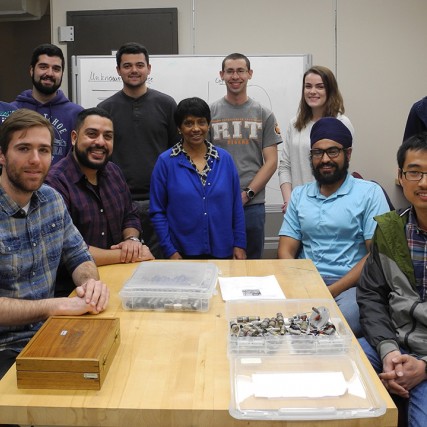
TTM Technologies Inc. makes donation to RIT for research fellowships
The donation will fund doctoral student research in advancing microwave and antenna technology for wireless and space or defense applications.
-
April 8, 2019

'Light & Sound' to highlight Rochester's interactive media opportunities
WHAM-TV talks to Ryne Raffaelle, vice president for research and associate provost, about the upcoming 2019 Light and Sound Interactive Conference.
-
April 4, 2019
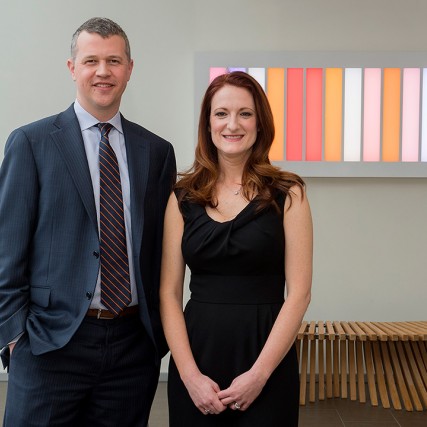
No longer lost in translation: Videos depicting complex scientific concepts break barriers for deaf STEM students
Research has revealed that people who learn English as a second language, including deaf and hard-of-hearing individuals, are underrepresented in STEM fields because of academic language abilities required to compete in those disciplines. A new project at NTID is helping to break down those obstacles specifically for deaf and hard-of-hearing people.
-
April 2, 2019
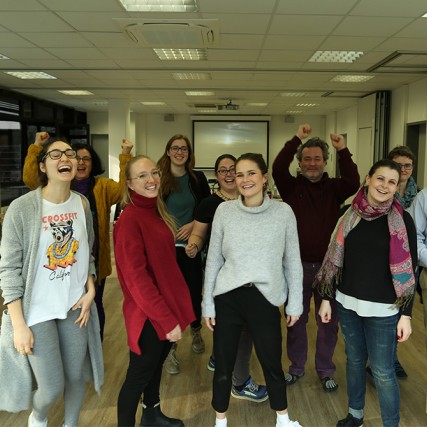
RIT to host science education researchers from around the globe for PEER workshop July 5-13
RIT is inviting scholars from across the globe for a workshop this summer to foster innovative research in science, technology, engineering and math (STEM) education with a focus on developing junior and emerging researchers.
-
March 28, 2019
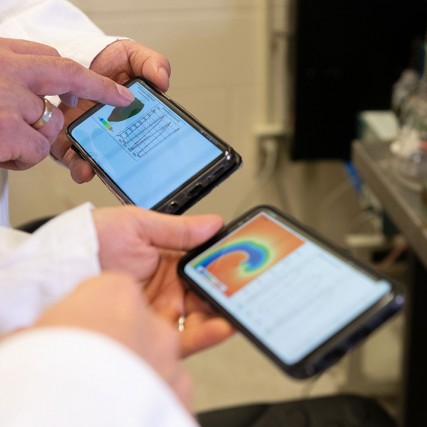
Scientists develop way to perform supercomputer simulations of the heart on cellphones
A team of scientists from RIT and Georgia Tech developed a new approach that can not only help diagnose heart conditions and test new treatments, but pushes the boundaries of cardiac science by opening up a floodgate of new cardiac research and education.
-
March 26, 2019

RIT researchers set to help LIGO resume hunt for ripples in space and time
The Nobel Prize-winning project that hunts for gravitational waves— ripples in space and time—is about to begin the longest and most sensitive observational run to date. And several RIT researchers are preparing to pore over the new data to help uncover some of the universe’s biggest mysteries.
-
March 21, 2019

Saunders College professorship facilitates ‘unlikely’ interdisciplinary research relationships
As The Benjamin Forman Collaborative Research Professorship, Victor Perotti acts as a facilitator for research alliances that benefit students and faculty that find value in building a portfolio around unique interdisciplinary partnerships.
-
March 21, 2019
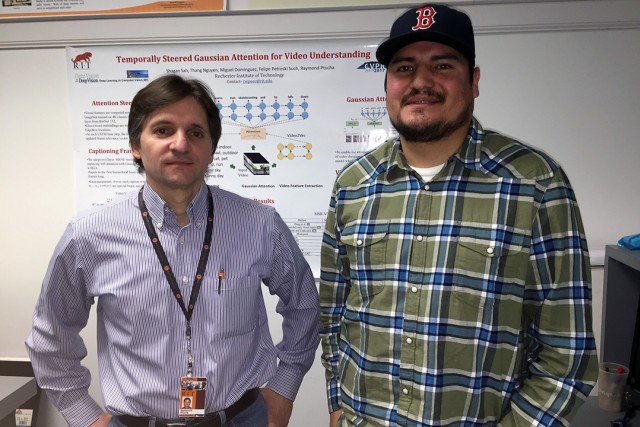
Podcast: Using AI to Save the Seneca Language
Intersections: The RIT Podcast, Ep. 11: Artificial intelligence and deep learning have many research applications. Ray Ptucha, assistant professor of computer engineering in RIT’s Kate Gleason College of Engineering, talks with computing doctoral student Robert Jimerson from the Golisano College of Computing and Information Sciences about a project using deep learning systems to help preserve the Native American Seneca language.