Facilities

CCRG’s research focuses on the universe’s most extreme phenomena, where intense gravitational and magnetic fields interact with ultra-relativistic matter and high-energy radiation.
To study these environments, we utilize advanced, large-scale computation and high-fidelity visualization. CCRG’s award-winning faculty drives major discoveries in relativistic astrophysics, gravitational physics, and cosmology. The center leads in computational astrophysics by developing key software—including agentic AI to build advanced numerical relativity and GRMHD codes for complex physics and astrophysics simulations. Furthermore, CCRG makes crucial contributions to gravitational wave detection alongside the LIGO Scientific Collaboration and observational projects like LISA, LSST, and pulsar timing arrays.
To power this rigorous research and process massive datasets, CCRG relies on a robust computing infrastructure. As detailed below, this dual-tiered approach leverages our customized, state-of-the-art local computing clusters housed in the Black-Hole Lab, alongside consistent access to national petascale and exascale supercomputing resources.
Local Computing Clusters
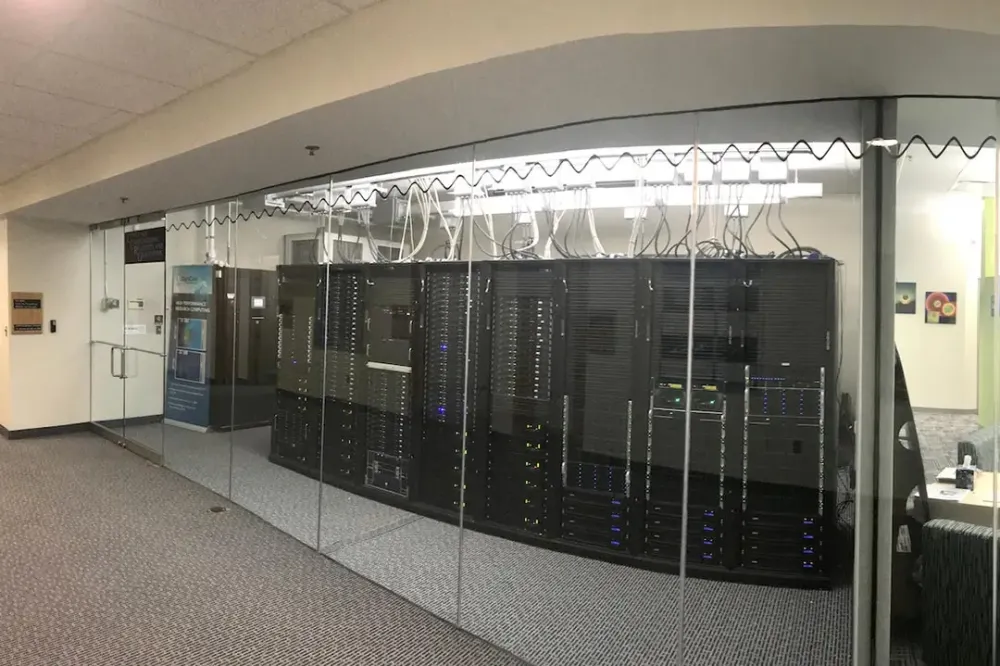
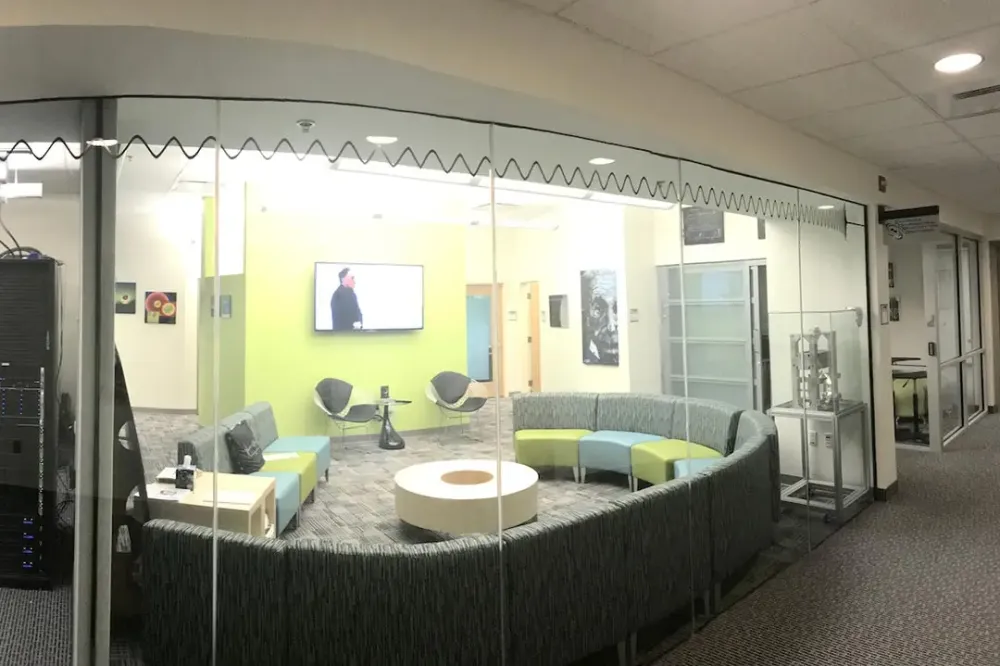
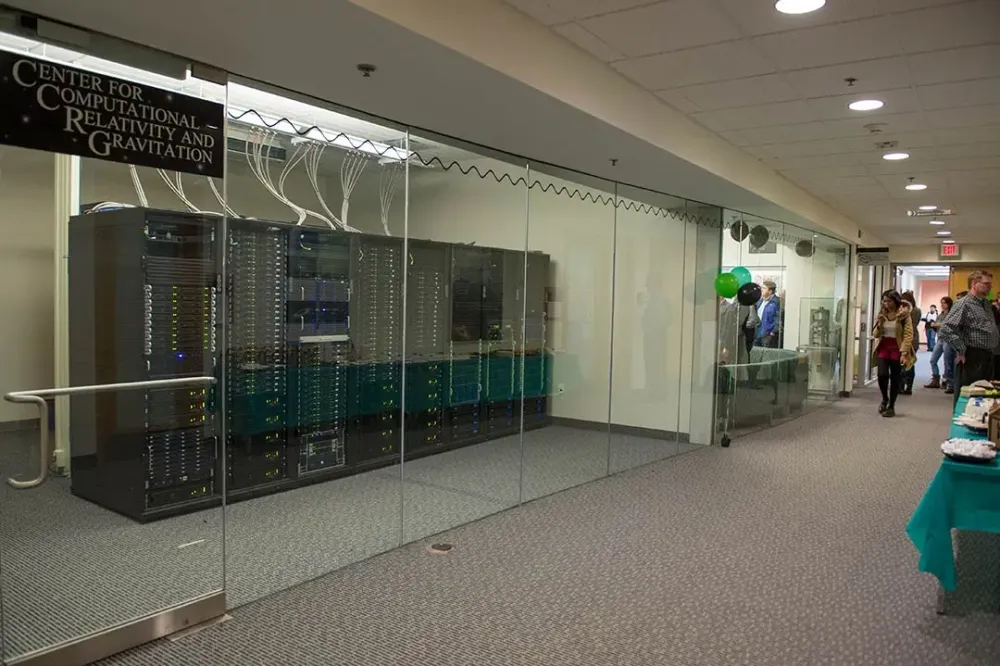
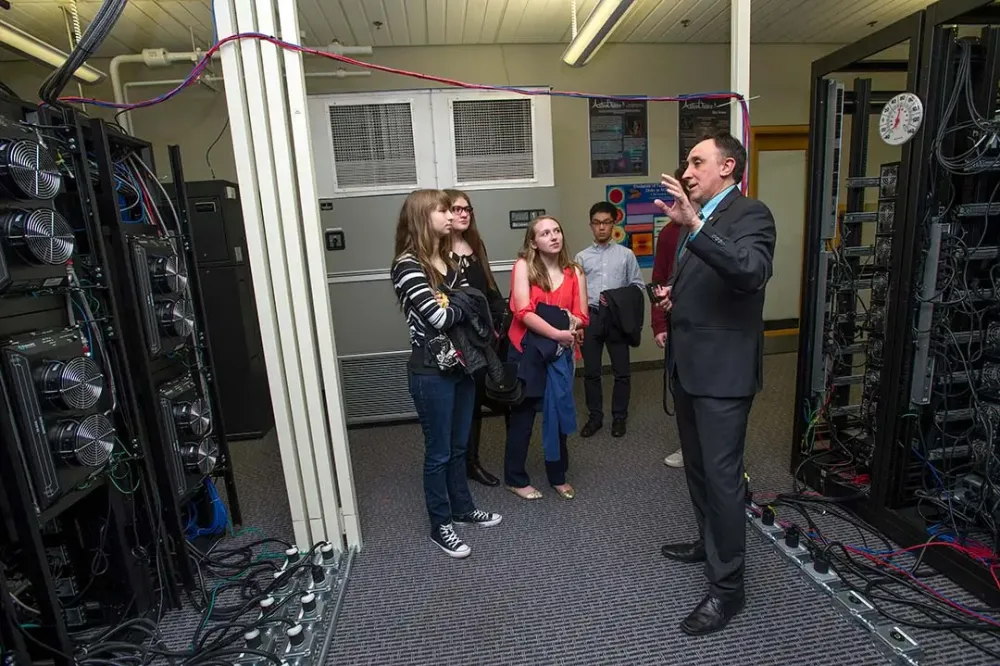
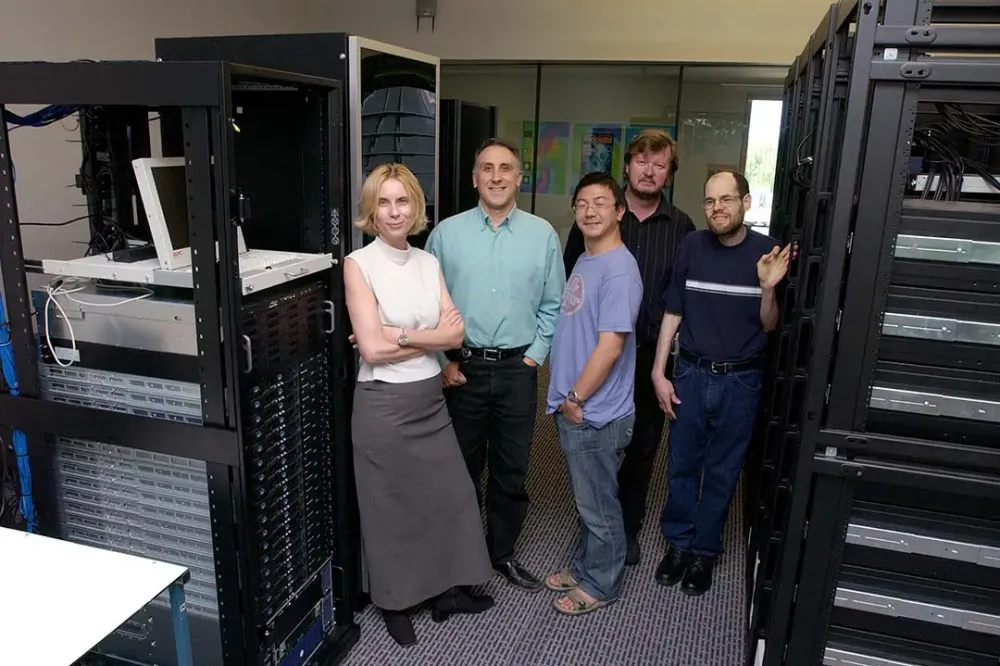
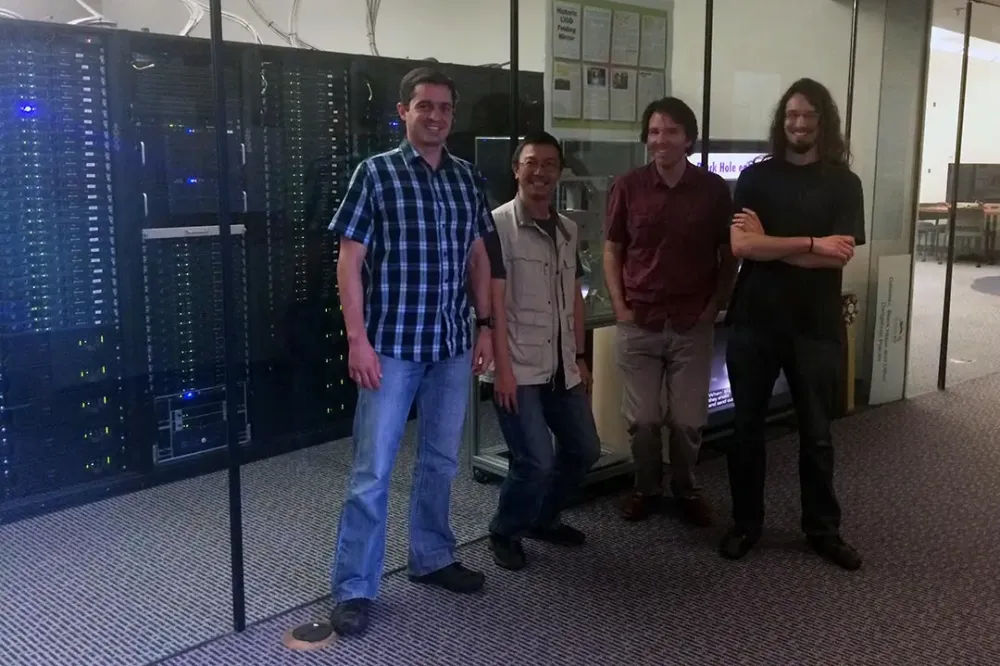
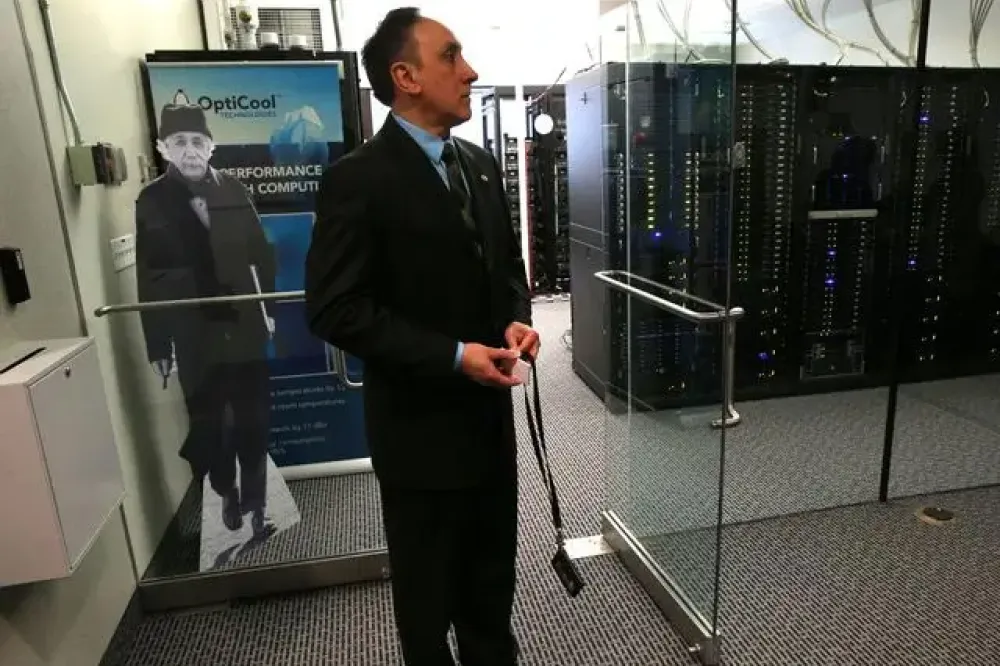
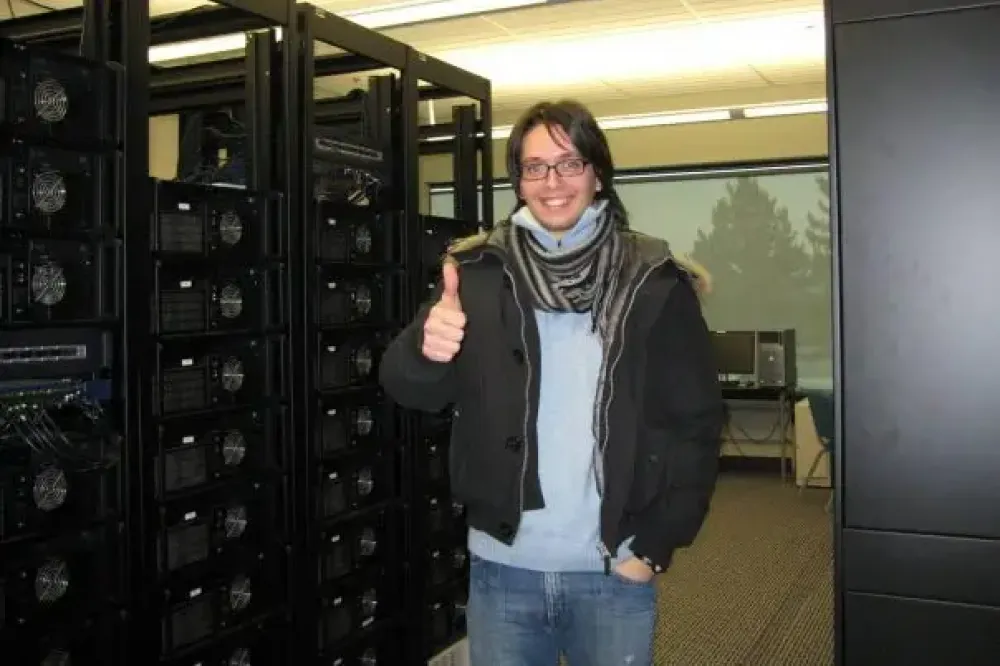
The CCRG clusters are housed in the Black-Hole Lab (74-2060), a state-of-the-art facility featuring a large glass viewing wall to showcase our commitment to green computing. All systems are produced by Aeon Computing and utilize an in-rack green cooling solution provided by OptiCool Technologies.
-
Green Prairies (1296 cores): Our flagship state-of-the-art cluster supports research at the frontiers of gravitational physics and relativistic astrophysics. It consists of 40 nodes, each equipped with dual Intel Skylake 6130 16-core CPUs, interconnected via an Intel Omnipath fabric. The system includes 38 nodes with 192GB of RAM and two high-memory nodes with 384GB of RAM, all supported by a high-speed 768TB Lustre filesystem. This system was funded via NSF MRI grant PHY-1726215.
-
Blue Sky (1040 cores): A robust hybrid cluster consisting of 50 Intel Sandy Bridge Xeon E5-25630 nodes (16 cores, 64GB RAM each) and 20 Intel Nehalem Xeon X5690 nodes (12 cores, 48GB RAM each). Two Sandy Bridge nodes feature dual Intel Phi coprocessors. The cluster uses a QDR Infiniband fabric and provides direct access to a 261TB Lustre filesystem. It was purchased through NSF grants PHY-1229173 and AST-1028087.
-
New Horizons (500 cores): Our original hybrid computational cluster, purchased via NSF grants PHY-0722703 and DMS-0820923.
-
WhiteLagoon: A massive 3PB storage pool with 20 attached high-speed nodes. It serves as a central hub, connected to Green Prairies, Blue Sky, and RIT’s Research Computing via a 100GB network. Additionally, RIT provides a dedicated 2PB Cold Storage system for exclusive CCRG use.