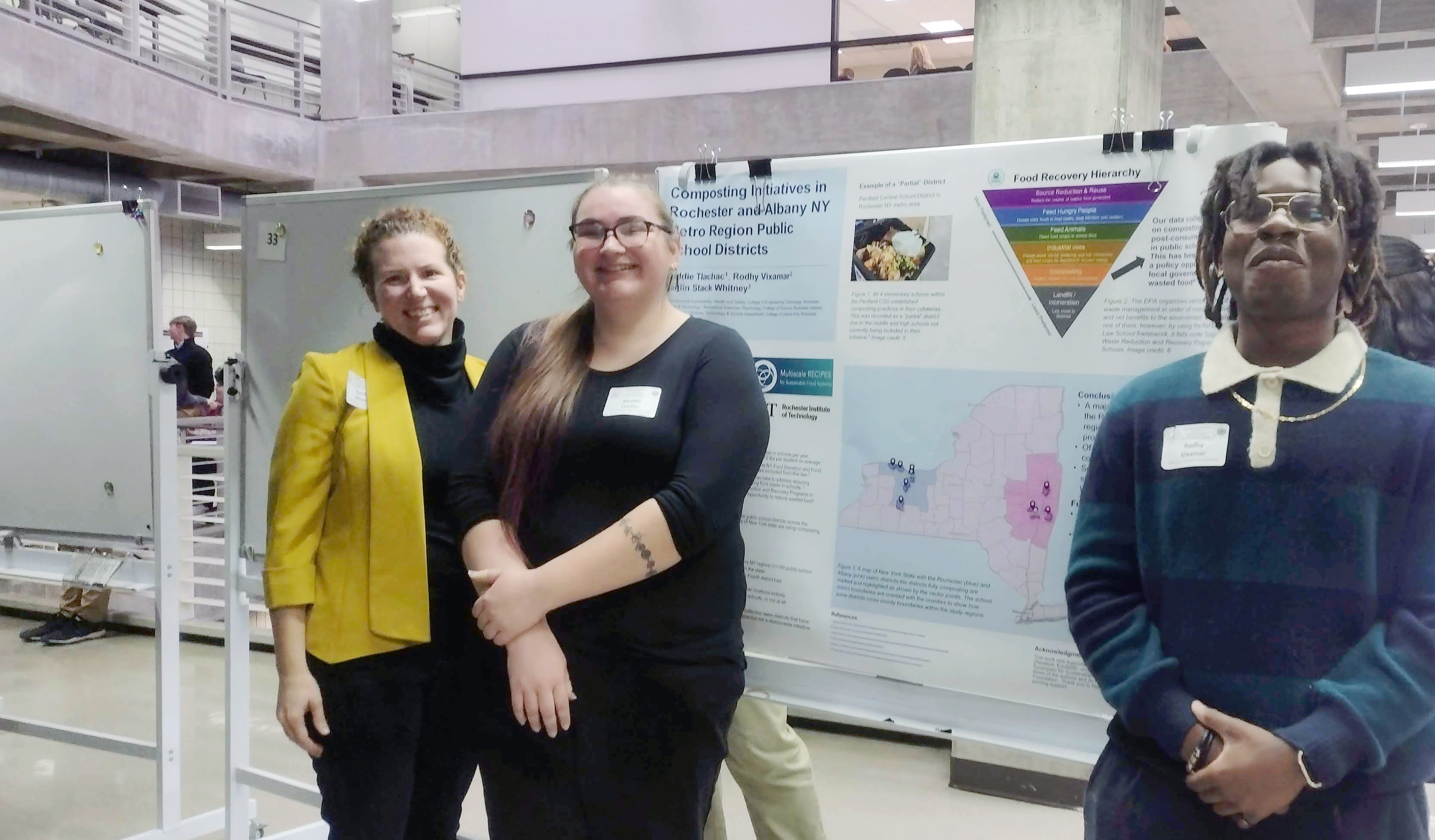
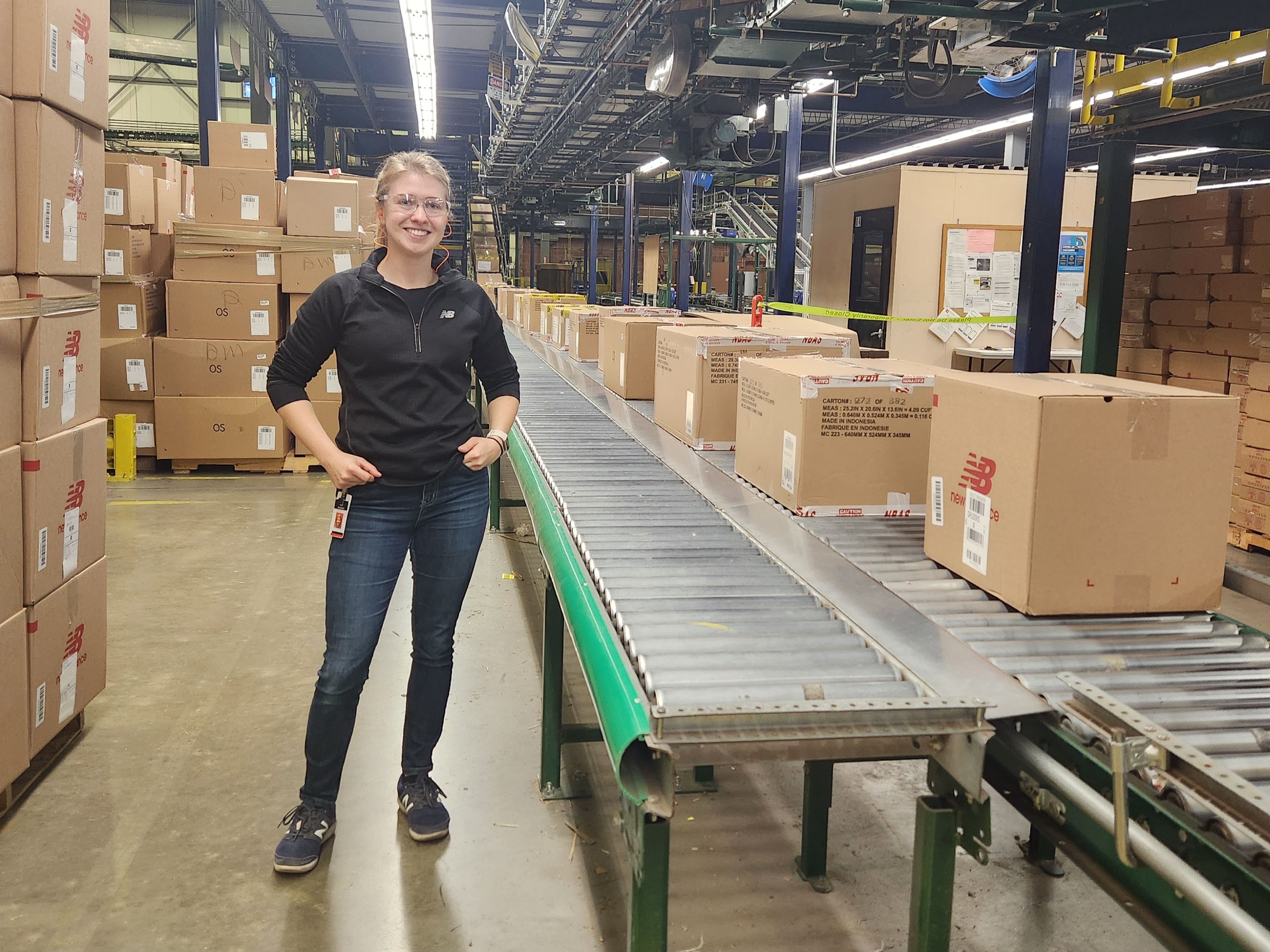
Protecting People and Planet: ESHS Student Drives Real-World Change at General Motors (GM) on Environmental Engineering Co-op
Motivated by living through environmental tragedies like Hurricane Katrina, Matthew translated RIT's practical skills into a high-impact co-op, implementing a lasting recycling program at General Motors (GM).
How did you find ESHS? What intrigued you about it? What was your journey like from end of high school to joining RIT/CET?
I grew up in New Orleans, where the environment and people’s lives are deeply interconnected. Living through hurricanes, the aftermath of Katrina, and events like Deepwater Horizon showed me firsthand that the need for environmental protection was not just to protect ecosystems but to prevent the concerning disruptions on people’s jobs, their families, and the places they live. In high school, I read Laudato Si’, a kind of essay which was written by Pope Francis about caring for our “common home.” It had a surprisingly profound impact on me, and from that point on, I felt a responsibility to pursue a career where I could contribute to environmental stewardship in a pragmatic way.
When it came time to look for a college program, I knew I wanted to live somewhere new. I am lucky enough to have family in the Rochester area and part of my search centered around schools in New York. At first, I thought I might study environmental engineering or geology, so I looked into all the environmentally focused programs. When I came across ESHS, it immediately stood out to me. I loved that it combined environmental topics with health, safety, and sustainability. The breadth of the program, and the career possibilities made me confident I would graduate with skills I could apply directly in a co-op or job post-grad.
How did you find your co-op? Any interesting backstory?
I’ve found my co-ops primarily through LinkedIn. I put a lot of time and care into improving my resume and took advantage of career services resources to translate my experiences into something marketable for internships. My professors were also a huge help since many of them come from industry. I found that by talking with them about my interests and goals, they often had suggestions about companies or roles that fit well with the path I had in mind for myself.
One of the most meaningful experiences I’ve had outside of co-op has been my campus job with RIT Dining’s Safety, Training, and Compliance Manager. The student who previously held the role encouraged me to apply, and it has turned out to be an amazing experience. I love that the work is both practical and directly connected to a place I interact with every day. I’ve gained so many skills that I’ve already applied in co-ops, especially around inspecting and auditing.
Can you describe a bit about your experience in the ESHS program?
I cannot overstate how much I love being a student in ESHS. We’re a tight-knit group, and that sense of community makes such a difference in having a great experience. I genuinely know everyone, and it’s nice to know that people have my back and I have theirs. Many of my closest friends at RIT are people I met through ESHS.
I think what makes the program special is how skill-focused and hands-on it is. I never feel like I’m doing academic work just for the sake of it. Everything we learn ties directly to real tasks and responsibilities I’ve had in jobs and co-ops. It often feels like checking off a list of essential industry skills. A highlight for me was earning my HAZWOPER certification. The labs leading up to it—like wearing full HAZMAT suits and SCBAs—were both fun and incredibly valuable.
During your Environmental Engineering co-op at General Motors, Arlington Assembly in Arlington, TX, what was your favorite project you worked on?
One project I’m especially proud of was implementing a single-stream recycling program at my facility. The site has around 5,000 employees, so figuring out the placement of containers and how to minimize contamination was a big undertaking. It felt meaningful to create a system that would have a visible, lasting impact on the entire site.
What was your involvement in the day-to-day?
I always had my own projects to keep me busy, but environmental work at a manufacturing plant has a lot of moving parts (figuratively and literally) and there’s constantly something happening somewhere. Whenever one of the environmental engineers received a call or needed to check on something in the facility, they would take me along. I helped with audits, area checks, and compliance reviews.
What was the impact/goal of the project for that company?
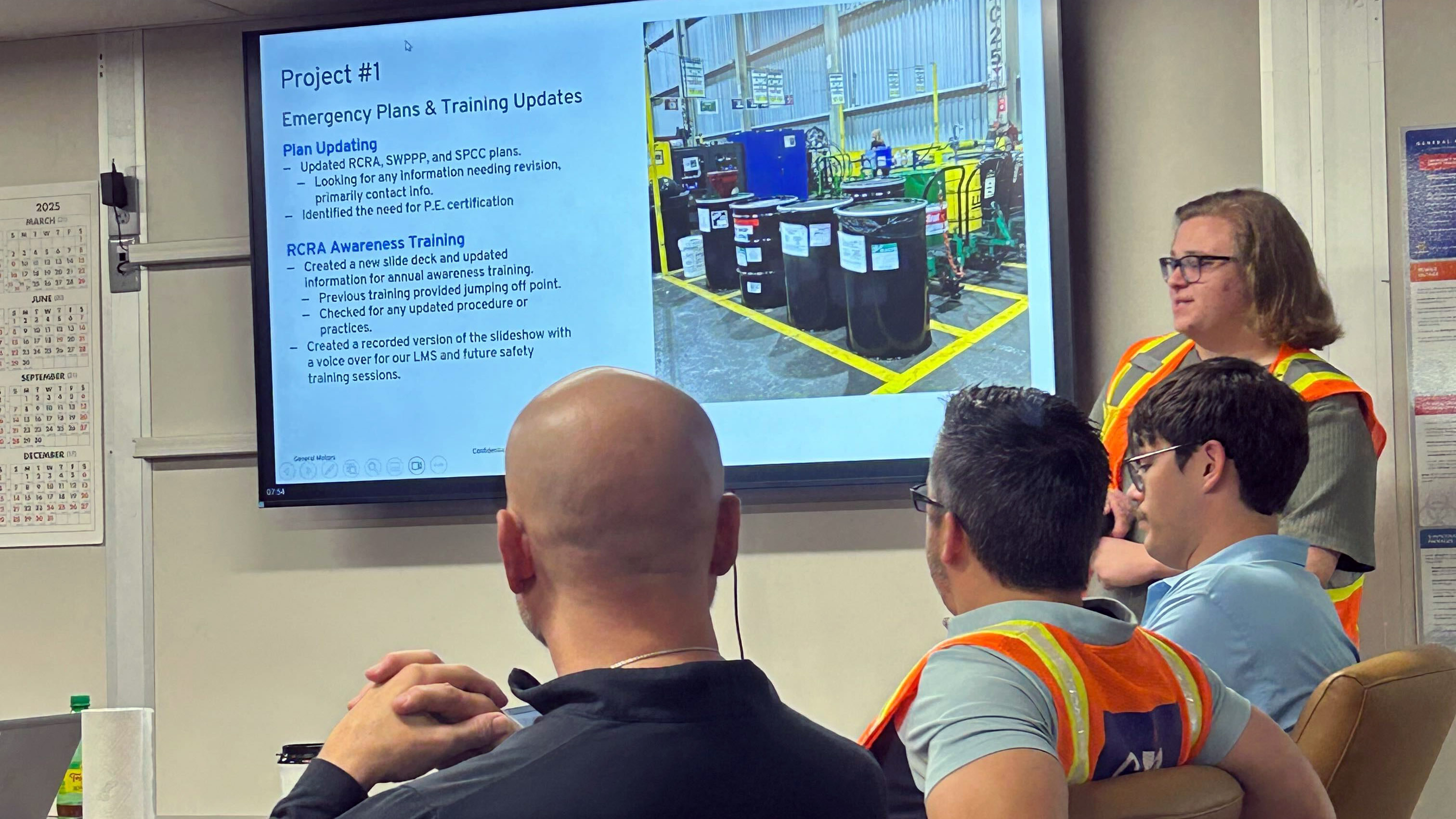
Everything was tied back to our environmental management system so everything tied back to a defined goal and metric that contributed to continuous improvements. Whether it was waste management, recycling, environmental reporting, or documentation, our work played a direct role in keeping the site aligned with regulatory expectations and the company’s own environmental standards.
How did you feel diving deeper into the field?
Being a part of a team of dedicated environmental professionals was an incredibly validating experience. It was exciting to see how directly my coursework applied to what I was doing every day, and the experience helped me further realize what kind of career I want to have.
What skills did you bring from your time in your program that were useful in co-op?
The program prepared me extremely well. There were many times I needed to understand environmental regulations and technical documents and there was no experience I did not feel equipped to handle with the skills learned in the program. A lot my classes prepared me not only on subject matter but trained me to think through complicated problems and produce valuable solutions.
What makes your program stand out from other schools you could have gone to? What advice would you give to high school students who would like to pursue this field?
CET and ESHS stand out from the rest because the program is incredibly practical and gives students like me skills that I will be using in the real world. The faculty’s industry experience shows, they understand what my future employers are looking for and guide students toward opportunities that truly help them grow. I honestly couldn’t have imagined feeling as confident in my future as I do now. Between the co-op opportunities, hands-on labs, professional education opportunities, and mentorship from professors, I feel extremely prepared for my career.
My advice for high school students is not to worry if you don’t have everything figured out yet. Look for a program that gives you real experiences and skills, not just classroom, academic knowledge. Take advantage of career services early, talk to professors, and say yes to opportunities even if they seem small. Environmental health and safety is a meaningful, and extremely tight-knit field where the work you do can genuinely protect people and the planet.
More Featured Profiles and Work
Amanda Bao