Health Science Combined Accelerated Bachelor’s/Master’s

Prepare For Your Future Faster

RIT’s Combined Accelerated Bachelor’s/Master’s Degrees are for our most highly focused, forward thinking, goal-oriented students in the health sciences. These pathways enable you to earn both a bachelor’s and a master’s degree in less time and at a lower cost.

What Is An Accelerated Health Science Bachelor’s/Master’s Degree?

RIT’s College of Health Sciences and Technology offers Combined Accelerated Bachelor’s/Master’s Degrees designed specifically for exceptional health sciences students with outstanding academic records who are interested in advancing their knowledge in global public health, nutrition, and sustainable practices.

The College of Health Sciences and Technology offers the following combined accelerated bachelor’s/‌master’s degrees:

The global public health BS/sustainable systems MS is designed for students who want to understand and address complex challenges at the intersection of human health, environmental sustainability, and social well-being. This combined degree provides students with opportunities to apply public health knowledge to real-world sustainability challenges while they build an interdisciplinary perspective that is increasingly valuable in a world facing climate change, environmental health risks, resource constraints, and persistent health inequities.

Students develop skills in systems thinking, sustainability analysis, data-driven decision-making, and problem-solving alongside their expertise in population health. Graduates are well positioned for careers in public health agencies, healthcare organizations, government, nonprofit organizations, consulting, sustainability and corporate responsibility, and organizations addressing environmental and community health. The accelerated BS/MS degree also provides strong preparation for graduate and professional education in public health, sustainability, environmental health, policy, and related fields. It equips graduates to approach health challenges not simply as medical problems, but as interconnected social, environmental, and systems challenges.

The nutritional sciences BS/dietetics and nutrition MS offers an accelerated pathway for students who want to pursue a career as a Registered Dietitian Nutritionist (RDN). Students build a strong foundation in nutrition science while progressing into graduate-level dietetics and nutrition education.

During the nutritional sciences degree, students complete two co-ops, gaining professional experience and practical skills that prepare them for their 1,000 hours of supervised practice at the graduate level. Students can also pursue a minor, such as exercise science, to explore complementary interests.

The ACEND-accredited master’s degree in dietetics and nutrition supports individualized faculty guidance and mentorship. The program director identifies and coordinates supervised experiential learning sites for each student. Students also gain research experience through a faculty-supervised thesis or project, preparing them for evidence-based practice. In our clinical simulation labs, students advance their learning through hands-on experiences where they apply and practice clinical skills.

Graduates are prepared to pursue the RDN credential and nutrition-related careers across clinical, community, public health, food and nutrition, sports, and wellness settings.

The nutritional sciences BS/sustainable systems MS offers students an interdisciplinary pathway for understanding how food, nutrition, environmental sustainability, and human well-being are interconnected. By combining these two degrees students gain both specialized knowledge of nutrition and a broader systems perspective on the environmental, economic, and social dimensions of food and health.

This accelerated pathway enables students to extend their undergraduate preparation into graduate-level study without treating nutrition and sustainability as separate fields, giving students opportunities to develop advanced skills in systems thinking, sustainability assessment, data analysis, and problem-solving. Students learn to examine issues such as sustainable food systems, food security, resource use, environmental impacts of food production, and the relationship between dietary choices and planetary health.

Graduates are prepared for careers in food and nutrition organizations, government agencies, nonprofit organizations, food and consumer industries, sustainability consulting, corporate sustainability, and organizations working on food systems and environmental policy. The dual degree provides a strong foundation for additional graduate or professional study in sustainability, nutrition, public health, food systems, environmental studies, and related disciplines.

Benefits of Becoming a Health Sciences Accelerated Scholar

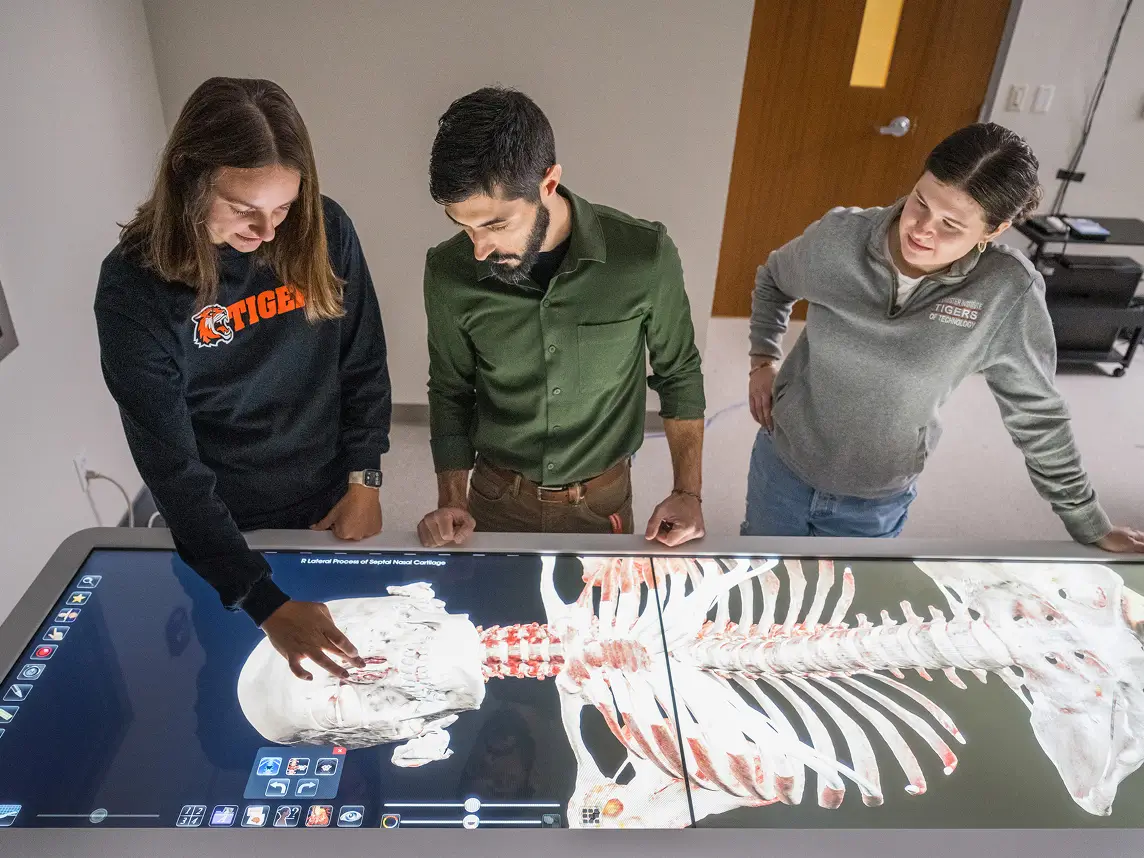
Three people standing at the anatomy table looking at a digital skeleton.

Gain a Competitive Edge for Medical and Graduate School

Many careers in health care require education beyond a bachelor’s degree. Earning both a bachelor’s and master’s degree provides advanced academic preparation, research experience, and specialized knowledge that can strengthen your qualifications for graduate study, including medical school and graduate degrees in physician assistant, occupational therapy, physical therapy, public health, and other health-related professional programs.
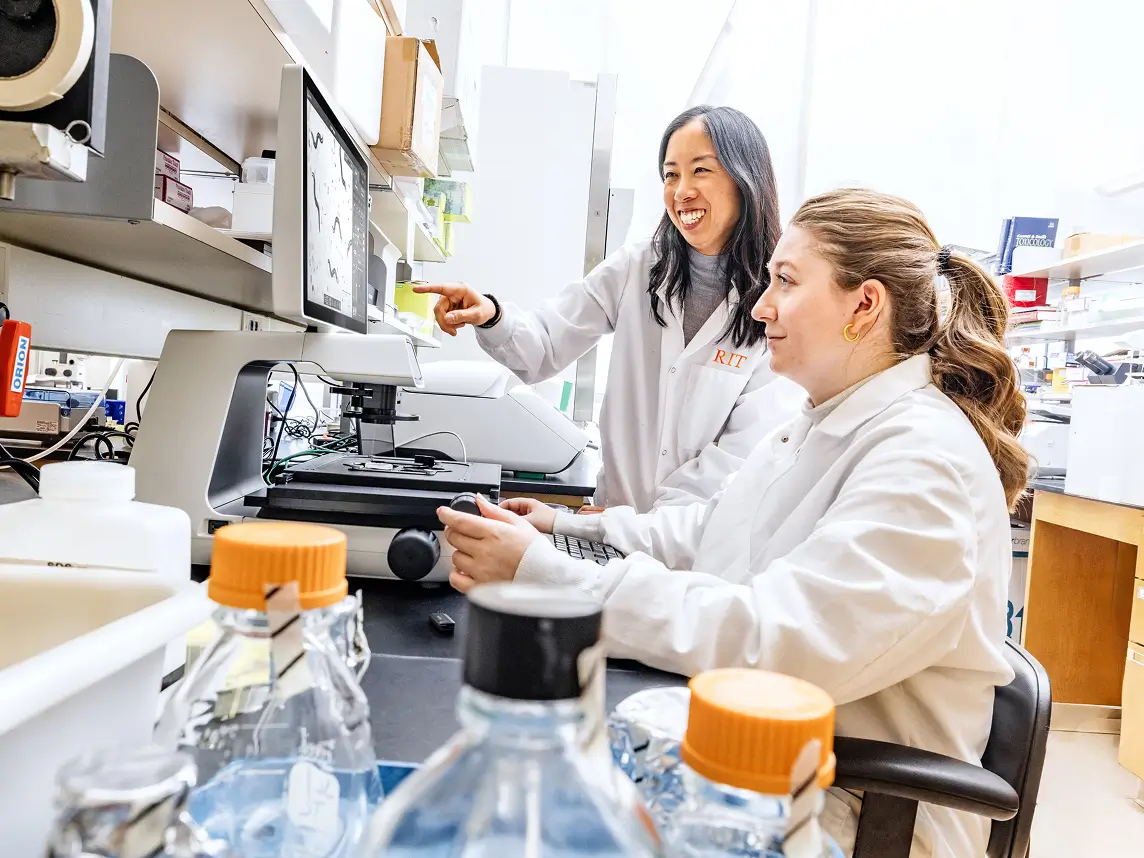
Two people in lab coats, looking at a display showing what is under the microscope.

Build Advanced Research Skills

Health care is increasingly driven by evidence-based practice and scientific discovery. Through graduate-level coursework and research opportunities, you’ll develop skills in data analysis, scientific inquiry, and problem-solving that prepare you to contribute to advances in human health and healthcare delivery.
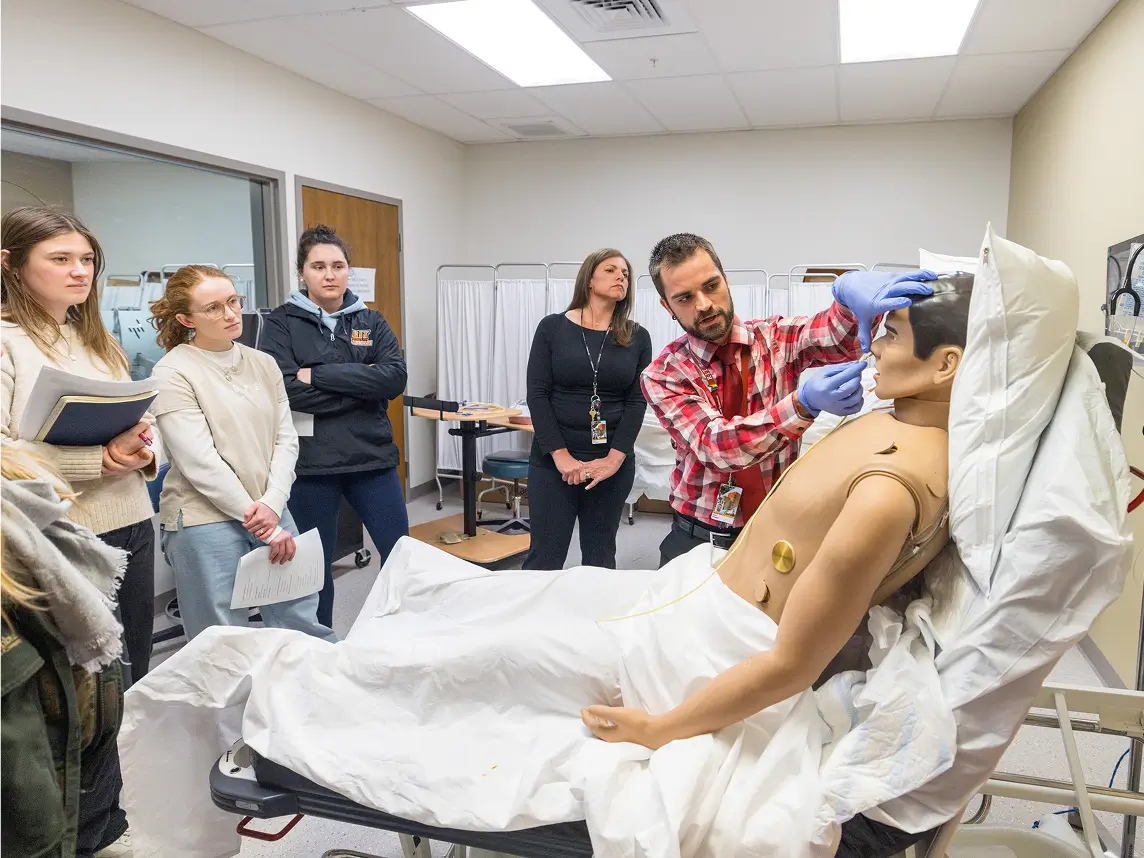
Students watch as an instructor performs a nose swab on a medical manikin.

Prepare for the Future of Health Care

The healthcare industry is rapidly evolving through advances in technology, artificial intelligence, personalized medicine, biotechnology, and population health. A combined accelerated degree allows you to explore emerging areas of healthcare and develop interdisciplinary expertise that employers and graduate programs increasingly value.
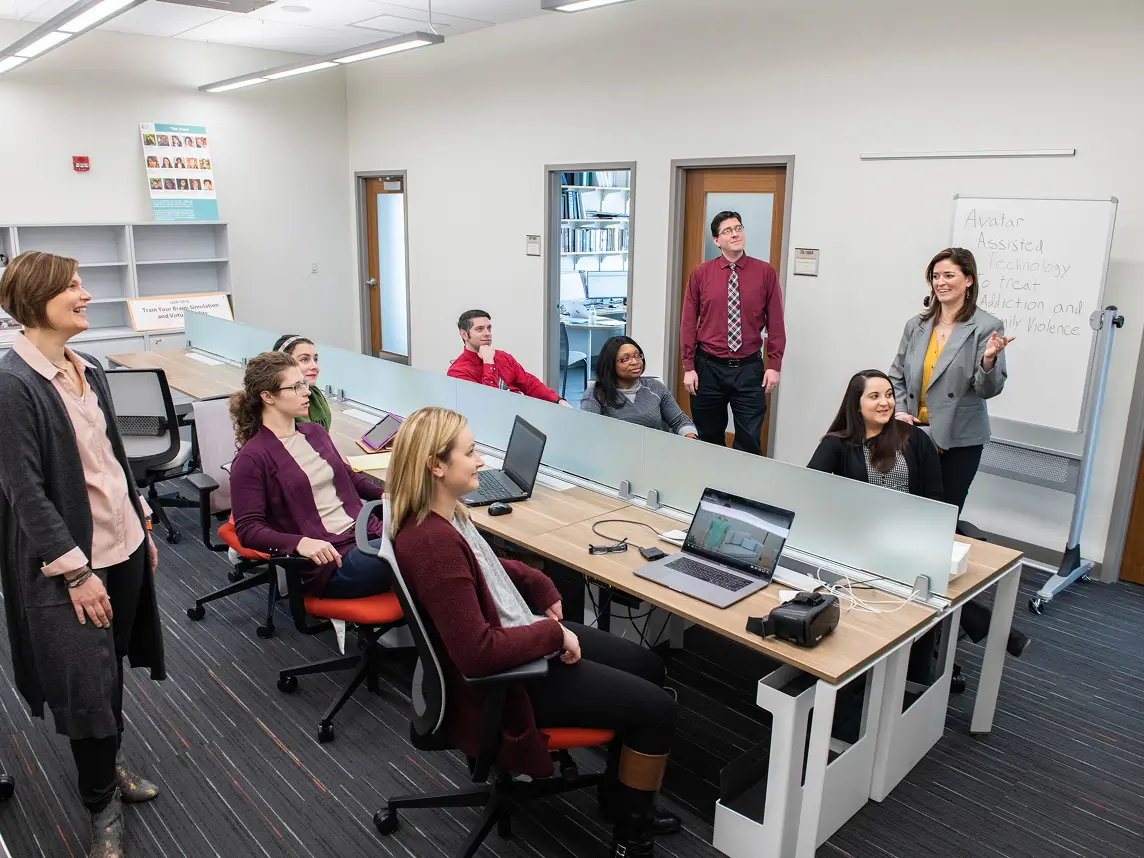
Six students sitting at desks with three instructors standing around them.

Expand Your Career Options

A master’s degree can open doors to specialized roles in healthcare, biotechnology, pharmaceuticals, clinical research, health informatics, healthcare administration, public health, and medical technology. You’ll graduate with the credentials to pursue a wider range of careers and leadership opportunities.
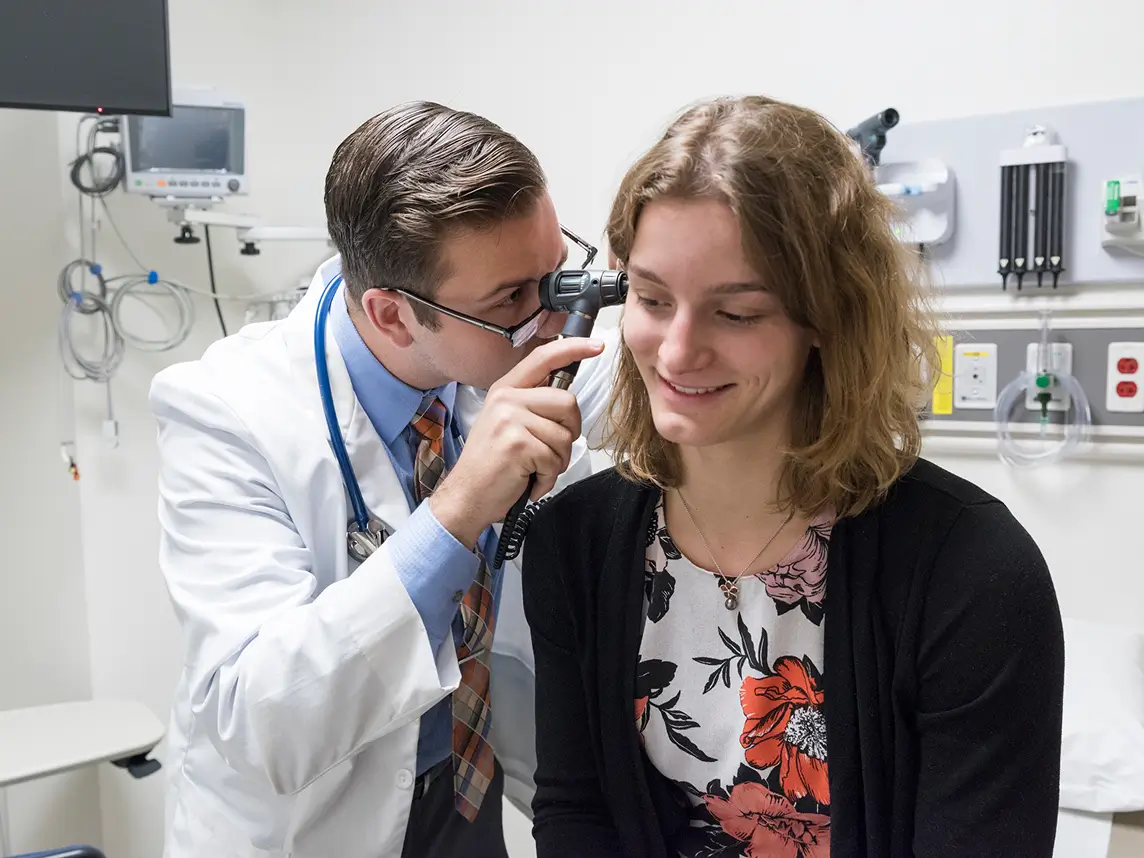
A professor demonstrates how to examine a patient's ear.

Develop Expertise Earlier

As an accelerated student, you’ll begin graduate-level coursework while completing your bachelor’s degree, allowing you to deepen your expertise sooner and graduate with advanced knowledge that sets you apart in a competitive job market.
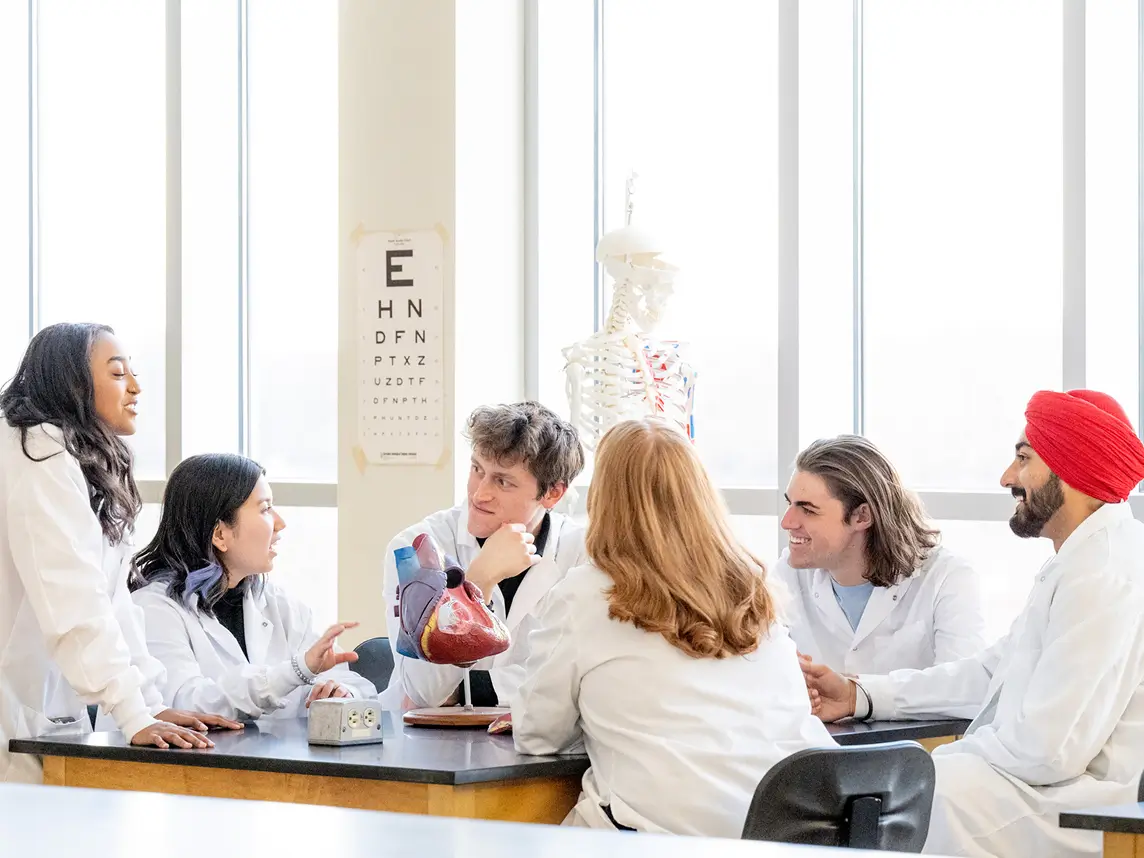
A group of six students in lab coats sitting around a table having a conversation.

Collaborate Across Health and Science Disciplines

Modern healthcare challenges require collaboration among scientists, clinicians, technologists, and public health professionals. Combined accelerated pathways expose you to interdisciplinary perspectives and help you develop the teamwork and communication skills essential for healthcare careers.

How Do Combined Bachelor’s and Master’s in Health Science Programs Work?

Students in a combined accelerated program have plans of study that map out their courses to take advantage of double counted credits or the use of course waivers that enable you to earn two degrees in less time with a cost savings. And, you can still take advantage of cooperative education experiences, internships, clinical rotations or internships, research, study abroad, and more. Advisors help with course selection for minors, immersions, and elective courses, assist in planning out clinical rotations, and provide support throughout your studies.

Admission

There are two ways to become an Accelerated Scholar

Conditional Early Acceptance For Incoming First Year Students

Outstanding applicants for first-year admission to RIT may be offered conditional early acceptance to a master’s degree along with their acceptance to their bachelor’s.

Enrolled Student Pathway For Current RIT Students

RIT students currently enrolled in a qualifying undergraduate degree may apply to join an accelerated pathway toward a master’s degree through the academic department, typically after their second or third year of study.

Contact Us

For general questions about RIT’s Combined Accelerated Bachelor’s/Master’s Degrees, contact accelerated@rit.edu.

Incoming First Year Student Inquiries:

Kristina Martin

Senior Assistant Director
Undergraduate Admissions
Enrollment Management
585-475-6581

Enrolled Accelerated Scholars Inquiries:

Evan Pierce

Academic Program Operations Administrator III
RIT Graduate School
Academic Affairs
585-475-4564

Graduate Program Inquiries:

Karen Palmer

Interim Director of Graduate Admissions
Enrollment Management
585-475-5656